Saskatchewan's Food Safety Regulations let home food processors make low-risk foods at home and sell them directly to the public and to stores that just resell packaged food — one of the most flexible setups in Canada. Your home kitchen counts as a food premises, so the Saskatchewan Health Authority (SHA) can visit, for example when following up on a complaint.
Province guide · Saskatchewan
How to sell homemade food in Saskatchewan
Home, online, markets — and even some stores
At a glance
- ✓ Farmers' markets Yes
- ✓ Sell from your home Yes — check city rules on customer pickup
- ✓ Online orders Yes
- ✓ Sell to stores Yes — retail or wholesale that don't prepare food; not hospitals or care homes
- ! Kitchen inspection No routine inspections; SHA may visit
- ! Label font size At least 12-point
Which path are you on?
Answer two questions to see which rules apply to you.
1Does your food need the fridge or freezer to stay safe, or contain meat, poultry, fish, or a cream / custard / cheesecake filling?
Yes
Not a home food processor itemFoods that need refrigeration, meat, seafood or raw-milk products need a permitted (commercial) food premises.
No — it's shelf-stable
Low-risk foodKeep going to question 2 ↓
2Who are you selling to?
Customers — home, online, markets
AllowedTalk to your local public health inspector, label every package, and you're set.
Stores that only resell packaged food
AllowedGift shops and grocery stores that don't prepare food themselves can stock your products.
Hospitals, health centres, care homes
Not allowedHome-prepared food can't be sold to designated care facilities.
What you can (and can't) make at home
Usually allowed (low risk)
- Baked goods without cream, custard or meat fillings: bread, cakes, fruit pies, cookies, squares, pastries
- Jams, jellies, honey, applesauce
- Vinegar pickles and relishes (pH ≤ 4.6)
- Candy, fudge, toffee, chocolate
- Egg-free dry noodles, dry baking mixes, cereals, granola, trail mix
- Dried fruit, vegetables, herbs and spices
- Popcorn, popcorn balls, candied apples
- Vegetable and potato chips, seasoning salts, mustard
- Wine or herb vinegar, syrups
Not from a home kitchen
- Anything that needs refrigeration
- Meat and seafood products
- Raw milk products
Step by step
-
1
Make sure your product is low risk
Low risk means it doesn't need the fridge and is unlikely to cause illness when handled properly. Check the lists below.
-
2
Contact your local public health inspector
Before you start, tell the SHA what you'll make, your home address, and how you'll sell. They'll confirm your products qualify and explain local expectations. Inspectors have the right to enter the food prep and storage areas of your home that you use for the business.
-
3
Meet basic kitchen standards
No commercial kitchen needed, but you do need safe drinking water, smooth surfaces you can sanitize, covered storage off the floor, raw and ready-to-eat kept apart, good handwashing, and pest and waste control. A Safe Food Handling course is strongly recommended.
-
4
Label every package
Labels are required by law — without one the food can't be sold or resold. Text must be at least 12-point. See the checklist below.
-
5
Licence, taxes, insurance
Check your city's home-based business licence and zoning — for example, Saskatoon allows delivery but not retail pickup at the home. Register a trade name if you use one, register for GST past the small-supplier threshold, and consider product liability insurance, especially if you sell to stores.
Registration checklist for Saskatchewan
The registrations a home food business may need here, what they cost, and where to do them. New to these terms? See registrations explained.
-
Business structure & nameProvincialOperating under your own name? No registration. Any other business name must be registered with Saskatchewan Registries (formerly ISC). Corporations incorporate there too.
-
Health / food safety approvalProvincialHome food processors making low-risk foods: no licence, but contact your local public health inspector and label every product. Higher-risk foods or a commercial operation need a licence from the Saskatchewan Health Authority.
-
City business licence & zoningMunicipalCity business licence; check zoning for customer pickup (e.g. Saskatoon allows delivery but not retail pickup at the home).
-
Business Number & GST/HSTFederal (CRA)Register with the CRA once taxable sales pass $30,000 over four consecutive calendar quarters, within 29 days of crossing. You can register sooner voluntarily. Basic groceries are zero-rated, but snacks, candy and single-serve baked goods are taxable.
-
Provincial sales taxProvincialPST is 6%, and since 2017 it applies to food wherever GST does: snack foods, candy, single-serve baked goods and prepared meals. Register for a vendor's licence through SETS. The “small trader” exception doesn't cover anyone selling outside their home (e.g. at markets) or to businesses.
-
Payroll & workplace insuranceFederal + provincialOpen a CRA payroll account, and register with WCB Saskatchewan: most employers must have workplace injury coverage.
Who needs what
Selling baked goods and preserves at markets
- Business name registration if it isn't your own name ($65)
- Talk to your public health inspector; no licence for low-risk foods
- PST vendor's licence if you sell taxable snacks or single servings
Home orders and online sales
- Same as above
- Check whether your city allows customer pickup at home
Stocking a gift shop or grocery store
- Allowed for stores that only resell packaged food (not care facilities)
- Labels on every package; PST licence likely
What goes on your label
1Lemon Poppyseed Loaf
2Maple Lane Bakes · 12 Maple Lane, Yourtown
3This food was made in a home kitchen that is not inspected by a government agency.
4Ingredients: flour, sugar, butter, eggs, lemon, poppy seeds, baking powder, salt
5Contains: wheat, eggs, milk
6Net 450 g
7Made 2026-10-01 · Best before 2026-10-08
- Common name of the food
- Your name and civic address
- Home-kitchen statement
- Ingredient list (if more than one ingredient)
- Allergens
- Net quantity
- Best-before date (if applicable)
All label text must be at least 12-point and clearly visible.
Tools for Saskatchewan sellers
Get set up faster
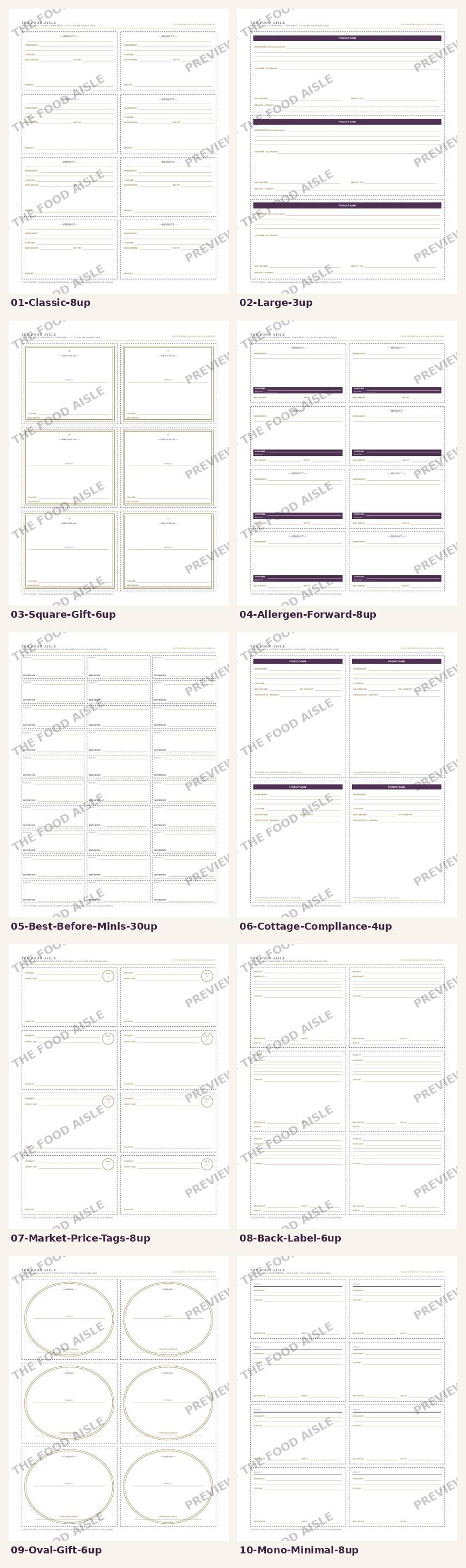 Product Label Templates
Labels with room for your civic address, the home-kitchen statement and allergens.
See it in the shop →
Product Label Templates
Labels with room for your civic address, the home-kitchen statement and allergens.
See it in the shop →
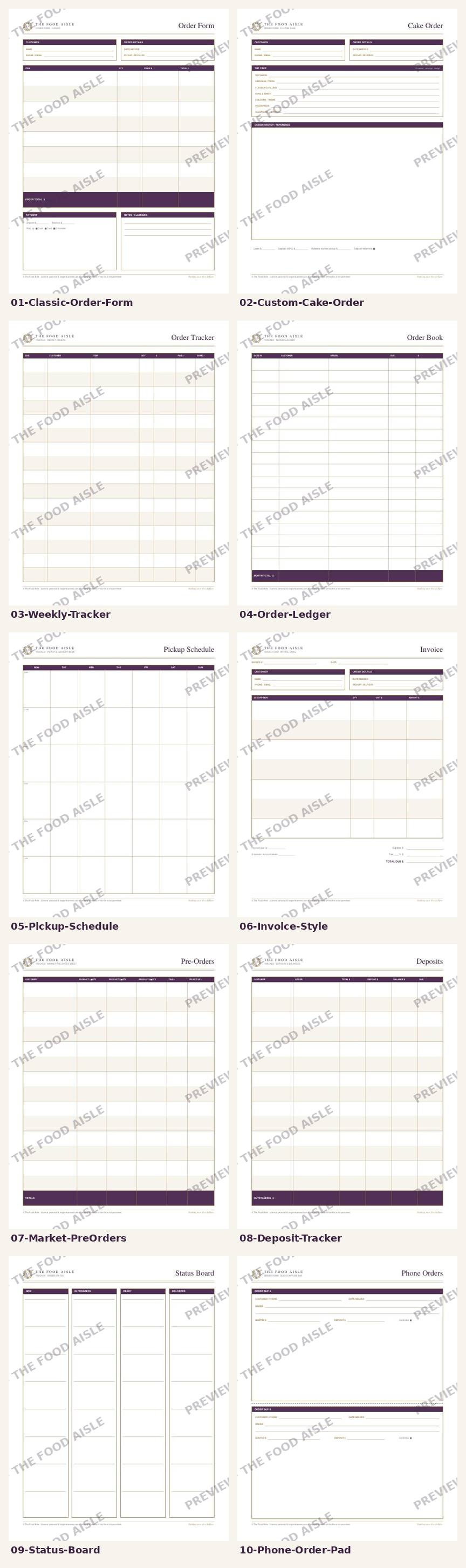 Order Forms & Order Tracker
Handle customer and wholesale store orders in one tracker.
See it in the shop →
Order Forms & Order Tracker
Handle customer and wholesale store orders in one tracker.
See it in the shop →
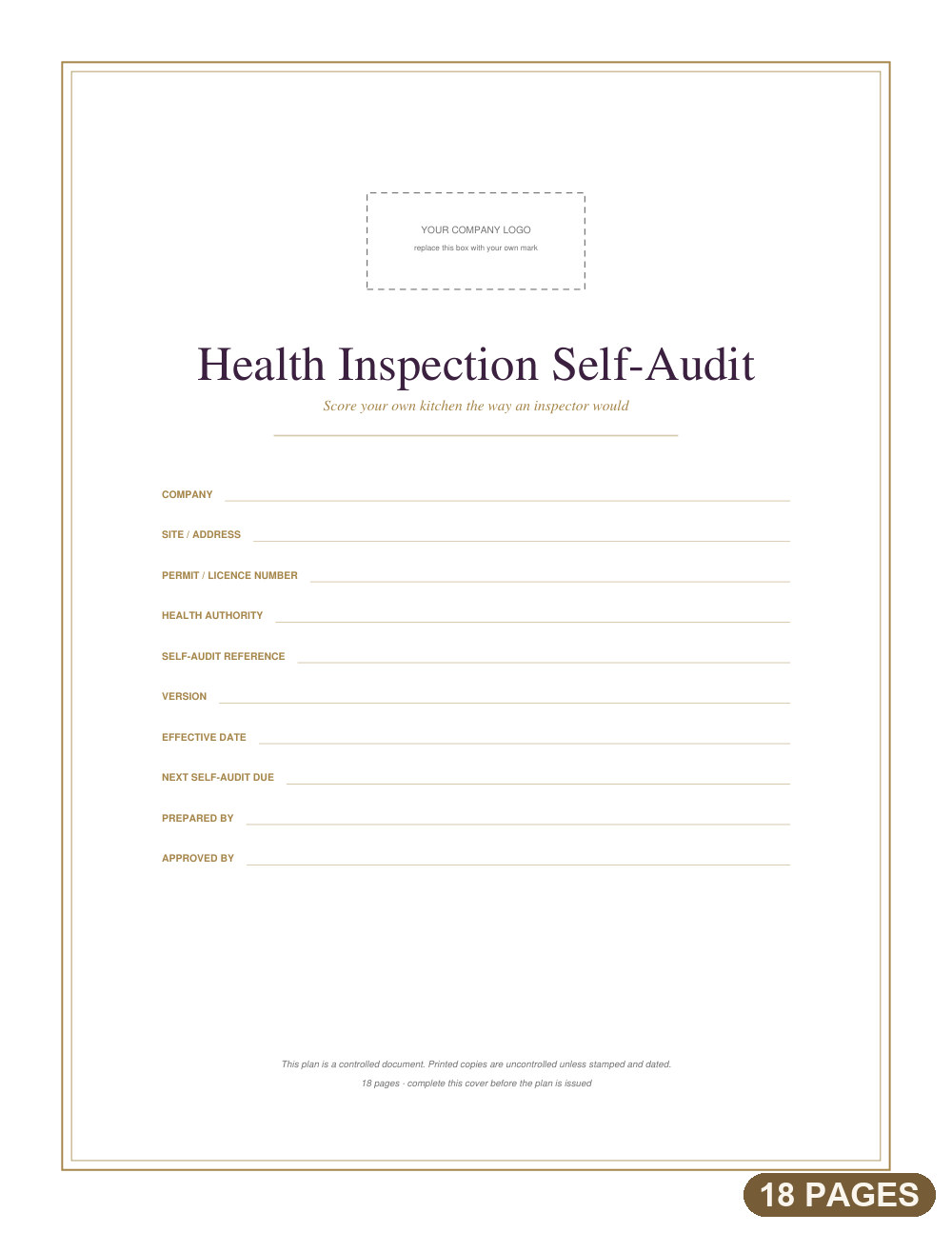 Health Inspection Self-Audit
Walk your own kitchen through an inspector-style check before anyone visits.
See it in the shop →
Health Inspection Self-Audit
Walk your own kitchen through an inspector-style check before anyone visits.
See it in the shop →
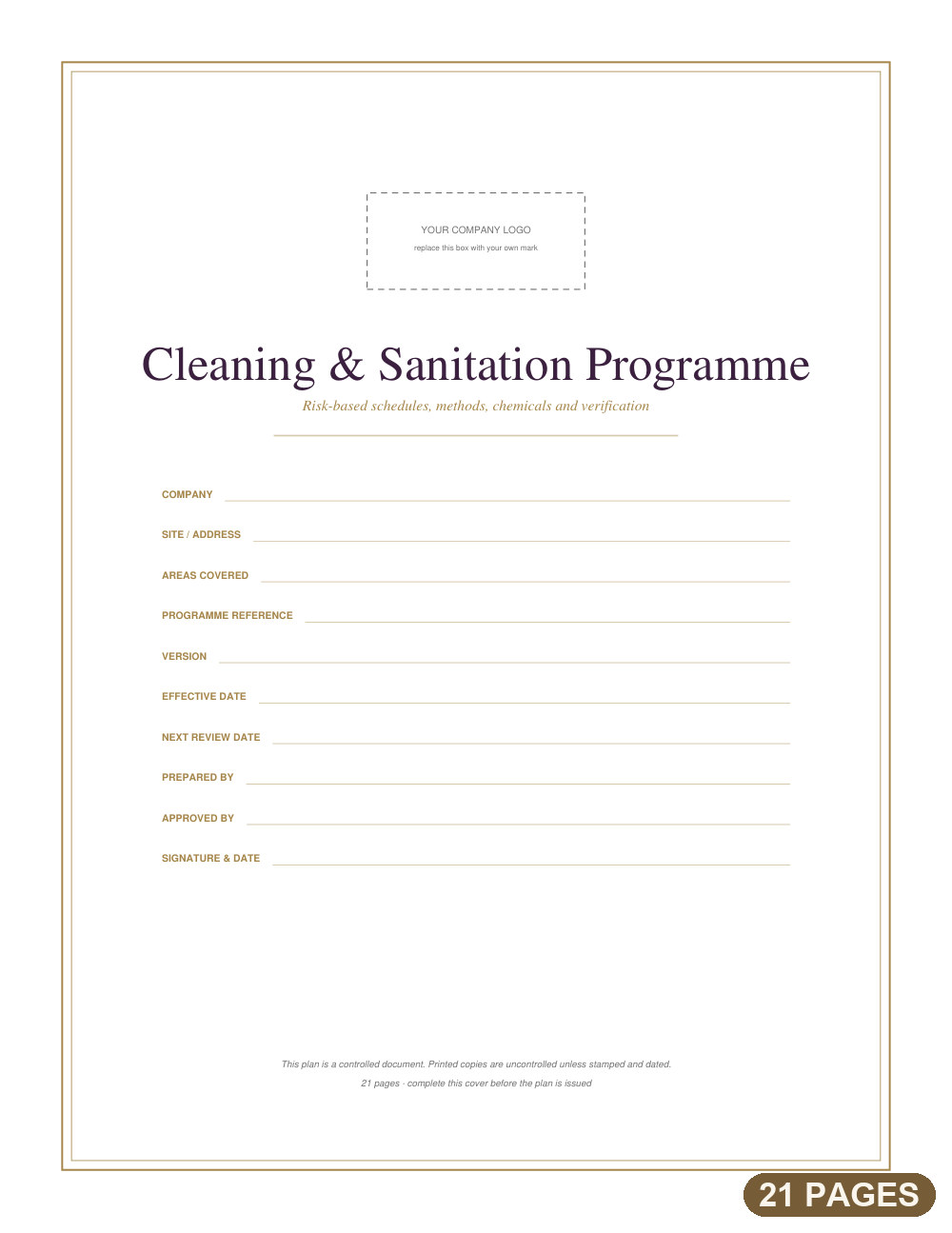 Cleaning & Sanitation Schedule
A simple routine that keeps your kitchen inspection-ready.
See it in the shop →
Cleaning & Sanitation Schedule
A simple routine that keeps your kitchen inspection-ready.
See it in the shop →
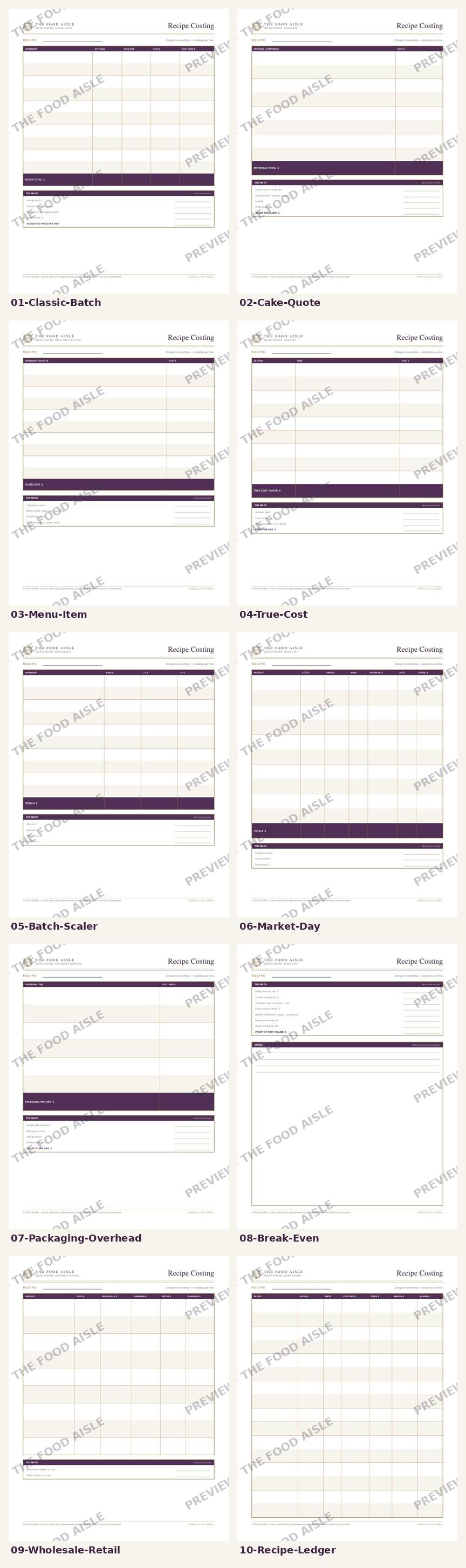 Recipe Costing & Pricing Calculator
Work out retail and wholesale prices that still make a profit.
See it in the shop →
Recipe Costing & Pricing Calculator
Work out retail and wholesale prices that still make a profit.
See it in the shop →
Official sources
Last reviewed October 1, 2026. This is a plain-language summary, not legal advice. Rules change, so confirm with your health authority and your city before you start selling.