Manitoba is the strictest of the five. The province says plainly that preparing and serving food from a home-based business for public consumption is prohibited. The one exception: low-risk, shelf-stable food made at home can be sold at farmers' markets, flea markets, craft sales and bake sales — under that market's or event's health permit.
Province guide · Manitoba
How to sell homemade food in Manitoba
Markets & bake sales only — under their permit
At a glance
- ✓ Farmers' markets, craft & bake sales Yes — under the market's health permit
- ✕ Sell from your home No
- ✕ Online pickup / delivery No
- ✕ Sell to stores & restaurants No — needs a commercial kitchen and your own permit
- ! Your own permit Not for market sales; required for anything else
- ! Packaging Packaged at home, sold in that package
Which path are you on?
Answer two questions to see which rules apply to you.
1Does your food need the fridge or freezer to stay safe, or contain meat, poultry, fish, or a cream / custard / cheesecake filling?
Yes
Commercial kitchen requiredHigher-risk foods need a commercial kitchen and your own food handling establishment permit.
No — it's shelf-stable
Low-risk foodKeep going to question 2 ↓
2Where do you want to sell?
A permitted farmers' market, flea market, craft or bake sale
AllowedSell under the market's permit and follow the Farmers' Market Guidelines.
From home, online, to stores, or catering
Not from a home kitchenUse a commercial kitchen and get your own permit from a public health inspector.
What you can (and can't) make at home
Usually allowed (low risk)
- Bread, cookies, fruit pies and similar baked goods
- Jam and pickles
- Other shelf-stable foods with water activity ≤ 0.85 or pH ≤ 4.6
Not from a home kitchen
- Anything that needs refrigeration
- Meat and dairy products
- Any sales from home, online, to stores or restaurants, or home catering
Step by step
-
1
Check you fit the exception
Your food must be non-potentially hazardous (shelf-stable), and you must sell only at a farmers' market, flea market, craft sale or bake sale that holds a health permit. Anything else means a commercial kitchen and your own permit.
-
2
Confirm with a public health inspector
Ask whether your exact product counts as non-potentially hazardous, whether your market has the right permit, and about any local training or labelling expectations.
-
3
Follow the Farmers' Market Guidelines
Food must be shelf-stable, packaged at home and sold in that same package. The market manager is responsible for making sure vendors comply.
-
4
Label every package
See the checklist below.
-
5
Check municipal rules
Your city or town (Winnipeg, Brandon, etc.) may still require a business licence. Ask the market manager about their vendor rules too.
Registration checklist for Manitoba
The registrations a home food business may need here, what they cost, and where to do them. New to these terms? See registrations explained.
-
Business structure & nameProvincialTrading under your own surname? Registration may not be required. Any other business name: register with the Manitoba Companies Office. Corporations incorporate there too.
-
Health / food safety approvalProvincialLow-risk home-made foods at a farmers' market, flea market, craft or bake sale: you sell under the market's health permit. Anything else (home, online, stores, higher-risk foods) needs a commercial kitchen and your own food handling permit.
-
City business licence & zoningMunicipalCheck with your city or town (Winnipeg, Brandon, etc.) and your market manager about business licences.
-
Business Number & GST/HSTFederal (CRA)Register with the CRA once taxable sales pass $30,000 over four consecutive calendar quarters, within 29 days of crossing. You can register sooner voluntarily. Basic groceries are zero-rated, but snacks, candy and single-serve baked goods are taxable.
-
Provincial sales taxProvincialManitoba RST is 7%, but since July 1, 2026, food and beverages for human consumption are exempt, including baked goods, candy and snacks in any size. Businesses with under $10,000 in taxable sales don't need to register.
-
Payroll & workplace insuranceFederal + provincialOpen a CRA payroll account, and register with WCB Manitoba: most employers must have workplace injury coverage.
Who needs what
Selling at a farmers' market or bake sale
- Sell under the market's health permit
- Business name registration if it isn't your own name ($60)
- Labels with contact info, ingredients and date
Selling from home or online
- Not allowed from a home kitchen
- Commercial kitchen + your own food handling permit
Supplying stores or restaurants
- Commercial kitchen + food handling permit
- Business Number; GST once over $30,000
What goes on your label
1Maple Lane Bakes · 12 Maple Lane, Yourtown
2Lemon Poppyseed Loaf
3Ingredients: flour, sugar, butter, eggs, lemon, poppy seeds, baking powder, salt
4Made 2026-10-01 · Best before 2026-10-08
5Contains: wheat, eggs, milk
- Vendor or business name and contact info
- Common name of the food
- Ingredient list
- Date prepared
- Allergens (strongly recommended)
Manitoba doesn't set a “home kitchen” statement for market sales — ask your market manager if they want one.
Tools for Manitoba sellers
Get set up faster
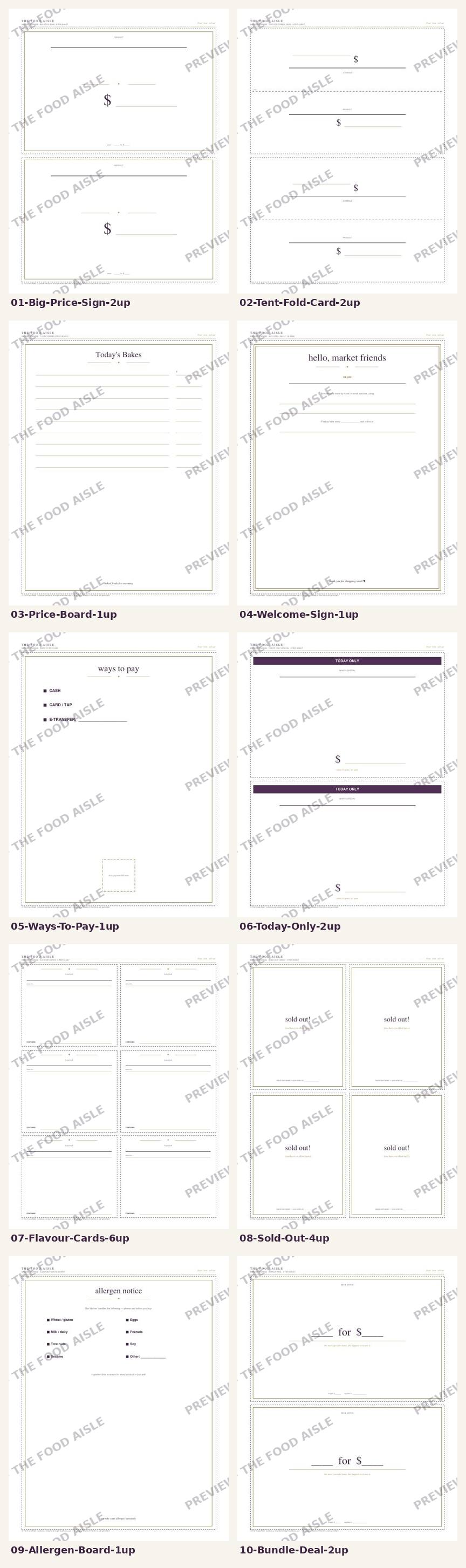 Farmers Market & Signage Cards
Booth signs and price cards — markets are your storefront in Manitoba.
See it in the shop →
Farmers Market & Signage Cards
Booth signs and price cards — markets are your storefront in Manitoba.
See it in the shop →
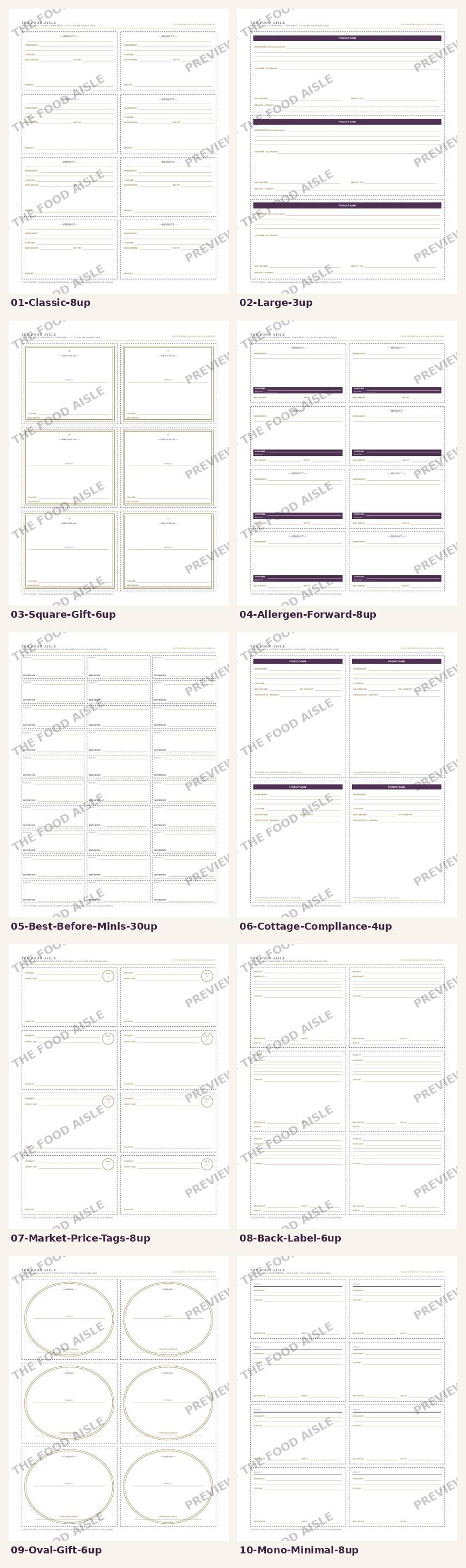 Product Label Templates
Labels with your contact info, ingredients and the date prepared.
See it in the shop →
Product Label Templates
Labels with your contact info, ingredients and the date prepared.
See it in the shop →
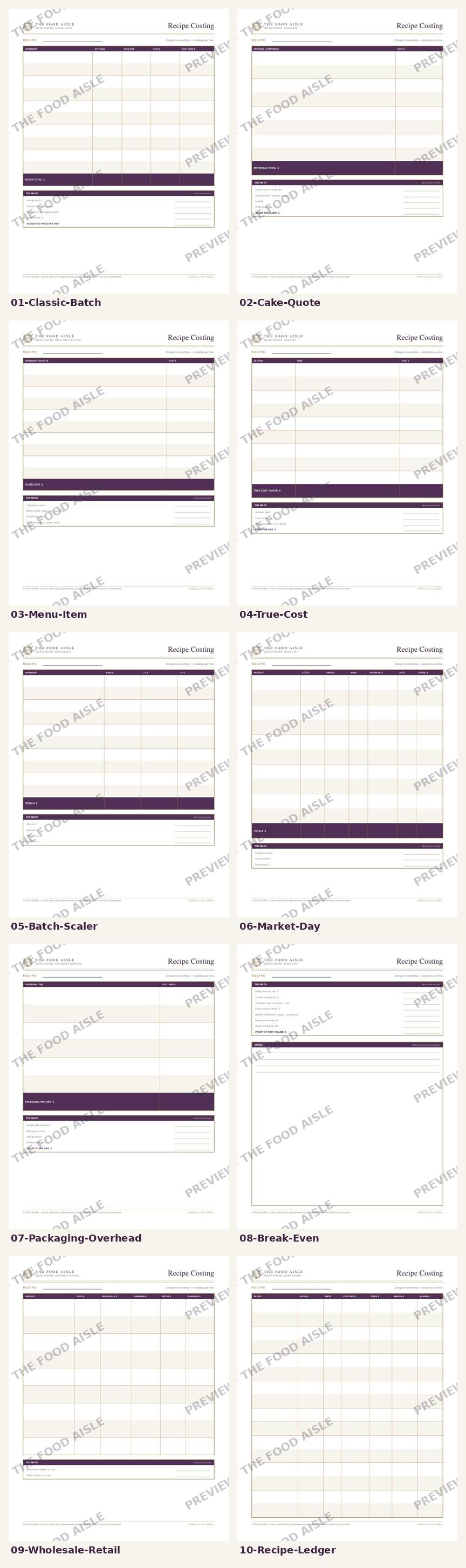 Recipe Costing & Pricing Calculator
Price for market day so every table pays for itself.
See it in the shop →
Recipe Costing & Pricing Calculator
Price for market day so every table pays for itself.
See it in the shop →
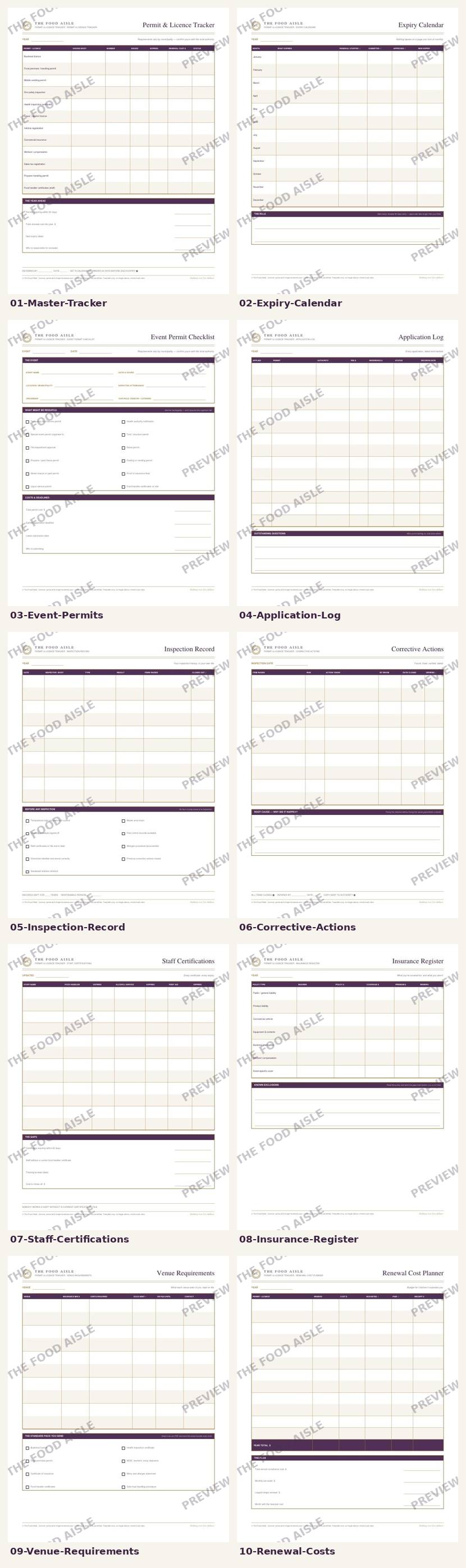 Permit & License Tracker
Ready to move to a commercial kitchen? Track your permits and renewals.
See it in the shop →
Permit & License Tracker
Ready to move to a commercial kitchen? Track your permits and renewals.
See it in the shop →
Official sources
Last reviewed October 1, 2026. This is a plain-language summary, not legal advice. Rules change, so confirm with your health authority and your city before you start selling.