Since June 1, 2020, Alberta's Food Regulation lets you make low-risk foods in your home kitchen and sell them straight to customers — from home, online, at farmers' markets and at special events — with no Alberta Health Services permit, no commercial kitchen and no routine inspections. In return, you stick to the low-risk list, handle food safely, label every package, and follow your city's business rules.
Province guide · Alberta
How to sell homemade food in Alberta
Permit-free from home, online and at markets
At a glance
- ✓ Farmers' markets & events Yes — food packaged at home, sold in that package
- ✓ Sell from your home Yes — door pickup is fine (no on-site dining)
- ✓ Online / mail order Yes — within Alberta
- ✕ Sell to stores & cafés No — end customers only
- ✓ Kitchen inspection No permit, no routine inspection
- ! Training Recommended; free AHS courses available
Which path are you on?
Answer two questions to see which rules apply to you.
1Does your food need the fridge or freezer to stay safe, or contain meat, poultry, fish, or a cream / custard / cheesecake filling?
Yes
Not allowed from a home kitchenHigher-risk foods need a permitted commercial kitchen and a food establishment permit from AHS.
No — it's shelf-stable
Low-risk foodKeep going to question 2 ↓
2Who are you selling to?
Directly to customers — home, online, markets, events
You can start without a permitLabel every package, keep your kitchen safe, and get your city business licence.
To stores, restaurants or schools for resale
Not allowed under the home rulesSelling to businesses needs a commercial kitchen and an AHS permit.
What you can (and can't) make at home
Usually allowed (low risk)
- Baked goods without meat or cream fillings: bread, buns, tortillas, cookies, brownies, squares, muffins, biscuits, fruit pies, donuts, waffles
- Cakes without cream, cheese or meringue fillings (only certain icings)
- Hard candy, fudge, toffee, brittle, chocolate, candied apples
- Popcorn, cotton candy, vegetable and potato chips
- Dried fruit and vegetables, granola, trail mix, cereals, nuts and seeds
- Dry baking and soup mixes, coffee beans, tea leaves, dried herbs and spices
- Honey, syrup, vinegars, nut butters
- Whole fresh fruit and vegetables, microgreens
- Jam, jelly, fruit butter, vinegar pickles and relish (pH ≤ 4.6 or water activity ≤ 0.85)
- Salsa that meets pH rules (tomato salsa: final pH below 4.2)
Not from a home kitchen
- Anything that needs refrigeration or freezing (cream pastries, cheesecake, quiche, meals with meat)
- Meat, poultry and seafood
- Raw milk or uninspected eggs as a main ingredient (eggs and dairy are fine fully cooked into a cake)
- Home-bottled water
- Home-canned goods beyond jam, jelly and pickles that meet the pH / water activity rules
Step by step
-
1
Pick products from the low-risk list
Double-check nothing needs refrigeration and there's no meat, seafood or raw milk. Only you and your household can make the food.
-
2
Decide how you'll sell
From home, online and mail order within Alberta, farmers' markets and special events are all fine — as long as it's straight to the final customer. No selling to stores or restaurants for resale, and no home restaurant. At events, food must be packaged at home and sold in that package (samples are OK).
-
3
Set up your kitchen safely
Safe drinking water (test a private well), clean smooth surfaces, wash-rinse-sanitize before and after, covered storage, raw kept away from ready-to-eat, and business food kept separate from family food. Wash hands for 20 seconds, don't cook when sick, and keep pets and small children out while you work.
-
4
Label every package
Labels are mandatory (except whole, uncut produce). A sticker, tag or card is fine as long as it stays with the product until sold. See the label checklist below.
- 5
-
6
Register a trade name (optional)
Trading as “Prairie Jam Co.” rather than your own name? Register the trade name with the province — it helps with a business bank account and your licence.
-
7
Take a food safety course
Not mandatory for home sales, but highly recommended — AHS has free courses and booklets on home canning and farmers' markets. Approved farmers' markets may require vendors to complete the AHS Food Safety Basics for Farmers' Markets course.
-
8
Taxes, insurance, then launch
Track income and expenses; register for GST once you pass $30,000 in four consecutive quarters (CRA small supplier rules). Alberta has no PST. Product liability insurance is strongly recommended and many markets require it.
Registration checklist for Alberta
The registrations a home food business may need here, what they cost, and where to do them. New to these terms? See registrations explained.
-
Business structure & nameProvincialSelling under your own name? No registration. Using another name? File a Declaration of Trade Name (or Declaration of Partnership) through an authorized registry agent; Alberta has no central online portal for this. Corporations also incorporate through a registry agent.
-
Health / food safety approvalProvincialLow-risk home-prepared foods sold directly to consumers: no AHS permit, no commercial kitchen. Higher-risk foods need an AHS food handling permit, usually with a commercial kitchen.
-
City business licence & zoningMunicipalCity business licence, plus a development permit or location approval in many cities (e.g. Calgary's Home Occupation Class 1, Edmonton's development permit).
-
Business Number & GST/HSTFederal (CRA)Register with the CRA once taxable sales pass $30,000 over four consecutive calendar quarters, within 29 days of crossing. You can register sooner voluntarily. Basic groceries are zero-rated, but snacks, candy and single-serve baked goods are taxable.
-
Provincial sales taxProvincialAlberta has no provincial sales tax. Only GST applies, once you're registered.
-
Payroll & workplace insuranceFederal + provincialOpen a CRA payroll account, and register with WCB-Alberta: most employers must have workplace injury coverage.
Who needs what
Selling cookies and jam at farmers' markets
- Trade name through a registry agent if it isn't your own name
- No AHS permit for low-risk foods
- City business licence
- Labels with both required statements
Taking home pickup and online orders within Alberta
- Same as above; still no AHS permit for low-risk foods
- Check your city's home-occupation rules (e.g. customer visits)
Supplying cafés or stores
- Not allowed under the home rules
- Commercial kitchen + AHS food handling permit
What goes on your label
1Lemon Poppyseed Loaf
2Made 2026-10-01 · Best before 2026-10-08
3Prepared in a home kitchen that is not subject to inspection. Not for resale.
4Not for resale
5Maple Lane Bakes · 12 Maple Lane, Yourtown
6hello@maplelanebakes.ca · 555-0123
7Ingredients: flour, sugar, butter, eggs, lemon, poppy seeds · Contains: wheat, eggs, milk · Net 450 g
- Name of the food
- Date it was made (or best-before)
- “Prepared in a home kitchen that is not subject to inspection”
- “Not for resale”
- Your name and business name
- Email and/or phone number
- Recommended: ingredients, allergens, net quantity
Both statements are required in Alberta. Whole, uncut fruit and vegetables don't need a label.
Tools for Alberta sellers
Get set up faster
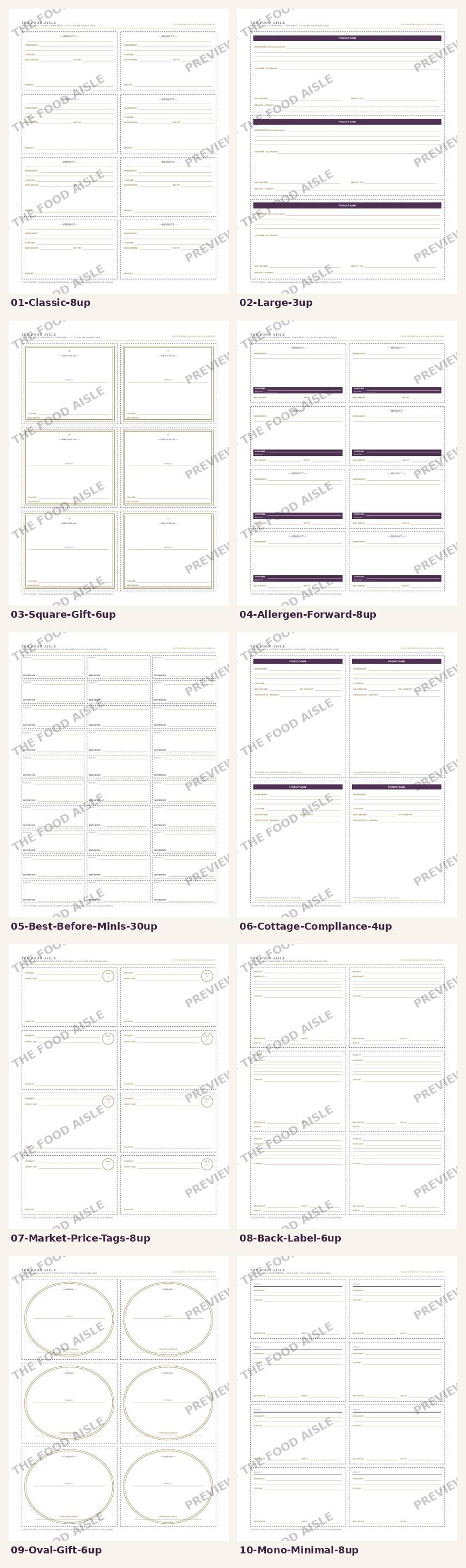 Product Label Templates
Labels with space for both required statements, your contact details and the date made.
See it in the shop →
Product Label Templates
Labels with space for both required statements, your contact details and the date made.
See it in the shop →
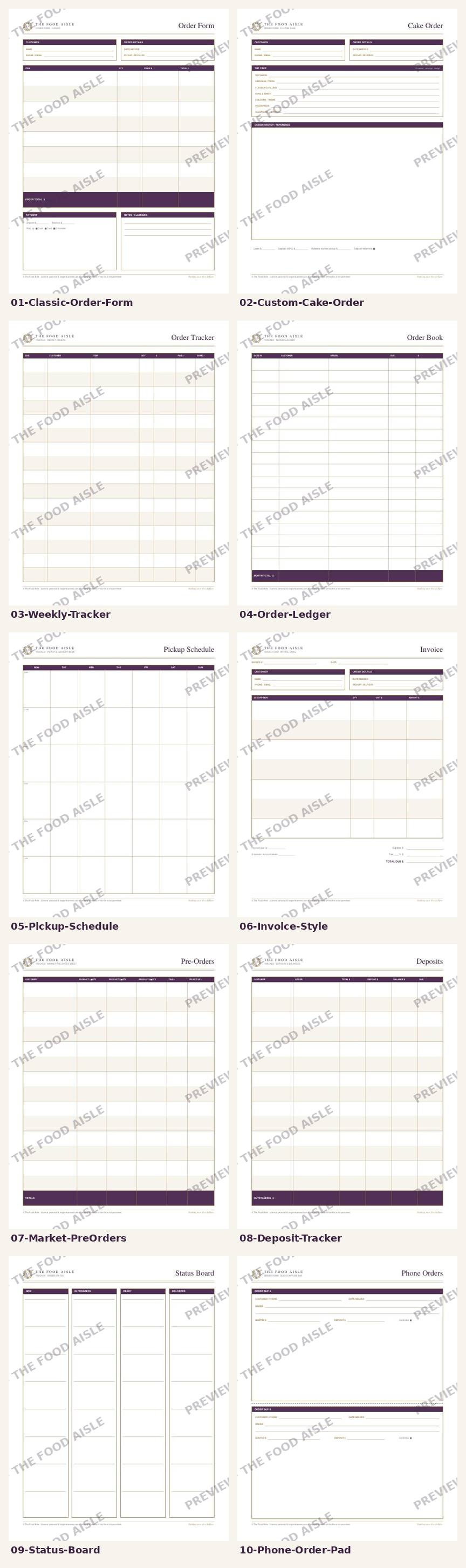 Order Forms & Order Tracker
Take home-pickup and online orders without losing track.
See it in the shop →
Order Forms & Order Tracker
Take home-pickup and online orders without losing track.
See it in the shop →
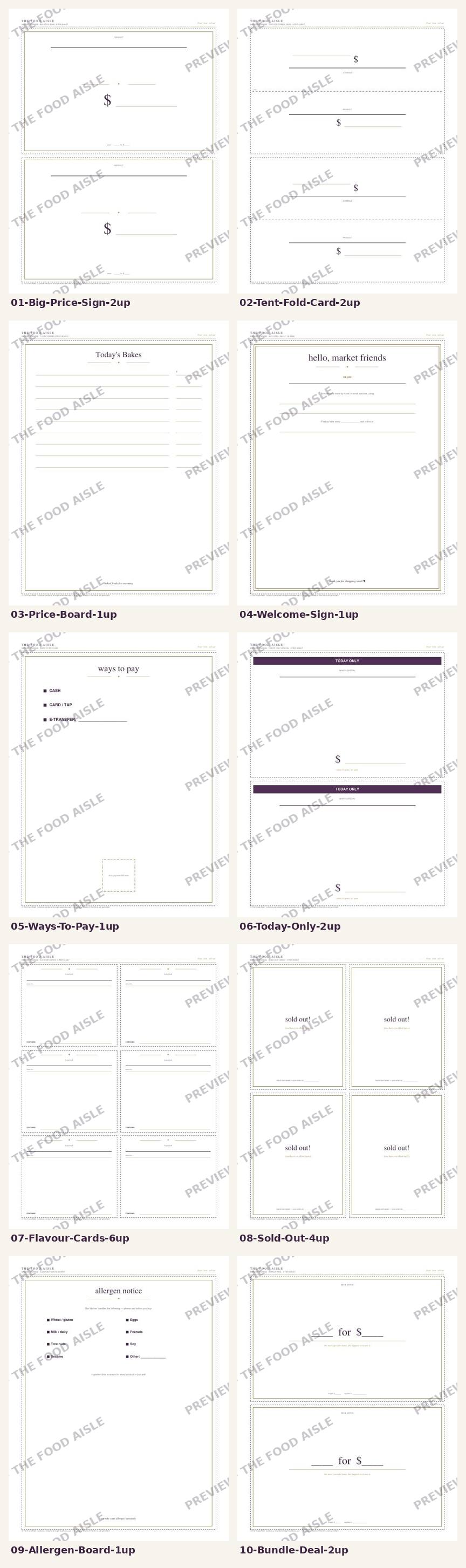 Farmers Market & Signage Cards
Price cards and booth signage for markets and events.
See it in the shop →
Farmers Market & Signage Cards
Price cards and booth signage for markets and events.
See it in the shop →
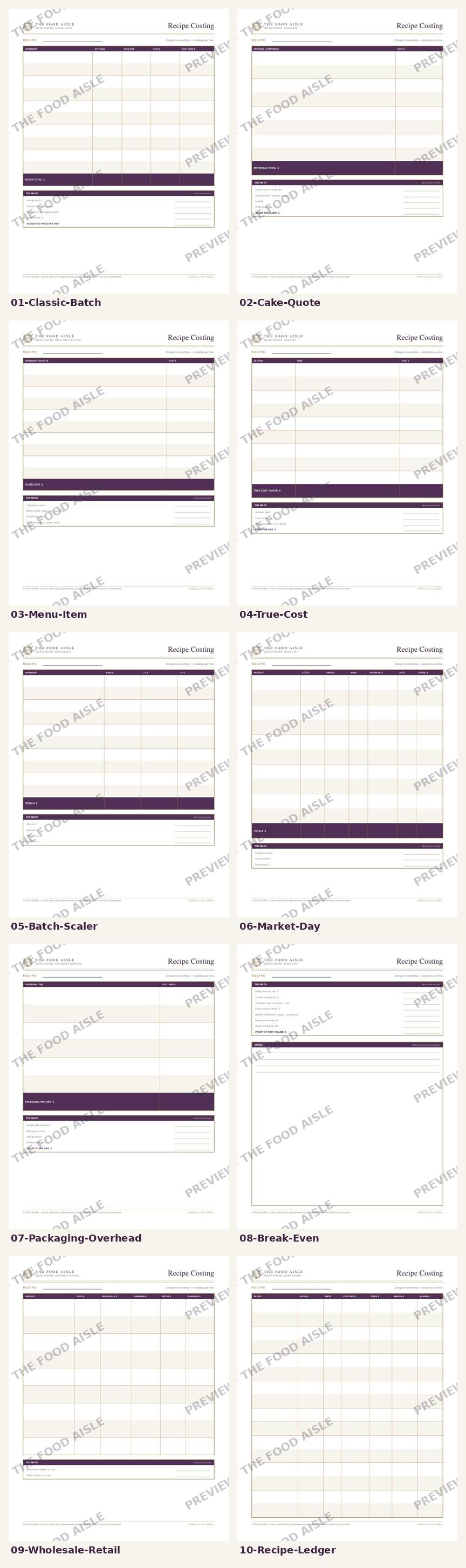 Recipe Costing & Pricing Calculator
Price each product so every sale actually pays you.
See it in the shop →
Recipe Costing & Pricing Calculator
Price each product so every sale actually pays you.
See it in the shop →
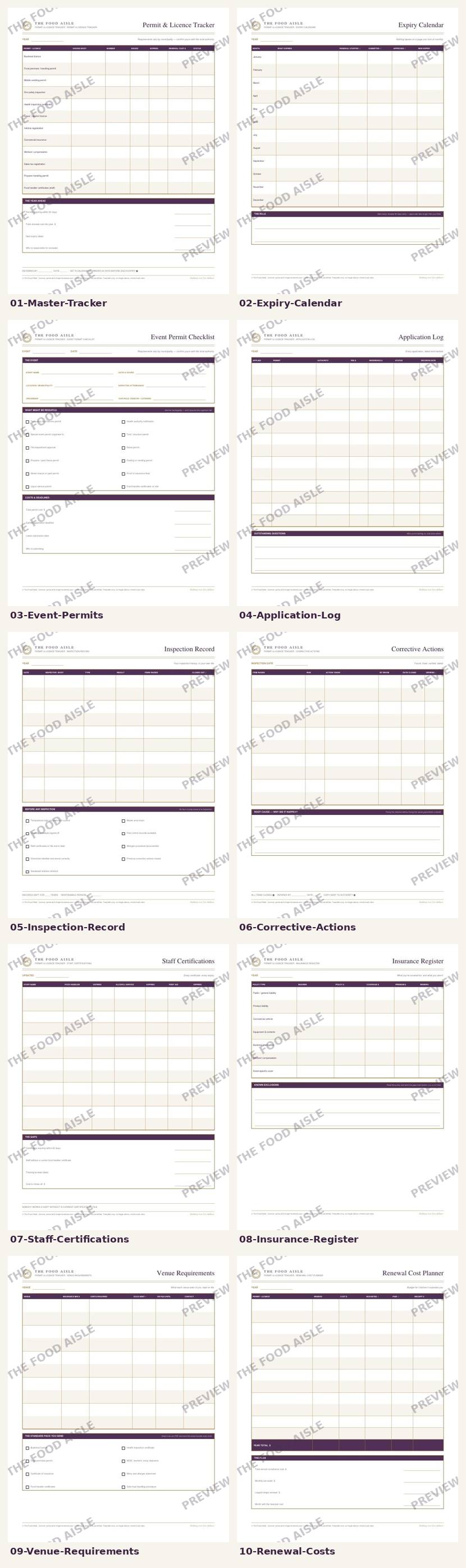 Permit & License Tracker
Track your city licence, development permit and renewals.
See it in the shop →
Permit & License Tracker
Track your city licence, development permit and renewals.
See it in the shop →
Official sources
Last reviewed October 1, 2026. This is a plain-language summary, not legal advice. Rules change, so confirm with your health authority and your city before you start selling.