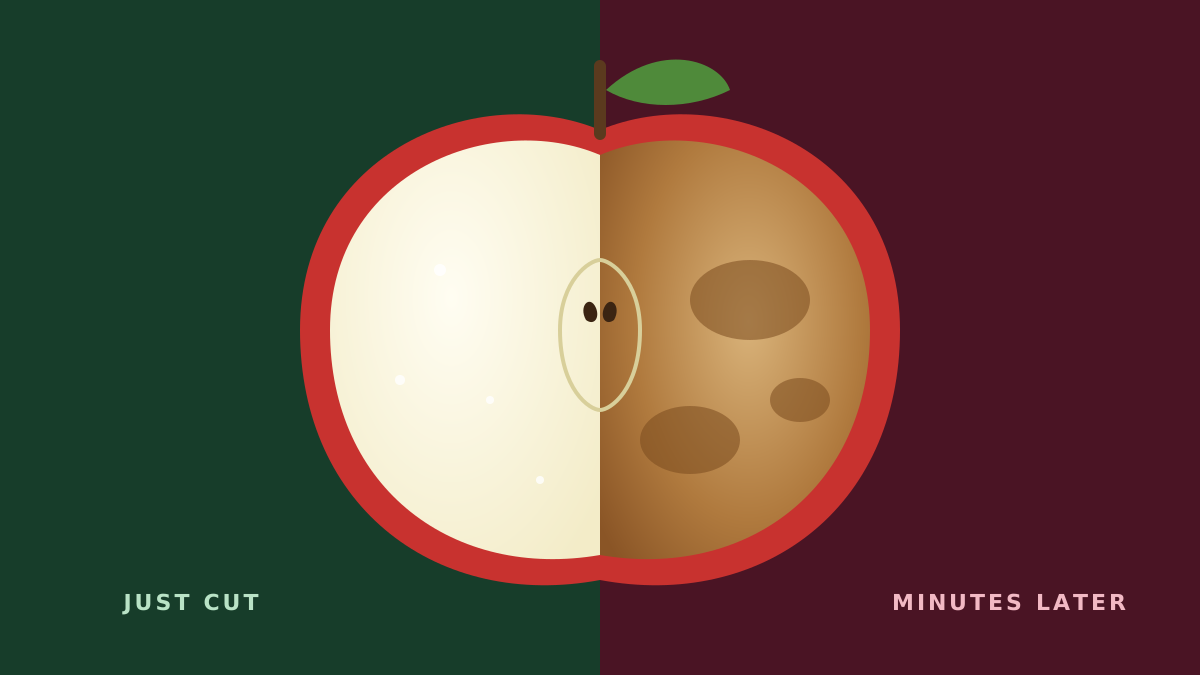
The moment you cut an apple, a chemical reaction begins.
You slice an apple. For a moment, everything looks perfect.
Then you walk away, return a few minutes later, and notice something strange.
The beautiful white flesh has started turning brown.
Did the apple suddenly become old? Did it spoil? Did something contaminate it?
Not quite.
What you're witnessing is one of the most fascinating chemical reactions in everyday food: enzymatic browning.
And it begins with a microscopic disruption inside the fruit.
01The moment oxygen enters
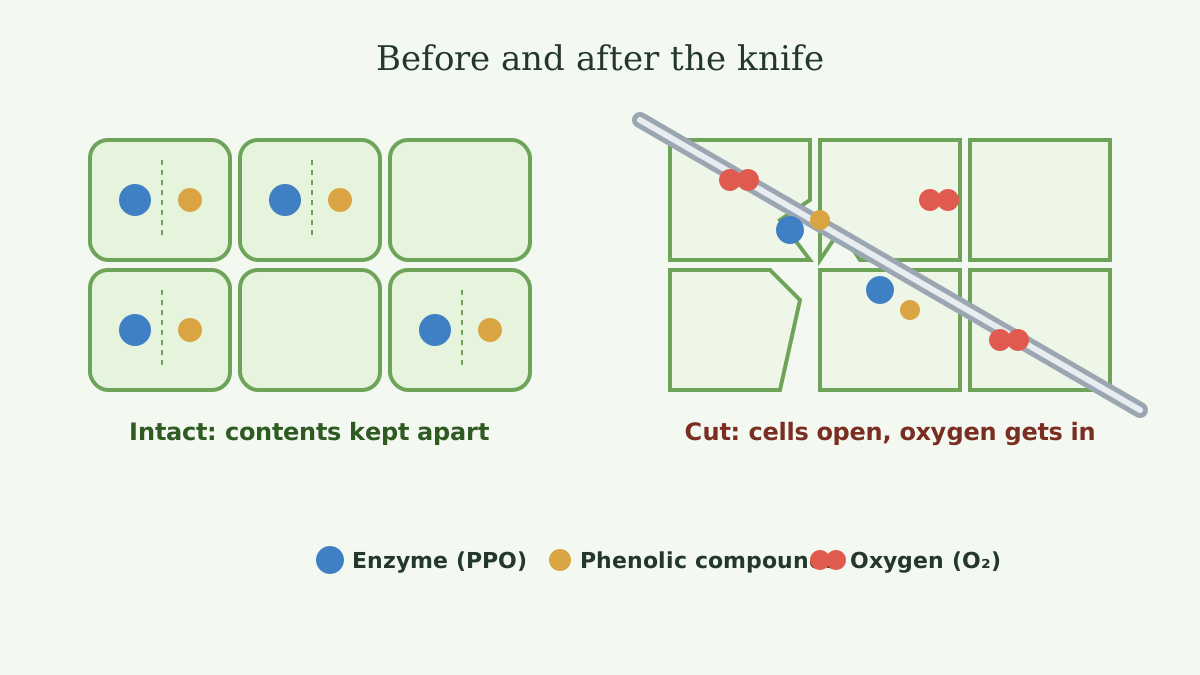
An apple is made up of millions of tiny plant cells.
Inside these cells are different compounds, enzymes and structures that normally remain separated.
When you cut an apple, you damage these cells.
Their contents come into contact with oxygen from the surrounding air.
This creates the conditions for an enzyme-driven chemical reaction.
02Meet the invisible culprit: PPO
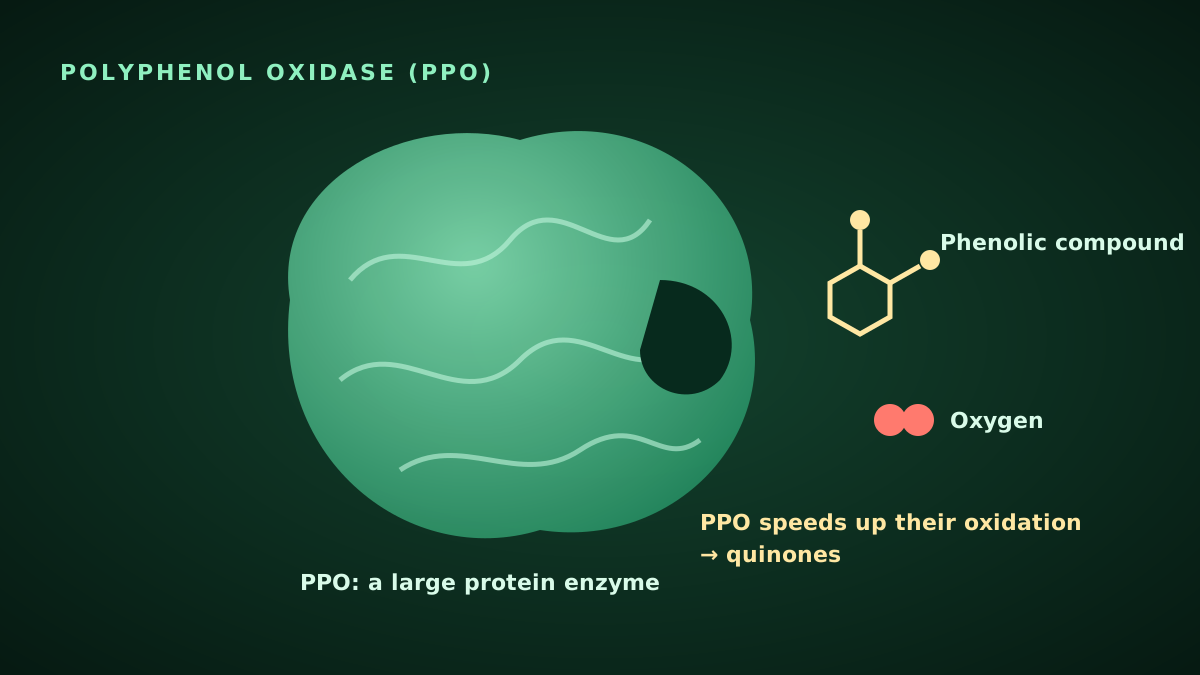
Meet polyphenol oxidase, commonly abbreviated as PPO.
This enzyme plays a major role in enzymatic browning in many fruits and vegetables.
When apple tissue is damaged, PPO can interact with naturally occurring phenolic compounds in the presence of oxygen.
It catalyses their oxidation, producing reactive compounds called quinones.
These quinones can then undergo further reactions, eventually forming brown-coloured pigments.
In simple terms:
Enzyme + oxygen + natural plant compounds = browning reactions.
And suddenly, your white apple isn't quite so white anymore.
03Where does the brown colour come from?
Here's where the chemistry becomes especially interesting.
The brown colour isn't simply oxygen staining the apple.
The process involves several chemical steps.
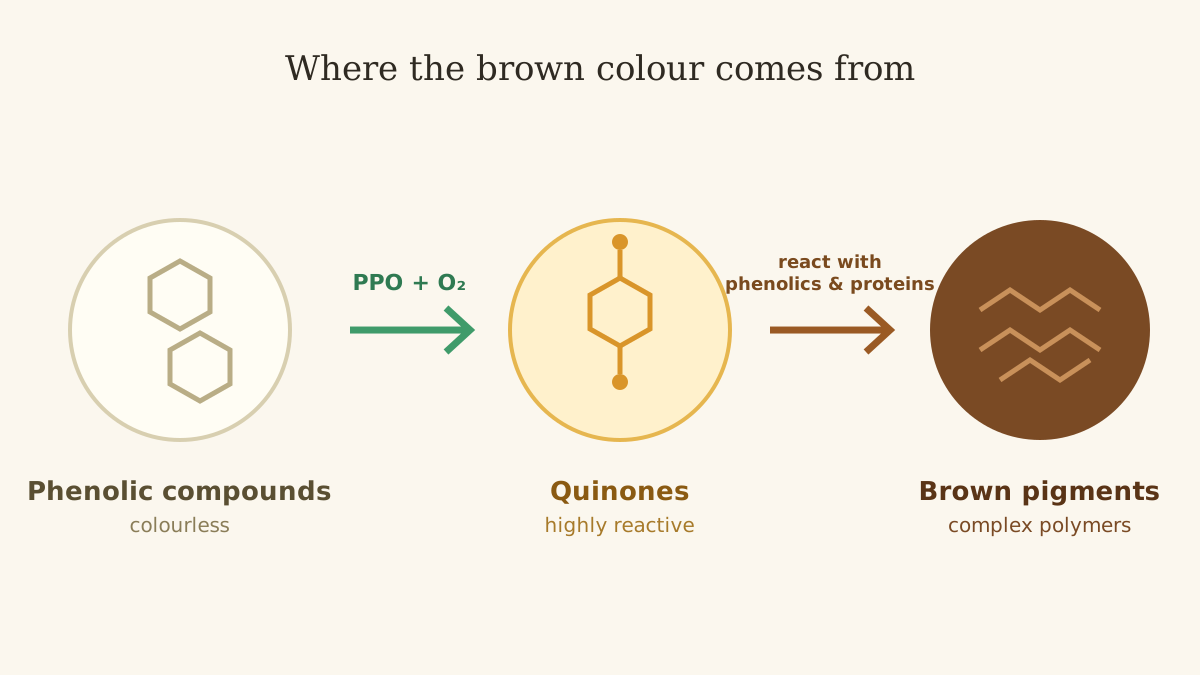
First, PPO helps oxidize certain phenolic compounds into quinones.
These quinones are highly reactive.
They can react with other molecules, including phenolic compounds and proteins, eventually producing complex brown pigments.
This is why the exposed surface gradually changes colour.
The reaction can happen surprisingly quickly, depending on the apple variety, temperature, oxygen exposure and other conditions.
04Why does lemon juice stop the browning?
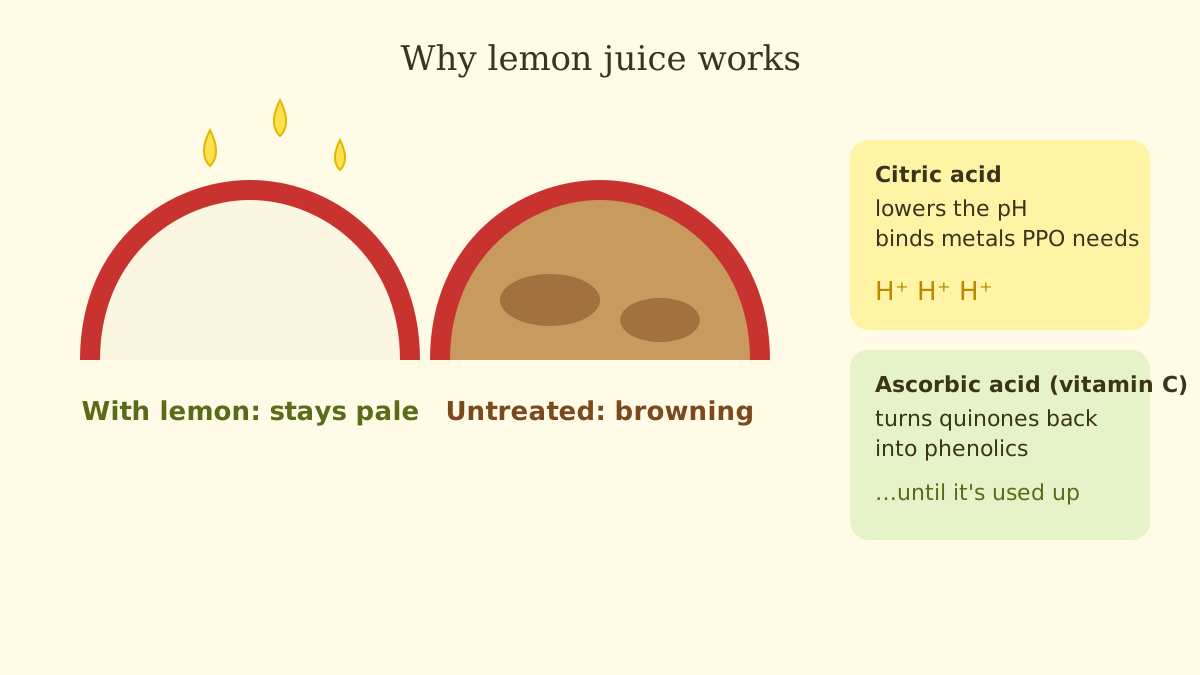
This is probably the most popular kitchen trick for preventing apple browning.
Squeeze a little lemon juice over freshly cut apple slices.
But why does it work?
Lemon juice contains citric acid and ascorbic acid (vitamin C).
They help slow browning through different mechanisms.
Citric acid
It lowers the pH of the apple surface, creating conditions that generally reduce PPO activity.
It can also bind certain metal ions involved in enzyme activity.
Ascorbic acid
This is particularly interesting.
Ascorbic acid acts as an antioxidant. It reduces the quinones produced during browning back into their original phenolic forms.
Once the ascorbic acid is used up, browning can begin again.
So lemon juice doesn't permanently stop every browning reaction.
It helps delay it.
05The salt water experiment
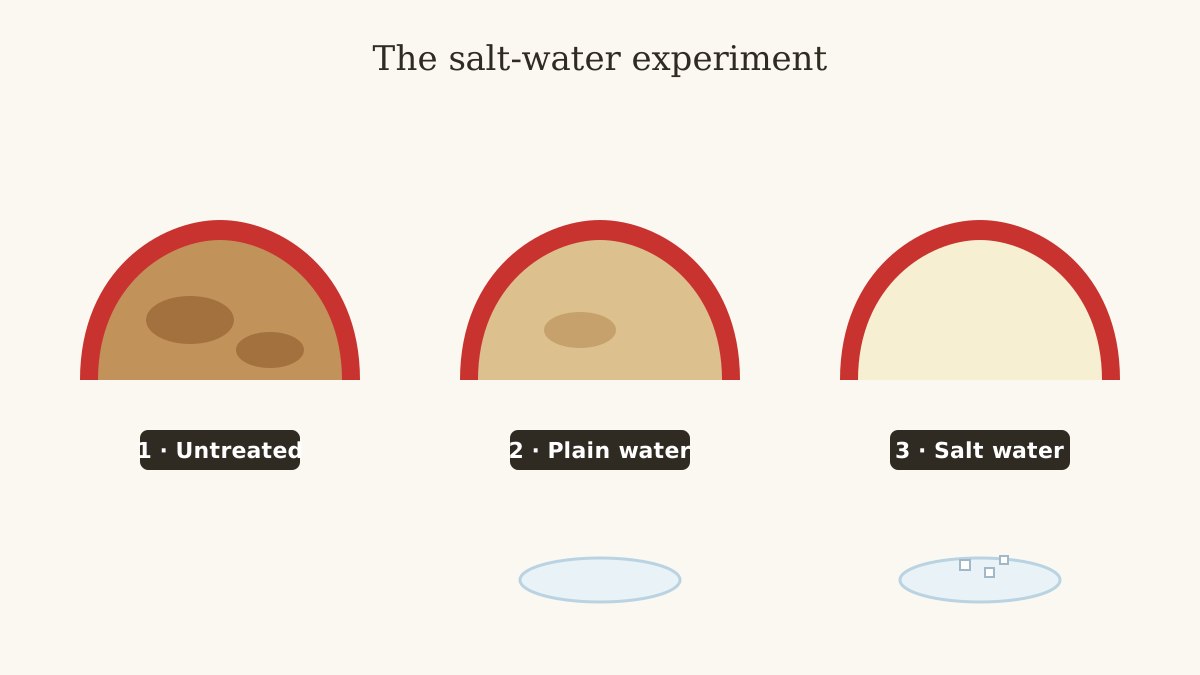
Lemon juice isn't the only way to slow down browning.
Salt water can also help.
A mild salt solution can reduce enzymatic browning through effects on enzyme activity and the chemical environment at the exposed surface.
However, the effectiveness depends on concentration, soaking time and the type of fruit.
06Can heat stop the reaction?
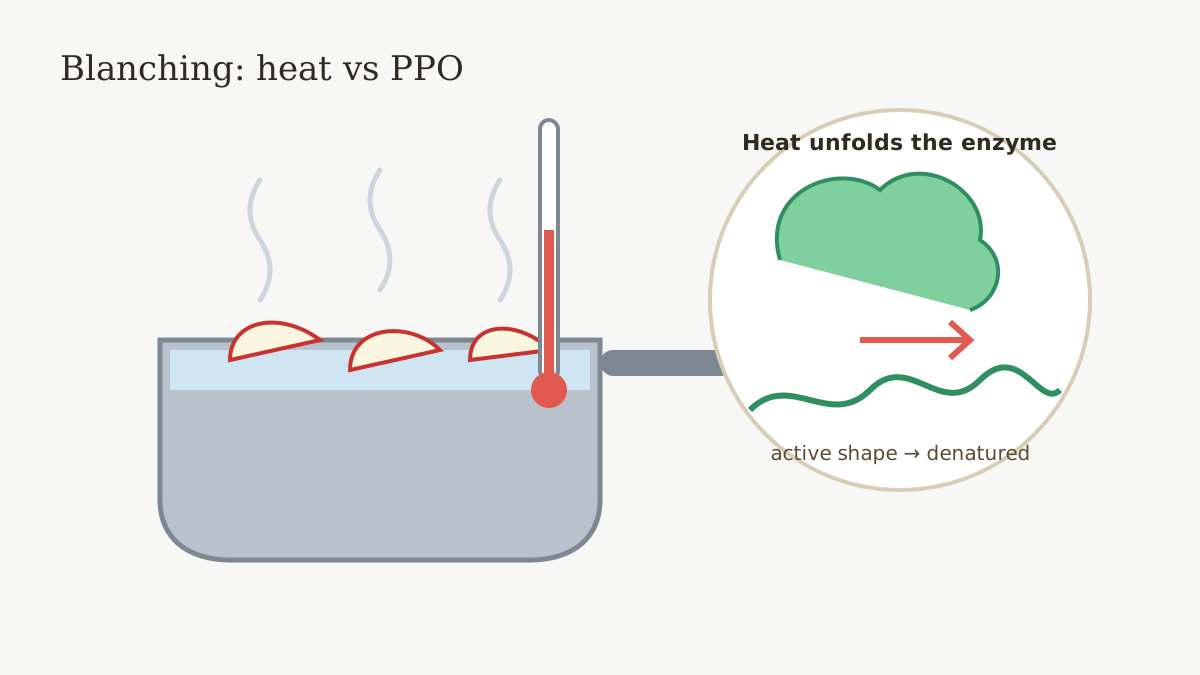
Yes, and food manufacturers use this principle.
PPO is an enzyme, and enzymes are proteins.
Exposure to sufficient heat can denature the enzyme, disrupting the structure needed for its activity.
This is one reason blanching is used before certain fruit and vegetable processing operations.
However, heat treatment needs to be carefully controlled.
Too much heat can soften the fruit, change its flavour and damage its texture.
For fresh apple slices, lemon juice or other suitable anti-browning treatments are generally more practical than cooking them.
07The food industry's secret: how do packaged apples stay white?
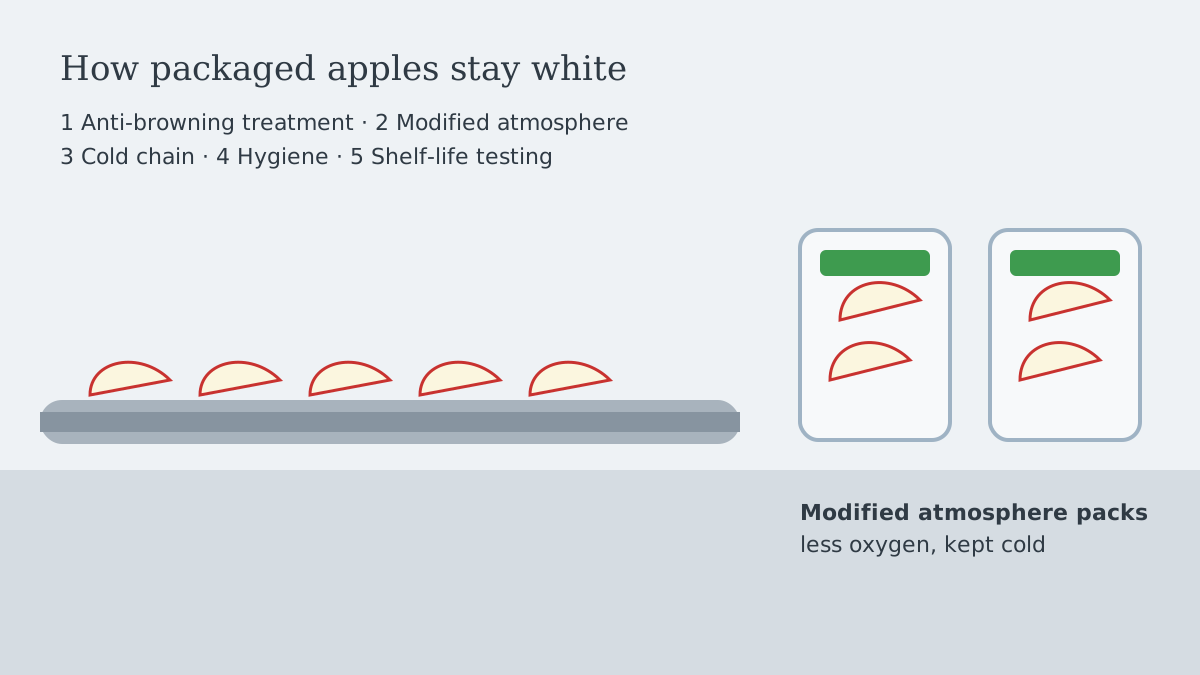
Have you ever wondered how packaged apple slices in supermarkets remain so pale and fresh-looking?
Food manufacturers don't rely on luck.
They use carefully designed processing and preservation methods.
Depending on the product, these may include:
- Anti-browning treatments. Approved formulations may contain ascorbic acid, citric acid or other suitable ingredients.
- Modified atmosphere packaging. The atmosphere inside packaging can be adjusted to slow certain deterioration processes, including oxidation.
- Temperature control. Refrigeration slows many chemical and biological reactions.
- Processing hygiene. Careful handling, sanitation and controlled processing help maintain product quality and safety.
- Shelf-life testing. Manufacturers evaluate colour, texture, flavour and microbiological quality throughout the intended storage period.
The objective is not simply to make apples look attractive.
It is to maintain quality while ensuring the product remains safe throughout its shelf life.
08The bigger picture: browning isn't always bad
Here's something worth remembering.
Not all browning is undesirable.
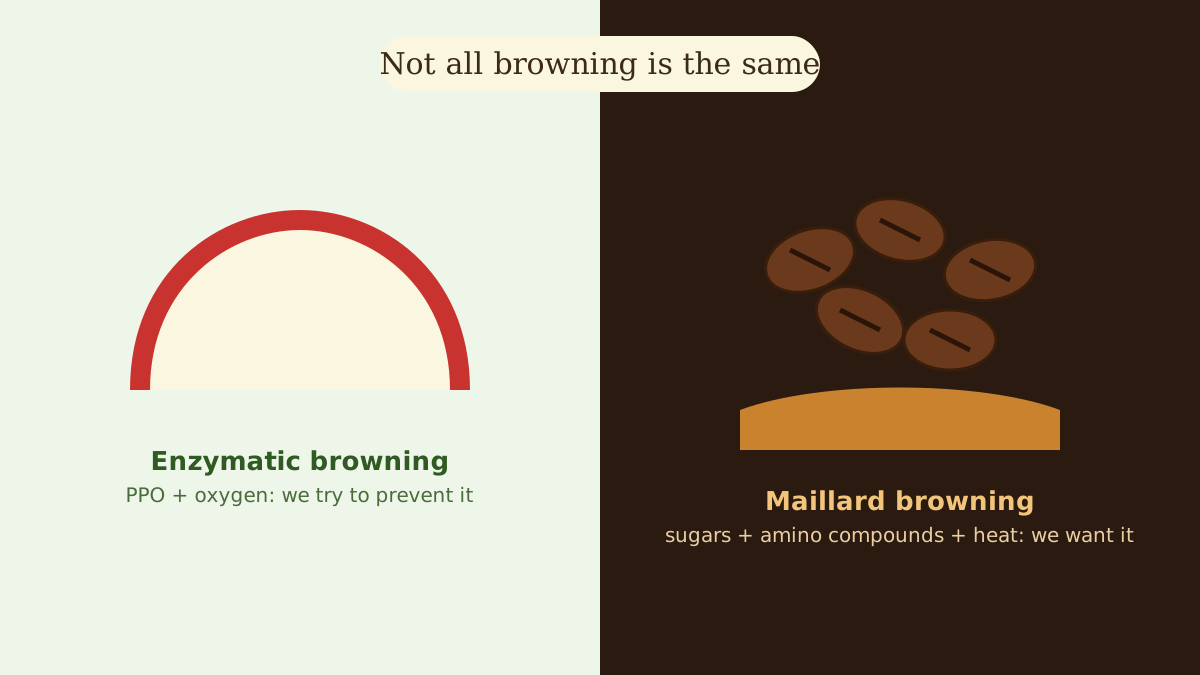
The enzymatic browning that makes a cut apple look less appealing is very different from the Maillard reaction responsible for the golden crust on bread.
Different chemical pathways produce different results.
Some browning reactions are deliberately encouraged because they create desirable flavours, aromas and colours.
Others need to be controlled to preserve the appearance and quality of fresh foods.
Food science isn't always about stopping chemical reactions.
Sometimes, it's about knowing exactly which reactions to encourage and which ones to prevent.
09The final reveal
The next time you cut an apple and watch its surface slowly turn brown, remember what is happening.
- You have damaged millions of tiny cells.
- Oxygen has entered.
- Enzymes have begun catalysing chemical reactions.
- Colourless compounds have transformed into brown pigments.
All within a piece of fruit sitting on your kitchen counter.
Something that looks like a simple change in colour is actually a fascinating demonstration of food chemistry.
Sometimes, the most extraordinary science happens in the most ordinary places.