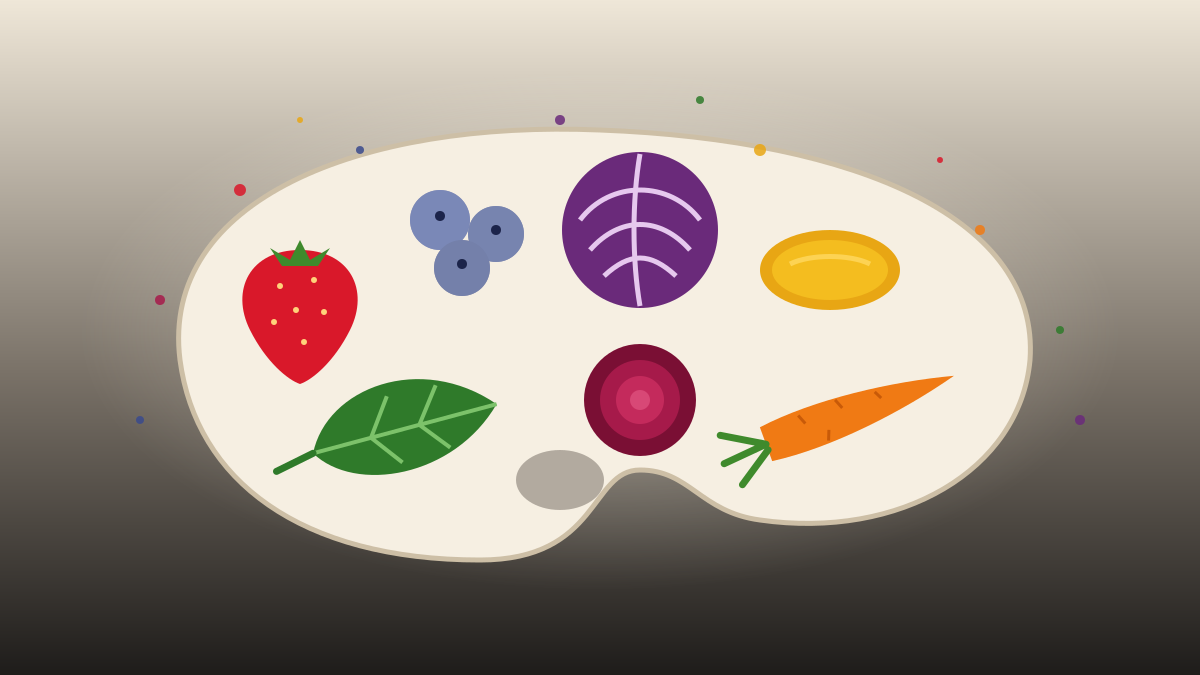
Your food is carrying its own paint.
Imagine cutting open a strawberry.
That unmistakable red colour isn't painted on. It isn't artificial. It comes from tiny chemical compounds inside the fruit.
Now squeeze a little lemon juice onto purple cabbage.
Something fascinating happens: its colour can shift towards pink or reddish-purple.
Add an alkaline ingredient, such as a little baking soda dissolved in water, and the colour may move towards blue or green.
No artificial colouring. No paint. Just chemistry.
Every colourful food contains molecules that interact with light in different ways. Some absorb certain wavelengths and reflect others. Some respond to acidity. Others are sensitive to heat, oxygen and light.
These natural molecules are called pigments.
And they are responsible for much more than making your food look beautiful.
They influence how we recognise food, how we perceive freshness and even how attractive a product appears before we taste it.
Welcome to the hidden chemistry of food colour.
01The molecules that paint your food
Food doesn't have one universal colour molecule
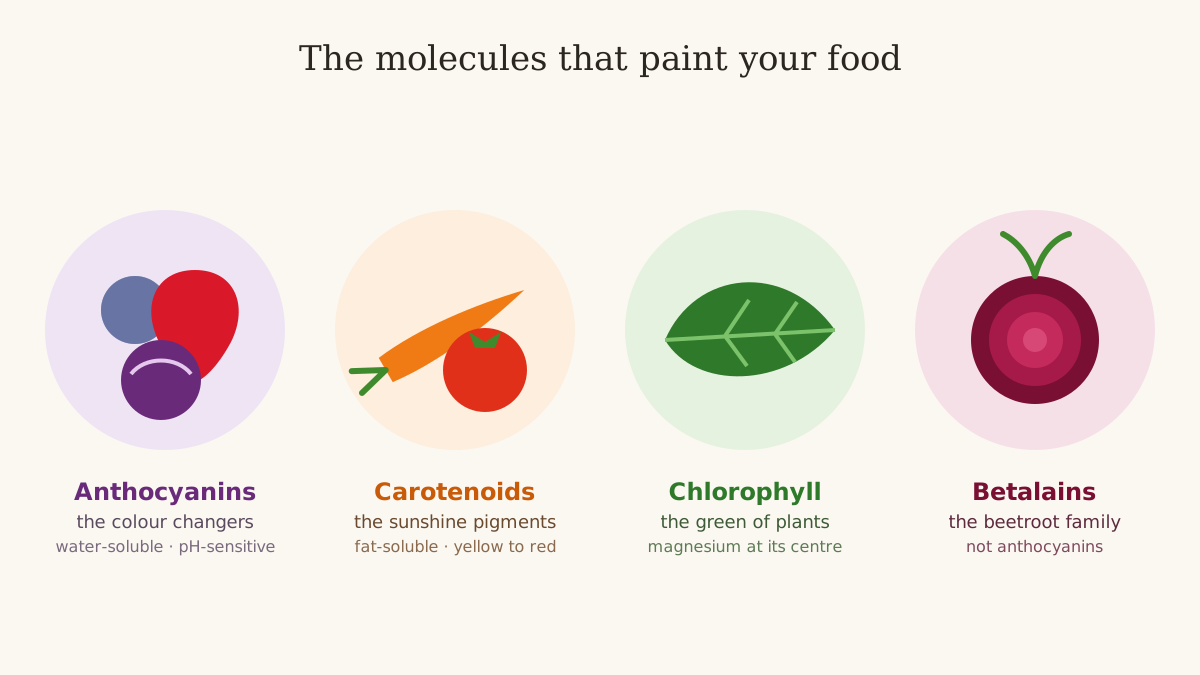
Different foods get their colours from different families of natural pigments.
Some are water-soluble. Others dissolve in fats. Some change their molecular structure when the environment becomes more acidic or alkaline.
Let's meet the main colour-producing families.
1. Anthocyanins: the colour changers
Found in strawberries, blueberries, purple cabbage, blackberries and many other red, blue and purple fruits and vegetables.
Anthocyanins are particularly interesting because their colour can change depending on the acidity of their environment.
2. Carotenoids: the sunshine pigments
These produce many yellow, orange and red colours.
Examples include:
- Beta-carotene in carrots.
- Lycopene in tomatoes and watermelon.
- Other carotenoids in peppers and leafy vegetables.
3. Chlorophyll: the green of plants
Chlorophyll is the pigment that gives many plants their green colour and plays a central role in photosynthesis, the process through which plants capture light energy.
4. Betalains: the beetroot family
The intense red-purple colour of beetroot comes largely from betalains, not anthocyanins.
These pigments are responsible for some of the most dramatic natural red and yellow colours in the plant kingdom.
Different molecules. Different structures. Different relationships with light.
And that's why food has such an extraordinary range of colours.
02Why does purple cabbage change colour?
The food that behaves like a chemistry experiment
Purple cabbage is one of the most fascinating ingredients in a kitchen.
Its colour comes largely from anthocyanins.
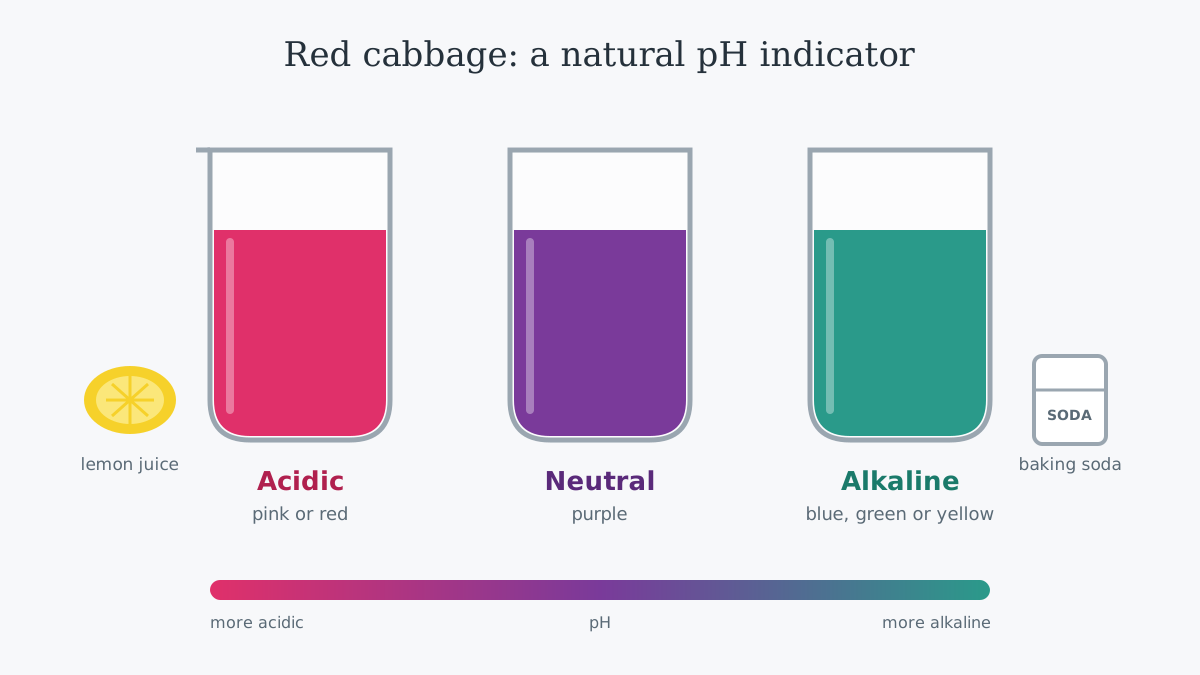
These pigments are sensitive to pH, which is a measure of how acidic or alkaline a solution is.
When the surrounding pH changes, anthocyanin molecules can shift between different chemical forms.
Those changes affect which wavelengths of light the molecules absorb, and therefore which colours we see.
In simplified terms:
- Acidic conditions: often red or pink.
- Near-neutral conditions: often purple.
- Alkaline conditions: can shift towards blue, green or yellow.
The exact colours depend on the cabbage variety, pigment concentration, temperature and other substances present.
This is why red cabbage extract can work as a natural pH indicator.
A simple vegetable has become a miniature chemistry laboratory.
03Why is a strawberry red but a blueberry blue?
Same pigment family. Different colours.
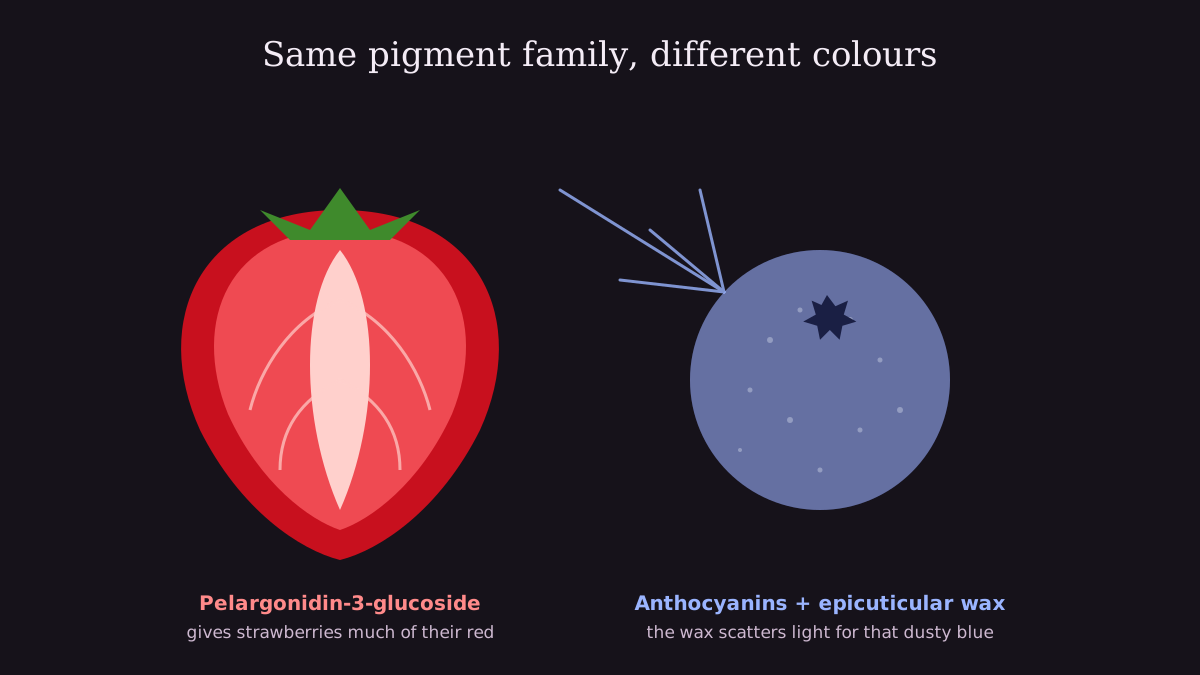
Strawberries and blueberries both contain anthocyanins, but they don't look alike.
Why?
Because colour is influenced by more than the name of a pigment.
Different anthocyanin molecules have different chemical structures. The pH inside the food, the presence of other compounds and the surrounding cellular environment also influence the colour we see.
Strawberries get much of their red colour from an anthocyanin called pelargonidin-3-glucoside.
Blueberries contain a mixture of anthocyanins that contribute to their dark red-purple pigments.
But there's another interesting detail.
The blue appearance of many blueberries is partly caused by a thin, natural wax coating on their skin, known as the epicuticular wax.
This coating scatters light and creates the characteristic dusty blue appearance.
So the next time you see a blueberry, remember: its colour is not simply the result of blue pigment.
It's a combination of pigment chemistry and the way light interacts with its surface.
04The other colours hiding in your food
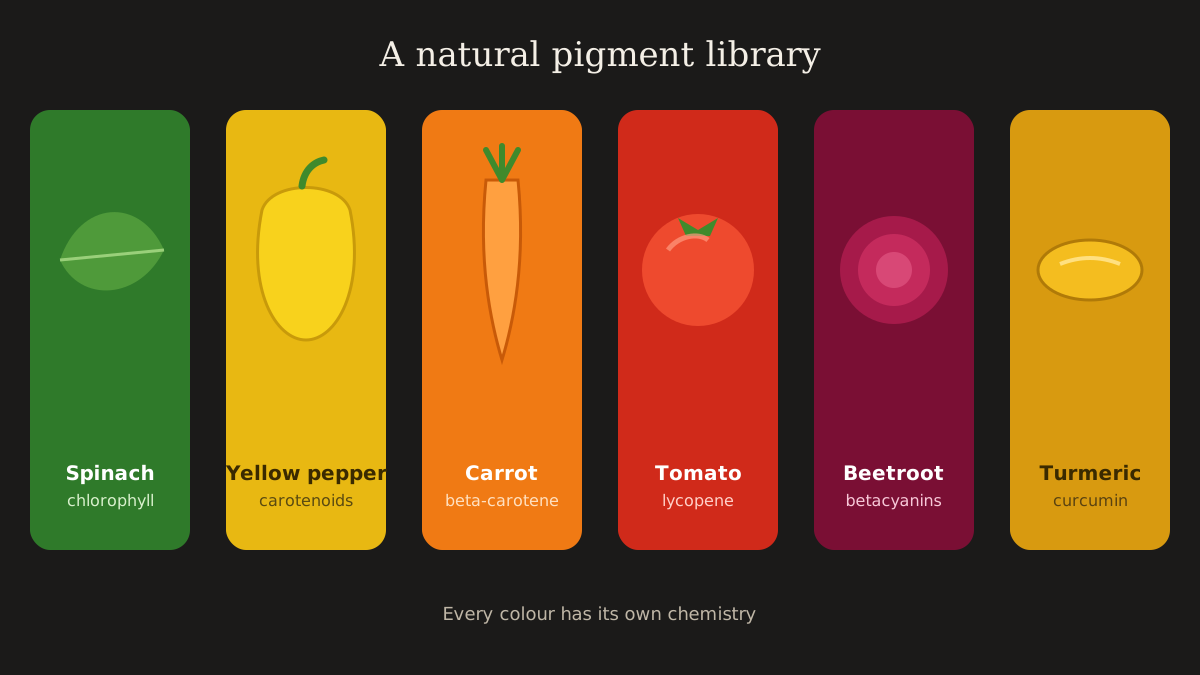
From green leaves to golden carrots
Not all food pigments behave like anthocyanins.
Some are much less sensitive to pH changes, while others are especially vulnerable to heat, oxygen or light.
The orange of carrots
Carrots are rich in beta-carotene, a carotenoid.
Our bodies can convert some beta-carotene into vitamin A, which supports normal vision and immune function.
The red of tomatoes
Tomatoes contain lycopene, another carotenoid.
It is responsible for much of their characteristic red colour.
The green of spinach
Spinach gets its green colour from chlorophyll.
Chlorophyll contains a magnesium atom at the centre of its molecular structure.
The deep red of beetroot
Beetroot gets its intense colour from betalains, especially red-purple betacyanins.
These pigments belong to a different chemical family from anthocyanins.
Food is essentially a natural pigment library.
And every colour has its own chemistry.
05Why green vegetables turn olive when cooked
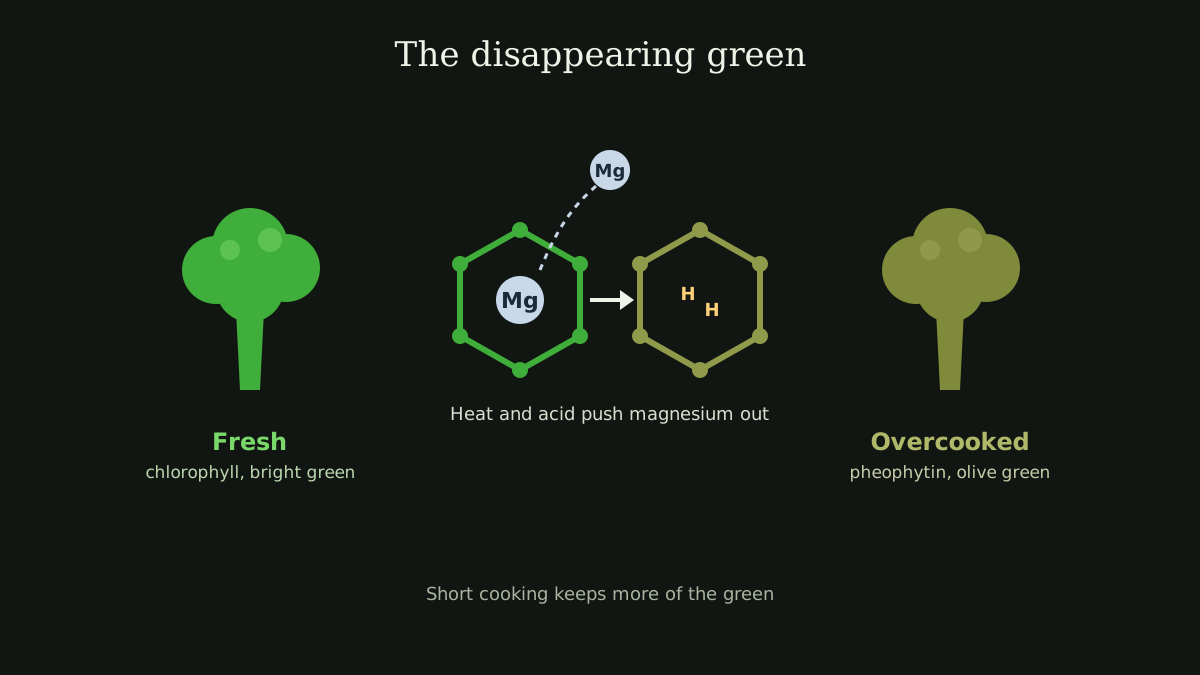
The disappearing green
Have you ever cooked broccoli or spinach and noticed that its beautiful green colour slowly becomes dull?
There is a chemical explanation.
Chlorophyll contains magnesium at the centre of its structure.
During cooking, heat can damage plant cells and affect the chemical environment inside them. Acids released from the food, or present in the cooking water, can promote the loss of magnesium from chlorophyll.
This produces compounds called pheophytins, which have a more olive-green colour.
The longer the food is cooked, the more noticeable these changes can become.
That's one reason overcooked green vegetables often look less vibrant.
06Colour is a food quality signal
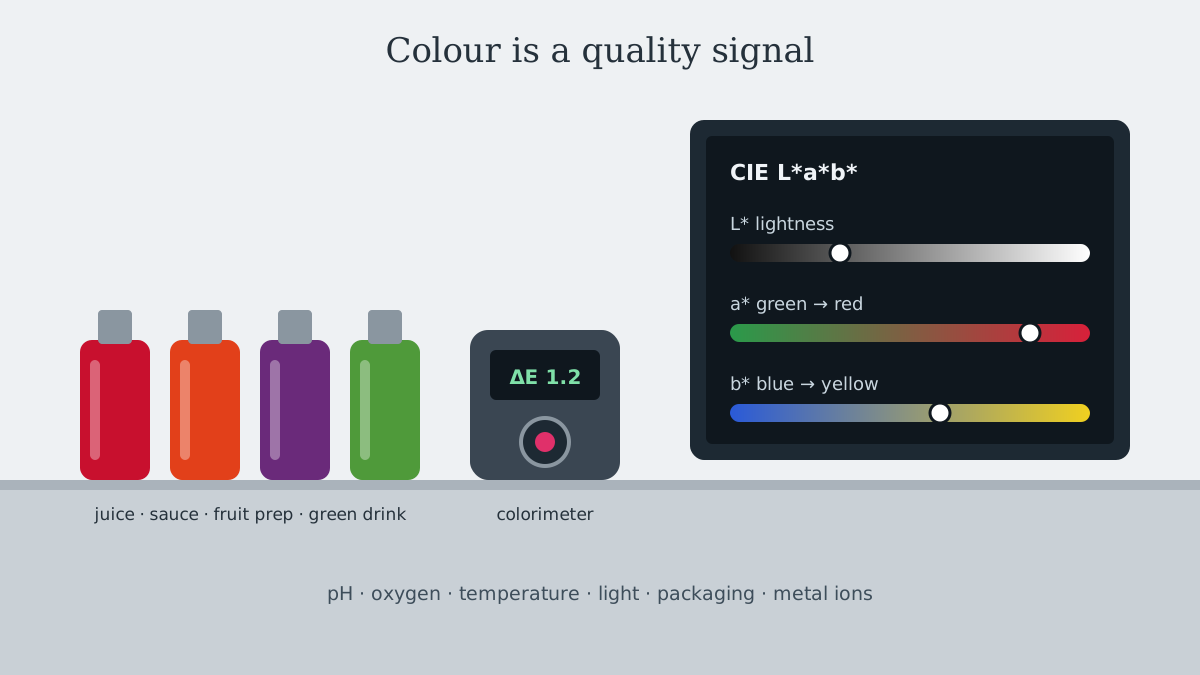
Why food manufacturers care about colour
In food manufacturing, colour is not just an aesthetic decision.
It is an important quality attribute.
Imagine buying a strawberry yoghurt that looks greyish, a tomato sauce that has turned brown, or a green beverage that has lost its vibrant appearance.
Even if the product is still safe to consume, a noticeable colour change may affect consumer confidence.
Food manufacturers therefore need to understand and control pigment stability.
Some of the key factors include:
- pH. The acidity of a product can strongly influence anthocyanin colour. This is particularly important in fruit beverages, jams, sauces and other products containing anthocyanins.
- Oxygen. Oxygen can contribute to pigment degradation and unwanted colour changes during processing and storage.
- Temperature. High temperatures and prolonged heating can damage certain natural pigments.
- Light. Exposure to light can accelerate the degradation of some pigments.
- Packaging. Packaging can help protect products from light and oxygen, depending on the material and design.
- Metal ions. Certain metal ions can interact with pigments and affect colour stability.
Food scientists may use pH measurements, controlled processing conditions, packaging trials and instrumental colour measurements to monitor these changes.
One commonly used colour measurement system is CIE L*a*b*.
It describes colour using three dimensions:
- L*: lightness, from dark to light.
- a*: green to red.
- b*: blue to yellow.
This allows manufacturers to measure colour changes objectively instead of relying only on visual judgement.
Because in food production, even a small colour difference can matter.
07The kitchen experiment: make your own colour lab
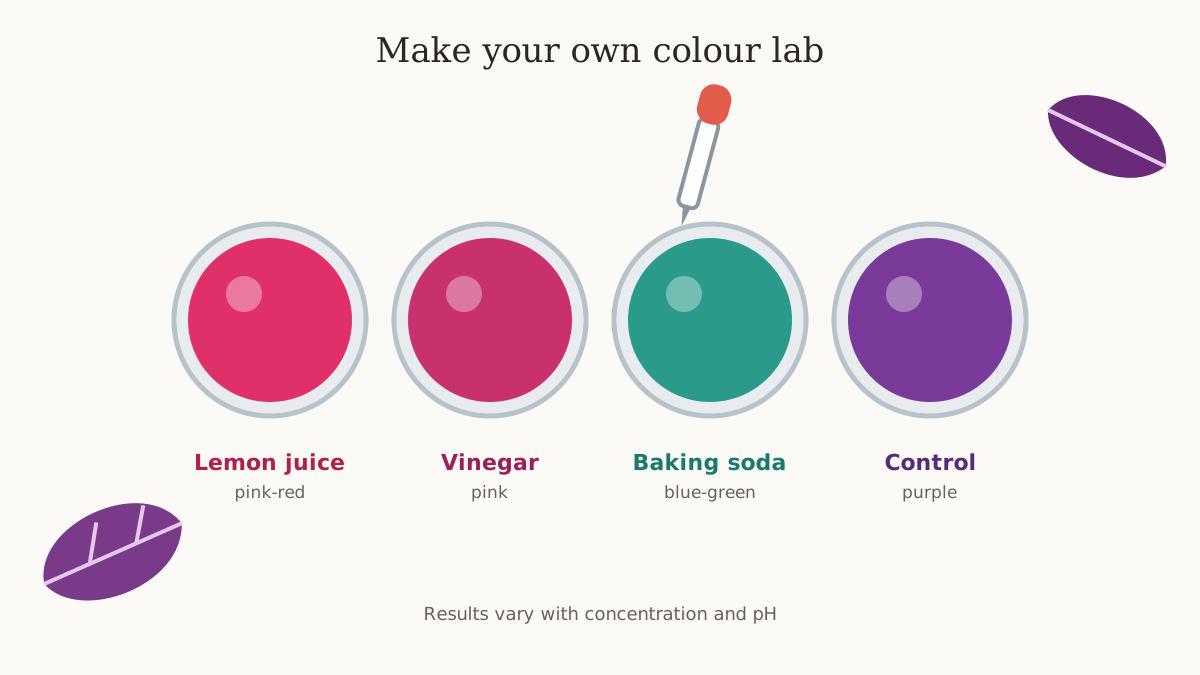
Can you change the colour of food yourself?
Now it's your turn to experiment.
You don't need a laboratory. You only need a little red cabbage.
The science behind it
The change occurs because anthocyanins respond to changes in pH.
You're observing a chemical transformation that food scientists use to understand natural pigment behaviour.
08The bigger picture: can we replace artificial colours with nature?
The future of food colour
Consumers increasingly notice the ingredients in their food, including the colour additives used in finished products.
This has encouraged food developers to explore natural colouring ingredients from fruits, vegetables, spices and other botanical sources.
But replacing a synthetic colour with a natural pigment isn't always straightforward.
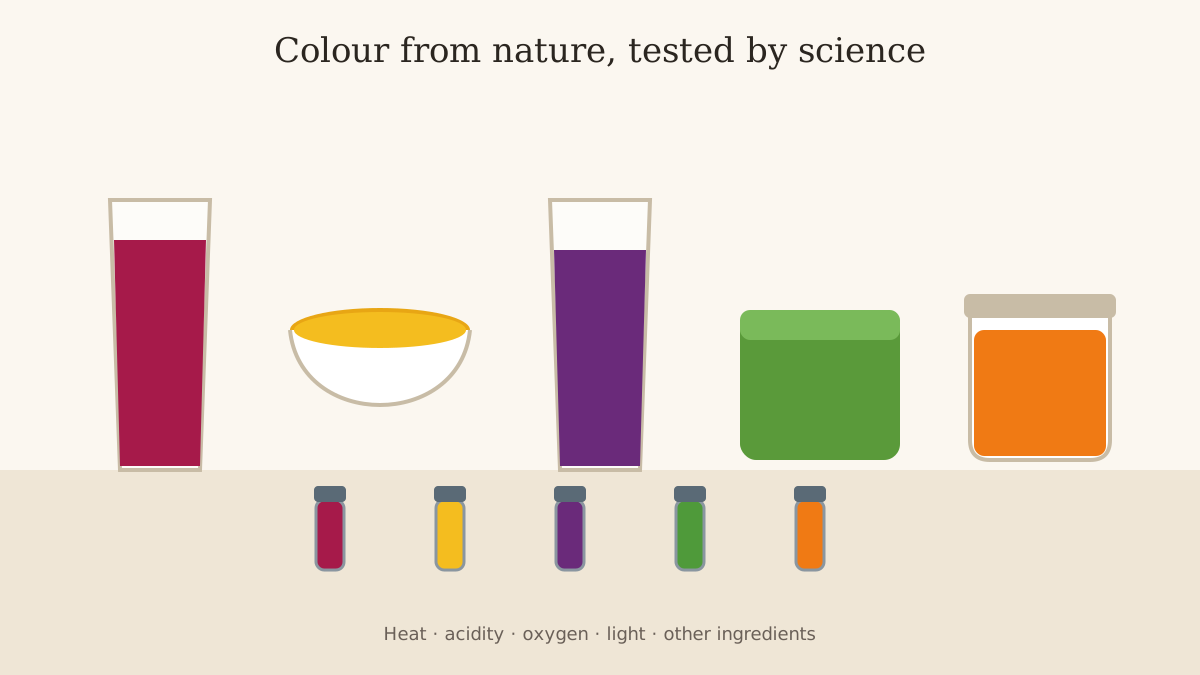
Natural pigments can be sensitive to:
- Heat during processing.
- Acidity and alkalinity.
- Exposure to oxygen.
- Light during storage.
- Interactions with other ingredients.
A natural colour that looks beautiful in a laboratory sample may behave very differently in a finished beverage, sauce or confectionery product.
Food scientists therefore need to test not only the initial colour, but also how it behaves throughout the product's shelf life.
The challenge is to create foods that look appealing while maintaining colour stability, product quality and safety.
Nature gives us the pigments.
Food science helps us understand how to use them.
09Food is chemistry you can see
The next time you see colour, look closer.
The red of a strawberry, the green of spinach and the purple of cabbage are not random decorations.
They are the visible result of molecular structures, chemical reactions and interactions with light.
Some pigments change when acidity changes. Others transform when exposed to heat. Some are protected by natural coatings, while others need careful processing and packaging to maintain their colour.
Food colour is more than appearance.
It is a story written in chemistry.
And sometimes, the simplest way to understand science is to squeeze a little lemon juice onto a piece of purple cabbage.