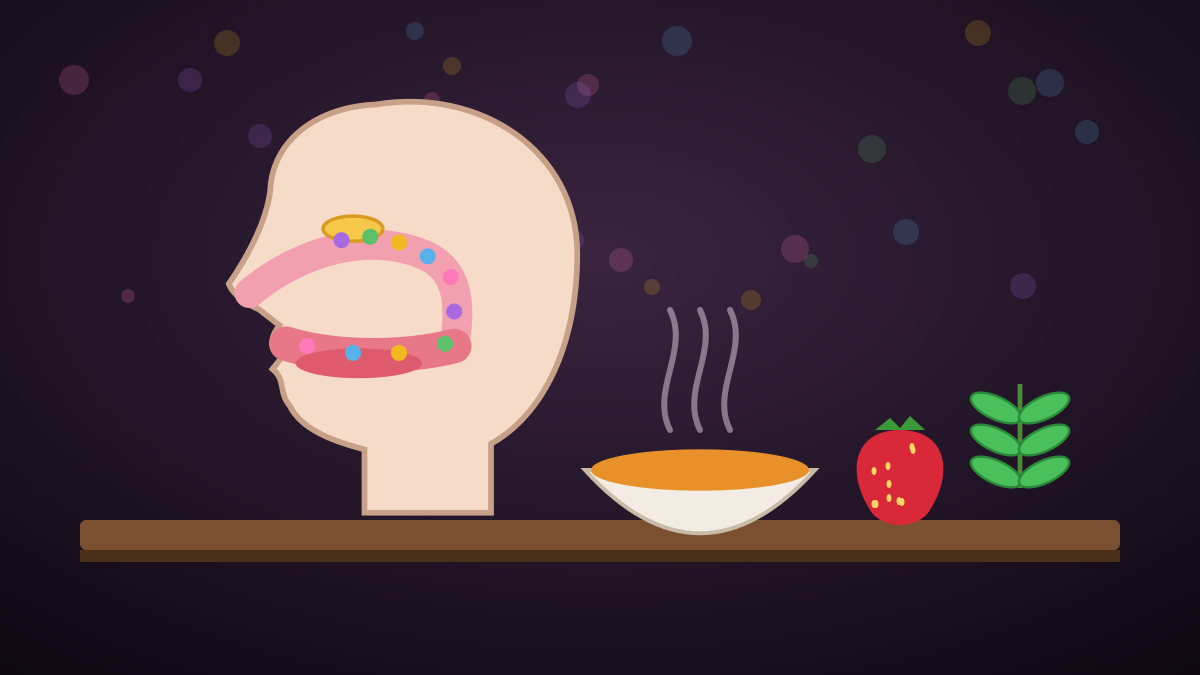
Why does your favourite food suddenly taste boring?
Imagine eating your favourite meal when you have a cold.
The food looks exactly the same. You use the same ingredients, the same recipe and the same seasoning.
But something feels different.
Your favourite curry seems less flavourful. Coffee loses its aroma. Even chocolate doesn't taste quite as satisfying.
Why?
The surprising answer is that much of what we call taste actually comes from our sense of smell.
Taste and smell work together to create the complete flavour experience.
Let's explore the science behind it.
01Taste and flavour are not the same thing
We often use the words taste and flavour interchangeably, but scientifically, they are different.
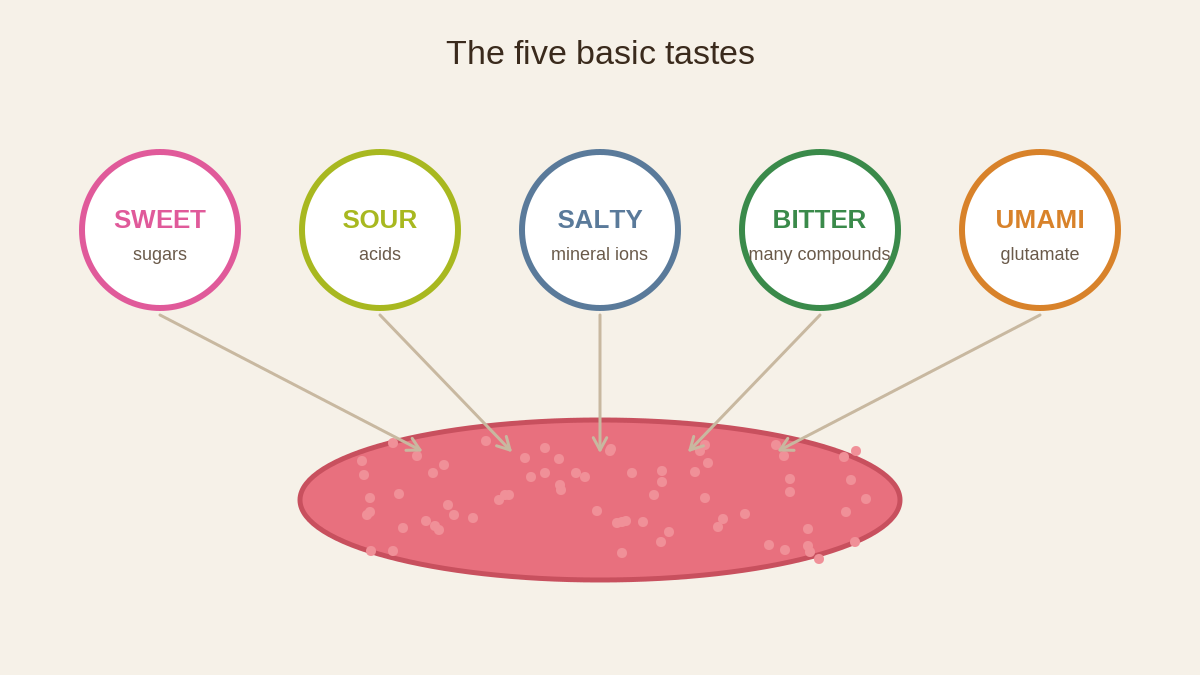
Taste is detected by specialised receptor cells, mainly located in taste buds on the tongue and other areas of the mouth.
The five commonly recognised basic tastes are:
- Sweet
- Sour
- Salty
- Bitter
- Umami
Flavour is much more complex.
It combines taste, smell, texture, temperature and other sensory sensations.
For example, when you eat a strawberry, your tongue detects sweetness and acidity.
But the distinctive strawberry aroma comes largely from volatile compounds detected by your nose.
Together, these sensations create the flavour we recognise.
02Why does smell influence taste so much?
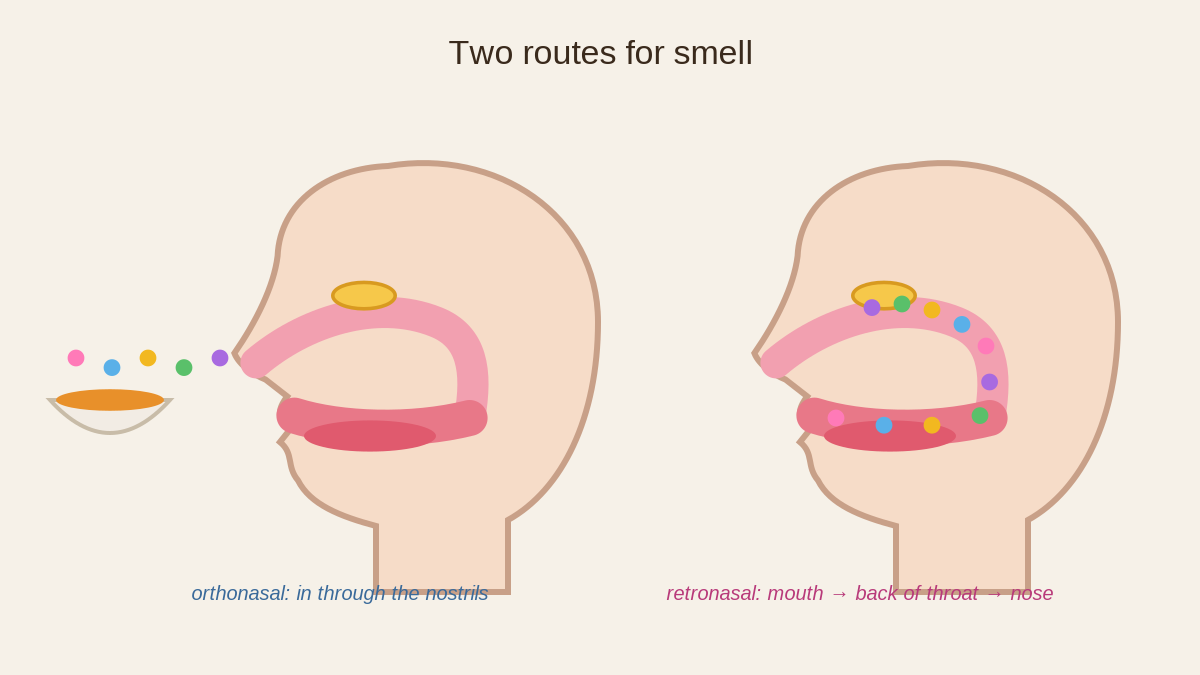
Your nose detects airborne chemical compounds called volatile molecules.
When you chew food, these compounds travel from the back of your mouth into your nasal cavity.
This process is called retronasal olfaction.
It is different from smelling food directly through your nostrils, which is called orthonasal olfaction.
Retronasal smell is particularly important when experiencing food.
It helps us recognise the difference between foods that may have similar basic tastes.
For example, vanilla and strawberry can both be sweet, but their aromas make them taste completely different.
03What happens when you have a blocked nose?
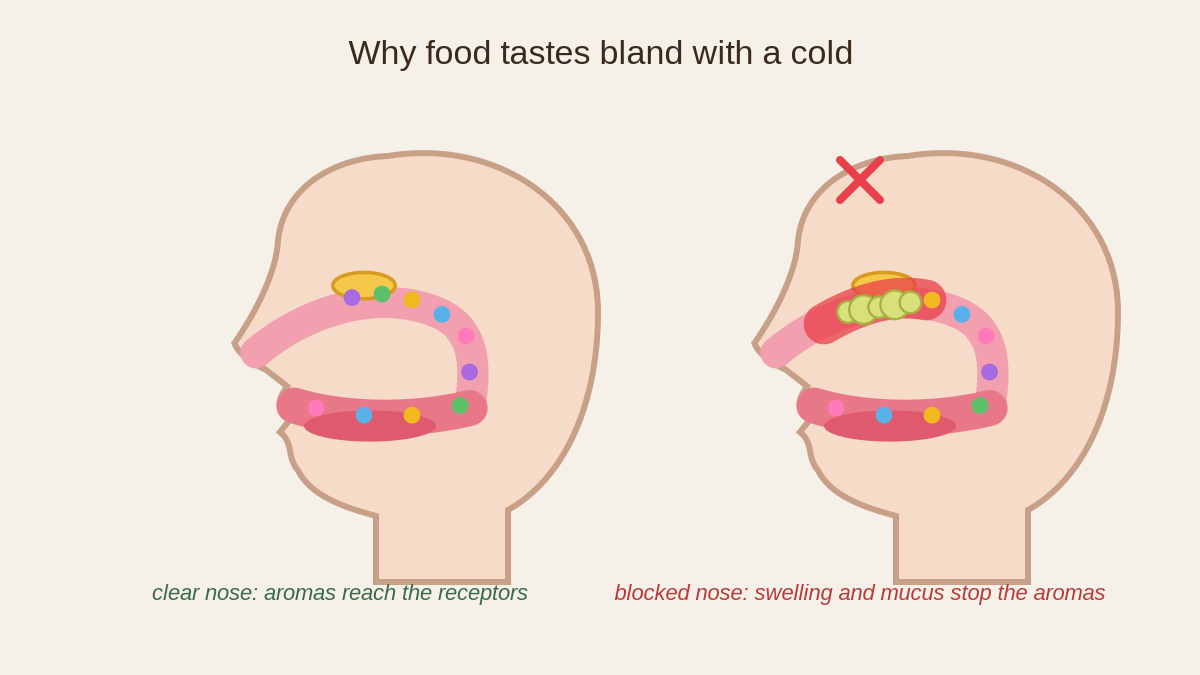
When you have a cold, your nasal passages may become inflamed and congested.
This can interfere with the movement of air and volatile aroma molecules through your nose.
As a result, fewer aroma compounds reach the olfactory receptors.
Your tongue may still detect sweetness, saltiness, sourness, bitterness and umami.
But the overall flavour experience becomes weaker because an important part of the sensory system is temporarily impaired.
This is why food often seems bland when you have a blocked nose.
04Why does texture still matter?
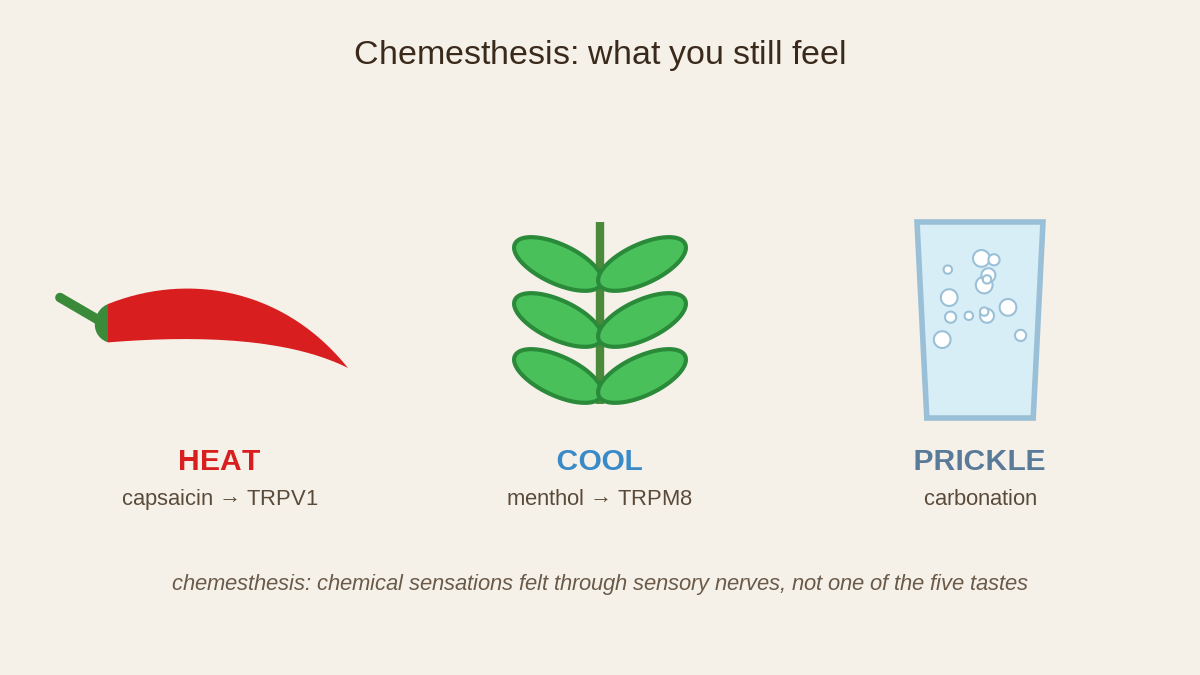
Even when your sense of smell is reduced, food doesn't become completely flavourless.
Your mouth detects many other sensations.
For example:
- Chilli creates a burning sensation through activation of sensory nerves.
- Mint produces a cooling sensation.
- Carbonated drinks create a prickling sensation.
- Crispy foods produce sounds and mechanical sensations.
- Creamy foods create a smooth mouthfeel.
These sensations are not all basic tastes.
They involve different sensory systems, including touch, temperature and chemical irritation.
This is why a spicy or crunchy meal may still feel interesting when you're congested.
05Why does food taste different as you get older?
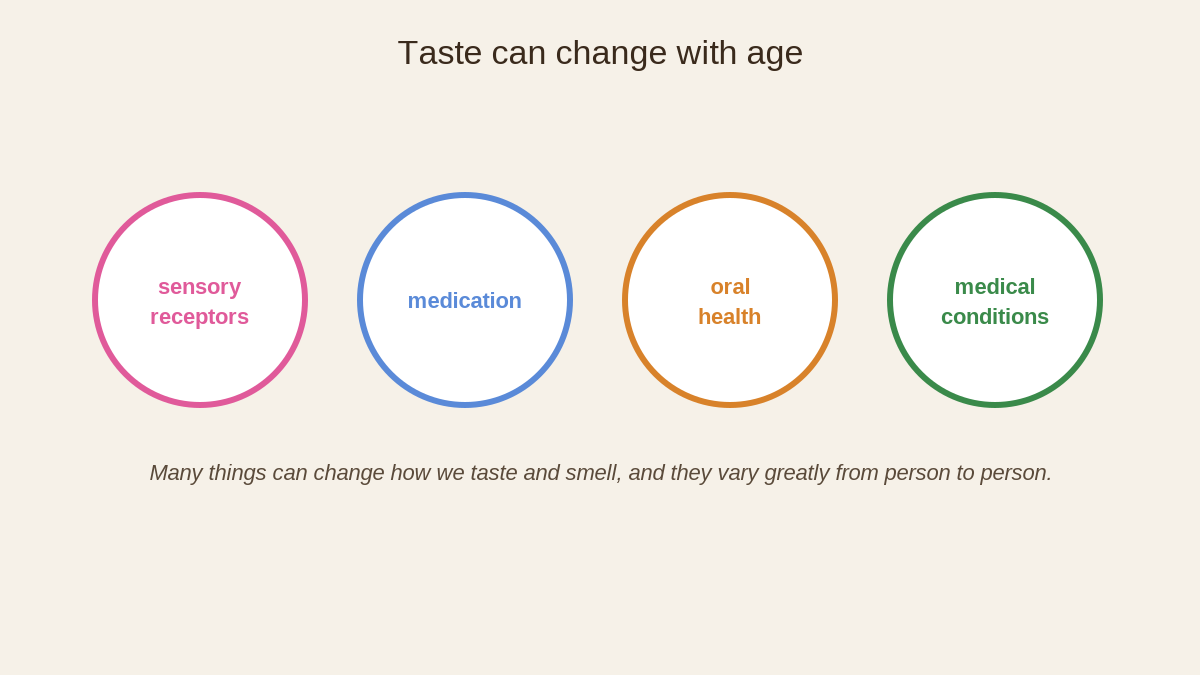
Smell and taste perception can change with age.
There are several possible reasons, including changes in sensory receptors, medication use, oral health and certain medical conditions.
Some people may become less sensitive to particular flavours or aromas.
This can influence food preferences and appetite.
However, these changes vary greatly from person to person.
06Why do chefs care about aroma?
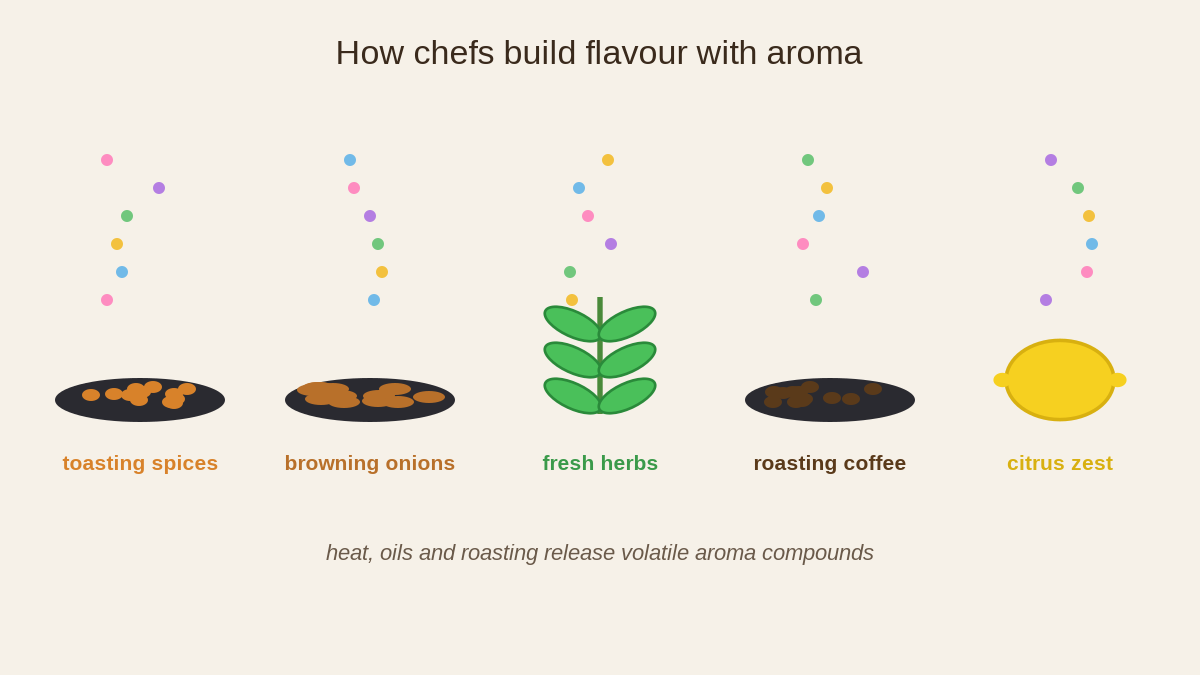
Professional chefs understand that flavour is not just about adding more salt or sugar.
They build flavour using ingredients that release aromatic compounds.
For example:
- Toasting spices releases aromatic molecules.
- Browning onions creates complex aroma compounds.
- Fresh herbs add volatile oils.
- Roasting coffee develops hundreds of flavour and aroma compounds.
- Citrus zest contributes aromatic oils.
This is why freshly ground spices can smell much stronger than spices that have been stored for a long time.
The chemistry of aroma is a major part of food development.
07A simple experiment: Can your nose change what you taste?
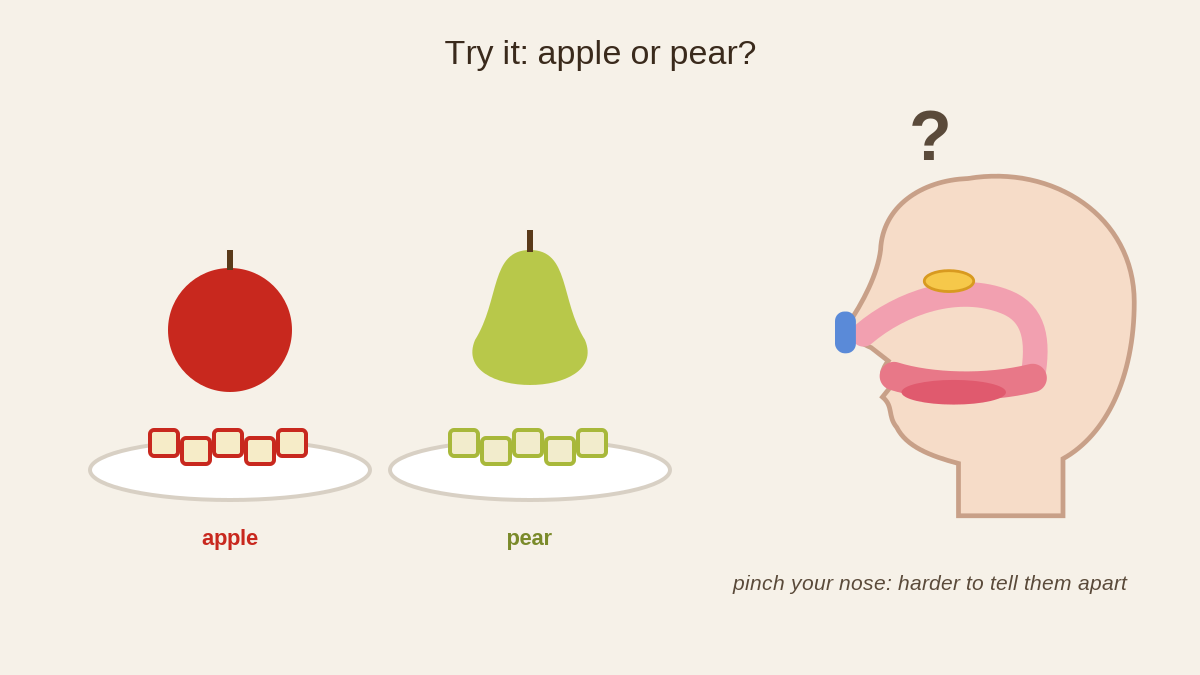
What to observe:
You may find it more difficult to distinguish the two fruits when your sense of smell is restricted.
When you release your nose, the aroma helps you recognise the flavour more clearly.
Never place food or objects inside your nose. Simply pinching the nostrils closed is sufficient for this demonstration.
08How the food industry uses flavour science
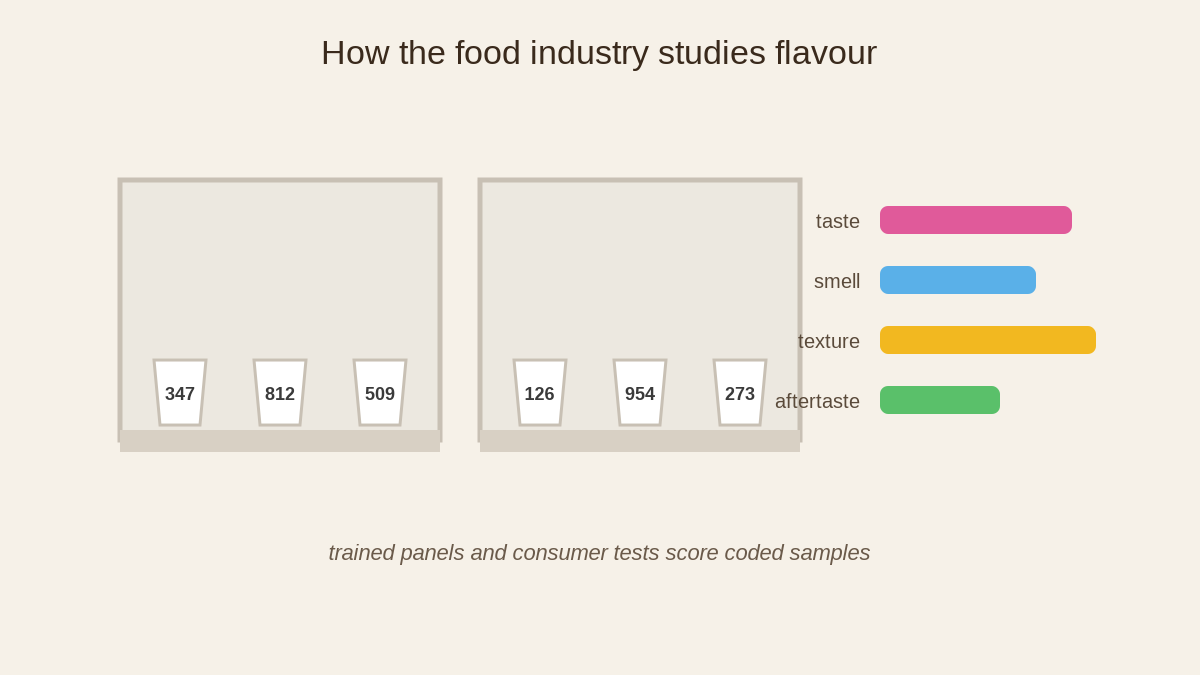
Food manufacturers use sensory science to understand how people experience food.
They may evaluate:
- Taste intensity
- Aroma
- Texture
- Aftertaste
- Mouthfeel
- Product acceptability
Trained sensory panels and consumer testing help companies develop products with consistent flavour.
Food scientists also study how processing affects volatile compounds.
Heating, drying, fermentation, freezing and packaging can all change the aroma profile of food.
This is particularly important in coffee, chocolate, beverages, dairy products and ready-to-eat meals.
09Conclusion
The next time food tastes bland during a cold, remember that your tongue may not be the problem.
Your sense of smell is an essential part of the flavour experience.
Taste detects basic sensations, smell contributes aroma, and your brain combines these signals to create what you recognise as flavour.
Food isn't just something you taste.
It's something you experience through multiple senses.