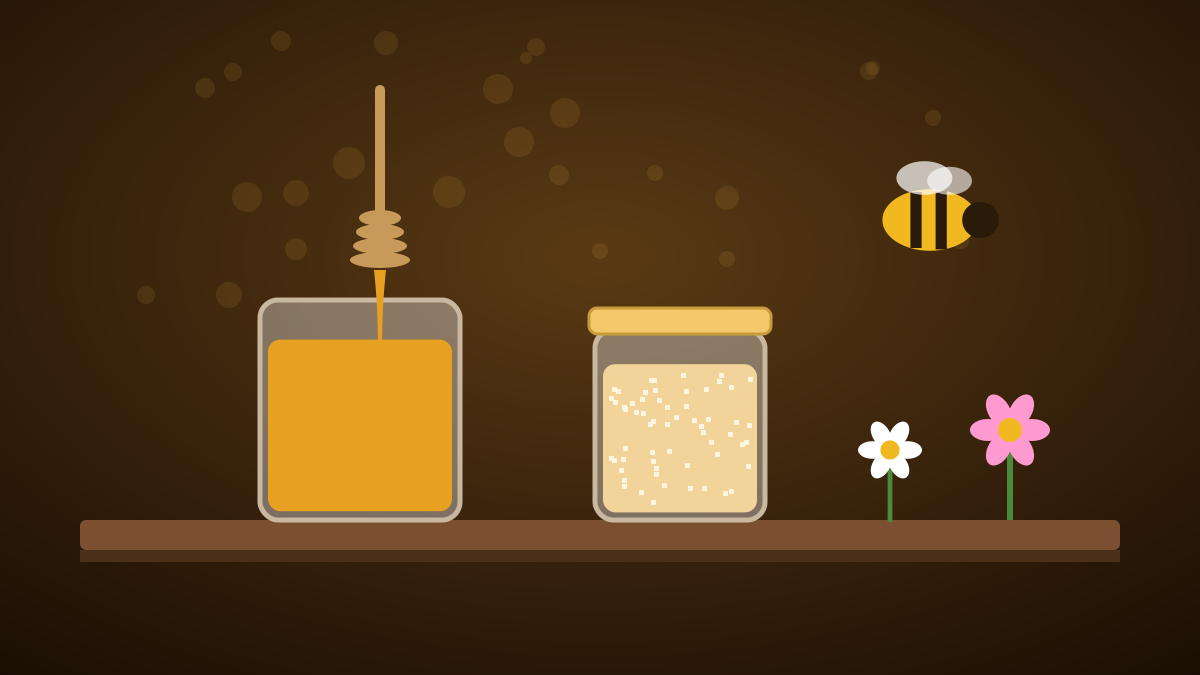
The sweet liquid that refuses to behave normally.
Honey is one of the most fascinating natural food products.
It is sweet, thick, sticky and sometimes surprisingly difficult to pour.
Some honey stays liquid for months, while other honey becomes cloudy, creamy or completely crystallised.
But why does this happen?
And how can something that is mostly sugar remain stable for such a long time?
The answer involves sugar chemistry, water activity, enzymes and crystallisation.
Let's explore what makes honey scientifically unique.
01What is honey actually made of?
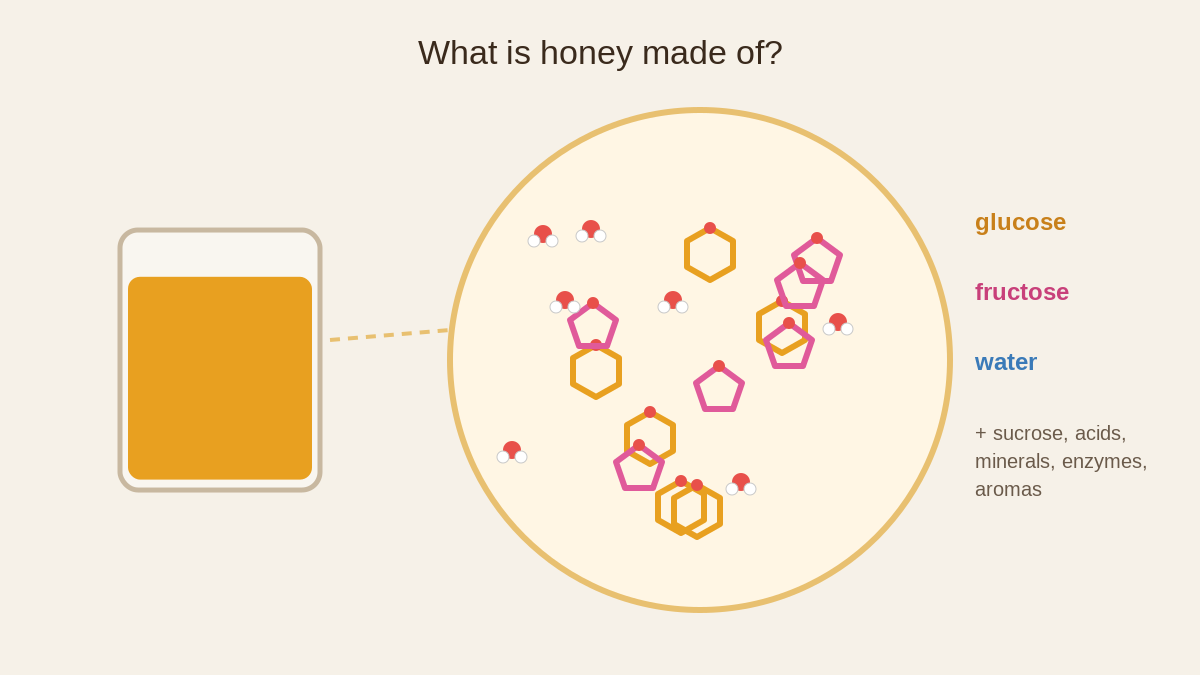
Honey is a natural mixture produced by honeybees using nectar collected from flowers.
Its main components include:
- Fructose
- Glucose
- Water
- Small amounts of sucrose
- Organic acids
- Minerals
- Enzymes
- Aromatic compounds
Fructose and glucose are the dominant sugars.
Their proportions vary depending on the floral source, climate, processing and storage conditions.
The combination of these sugars and the relatively low water content gives honey its distinctive properties.
02Why is honey so thick?
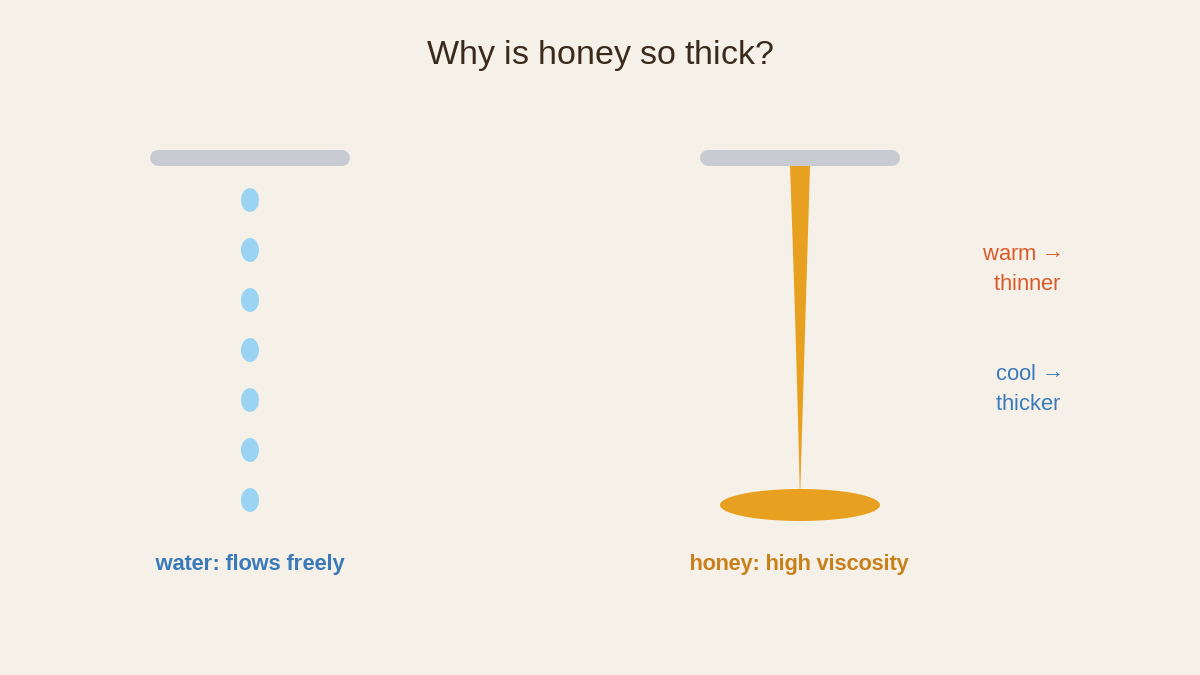
Honey is much more viscous than water.
Viscosity describes how resistant a liquid is to flowing.
Honey contains a high concentration of dissolved sugars.
These sugar molecules interact with water and make it harder for the liquid to flow freely.
Temperature also makes a difference.
When honey is warmed, its viscosity decreases and it flows more easily.
When it becomes cooler, it becomes thicker.
This is why honey pours much more easily from a bottle when it is slightly warm.
03Why does honey crystallise?
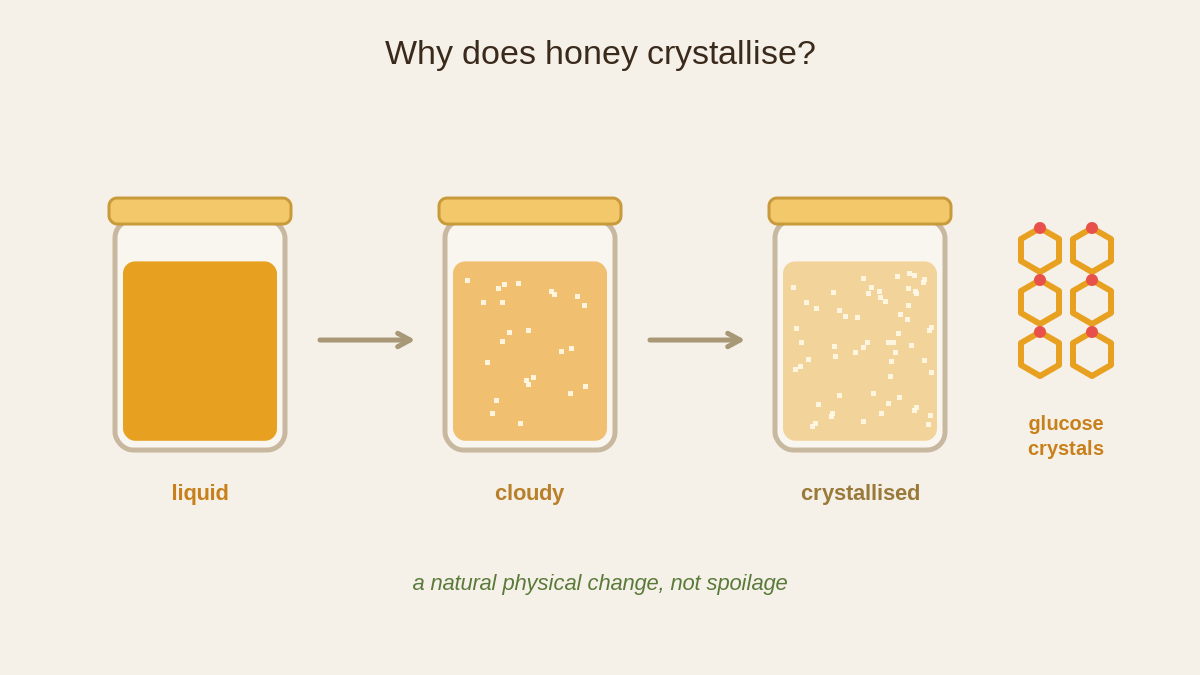
Have you ever opened a jar of honey and discovered that it has turned grainy or solid?
This is crystallisation.
Honey contains two major sugars: glucose and fructose.
Glucose is less soluble in water than fructose.
When the concentration of glucose becomes too high relative to the available water, glucose molecules can begin forming crystals.
These crystals grow and spread through the honey.
Eventually, the liquid may become thick, cloudy or almost solid.
The speed of crystallisation depends on several factors:
- Glucose-to-fructose ratio
- Water content
- Temperature
- Presence of tiny particles that help crystals form
- Storage conditions
Some varieties crystallise quickly, while others remain liquid much longer.
Crystallisation is a natural physical process and does not automatically mean honey has spoiled.
04Why does honey have a long shelf life?
Honey has several properties that make it unfavourable for many microorganisms.
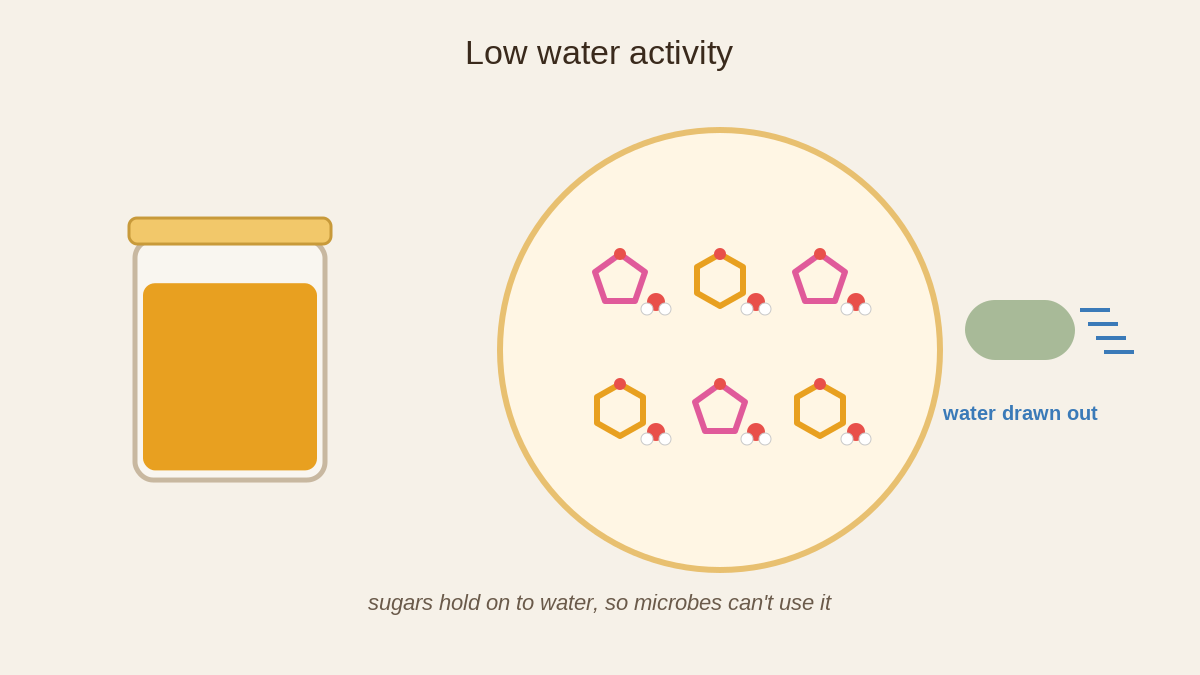
First, it contains very little available water.
Although honey contains water, much of it is associated with the concentrated sugar mixture.
This is described using a concept called water activity.
Water activity measures how much water is available for microbial growth and chemical reactions.
Honey generally has low water activity.
Second, its high sugar concentration creates an osmotic environment that can draw water out of microbial cells.
Honey is also naturally acidic.
Together, these characteristics make properly stored honey resistant to many forms of microbial spoilage.
However, honey is not sterile.
Some microorganisms and spores can survive in it.
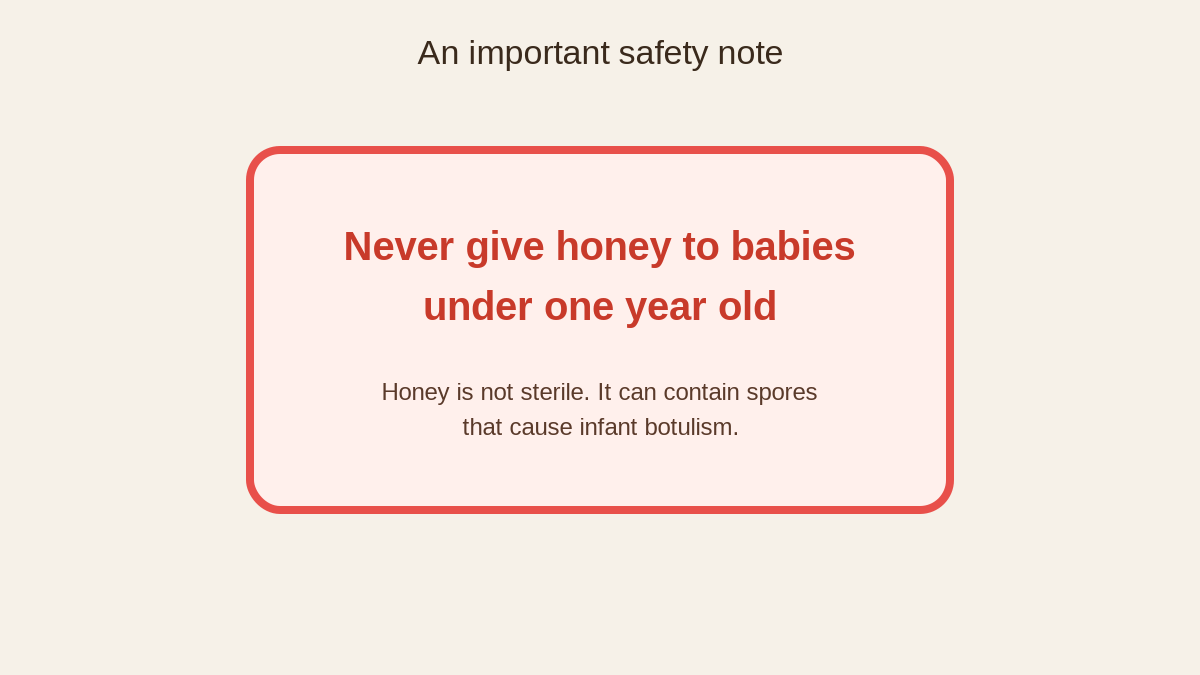
Honey must never be given to infants under one year of age because of the risk of infant botulism.
05What do enzymes do inside honey?
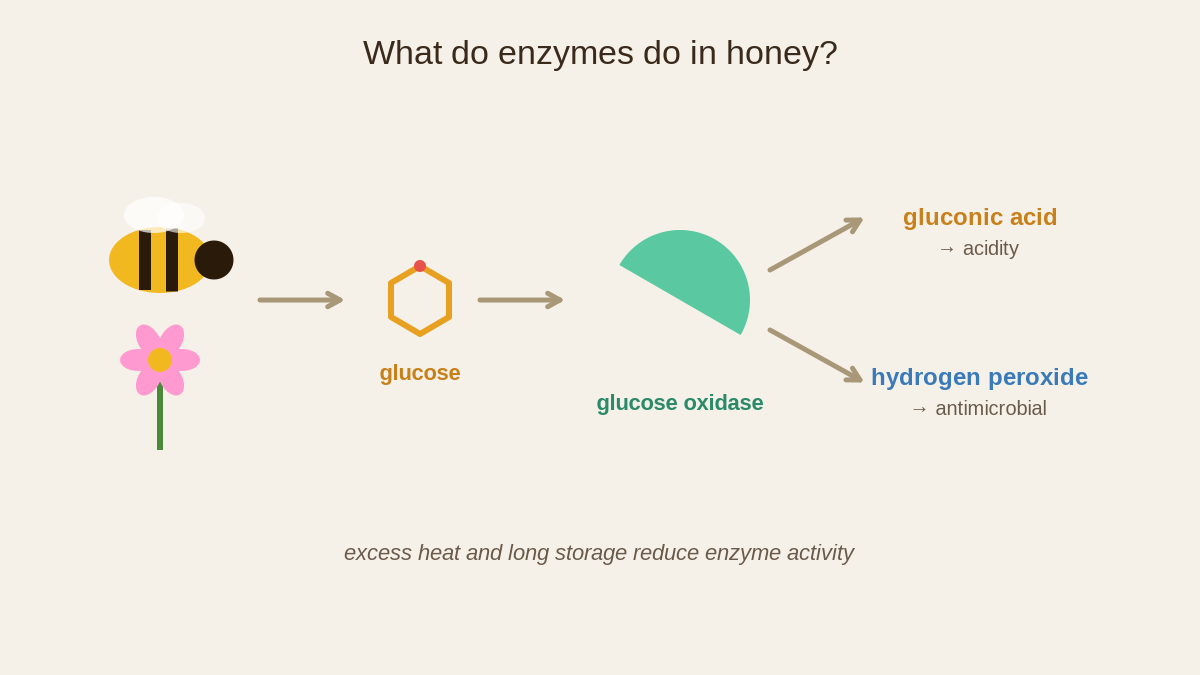
Honey contains small amounts of enzymes introduced during nectar processing by bees.
One important enzyme is glucose oxidase.
When suitable conditions are present, this enzyme helps convert glucose into gluconic acid and hydrogen peroxide.
Gluconic acid contributes to honey's acidity.
Hydrogen peroxide can contribute to honey's antimicrobial activity.
The amount of activity depends on factors such as moisture, temperature and honey composition.
Heating and prolonged storage can reduce the activity of certain enzymes.
This is one reason why honey processing conditions matter.
06Why does honey have different colours and flavours?
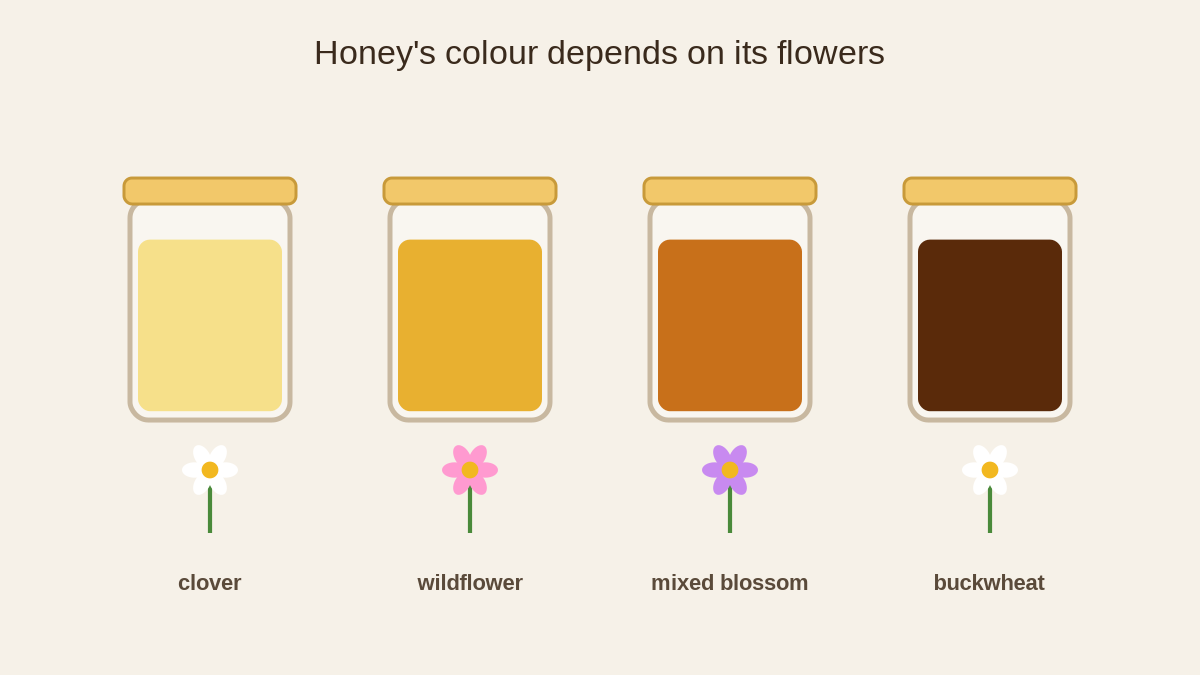
Not all honey tastes or looks the same.
Honey can range from very pale gold to dark amber.
Its flavour and aroma depend heavily on the flowers from which bees collect nectar.
Different floral sources contain different combinations of natural compounds.
For example, honey produced from clover, wildflowers or buckwheat can have noticeably different sensory characteristics.
Minerals, pigments, phenolic compounds and processing conditions can also influence colour.
This is why honey is not a single uniform product.
It is a naturally variable food ingredient.
07A simple experiment: Watch honey crystallise
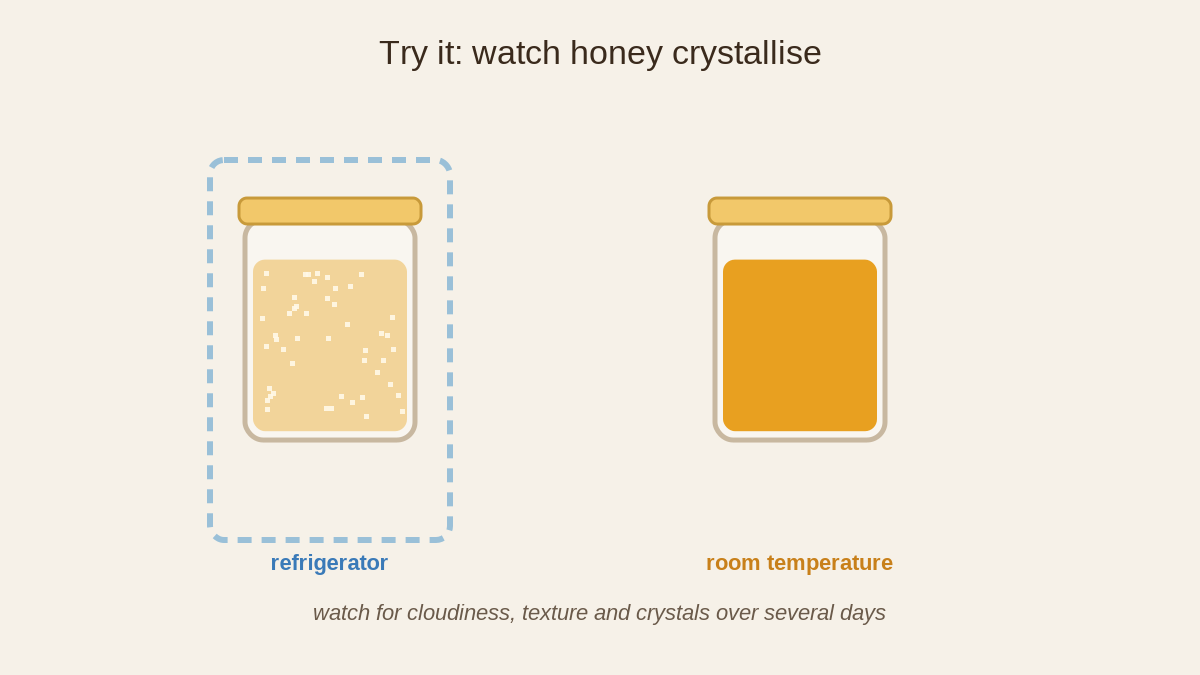
What to observe:
Honey crystallisation is influenced by temperature, composition and the presence of crystal seeds.
Cool storage can encourage crystallisation under some conditions, although the relationship between temperature and crystallisation is not simply that colder always means faster.
Different honeys can behave differently.
Do not use this experiment to judge whether honey is safe to eat. Always follow appropriate food storage guidance.
08Can crystallised honey become liquid again?
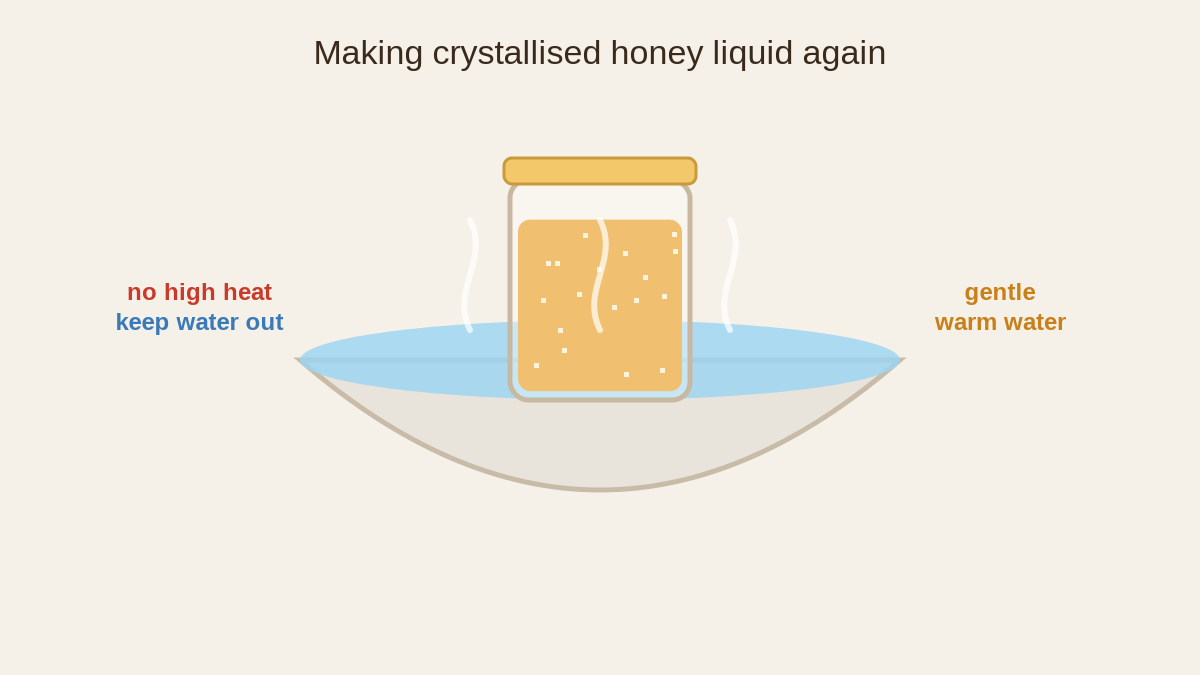
Yes.
Crystallised honey can generally be returned to a more liquid state by gently warming the jar in warm water.
Avoid excessive heating.
High temperatures can damage some of honey's flavour compounds and enzymes.
A gentle water bath is usually sufficient to soften or dissolve the crystals.
Make sure the container is suitable for warming and keep water out of the honey.
09How the food industry uses honey science
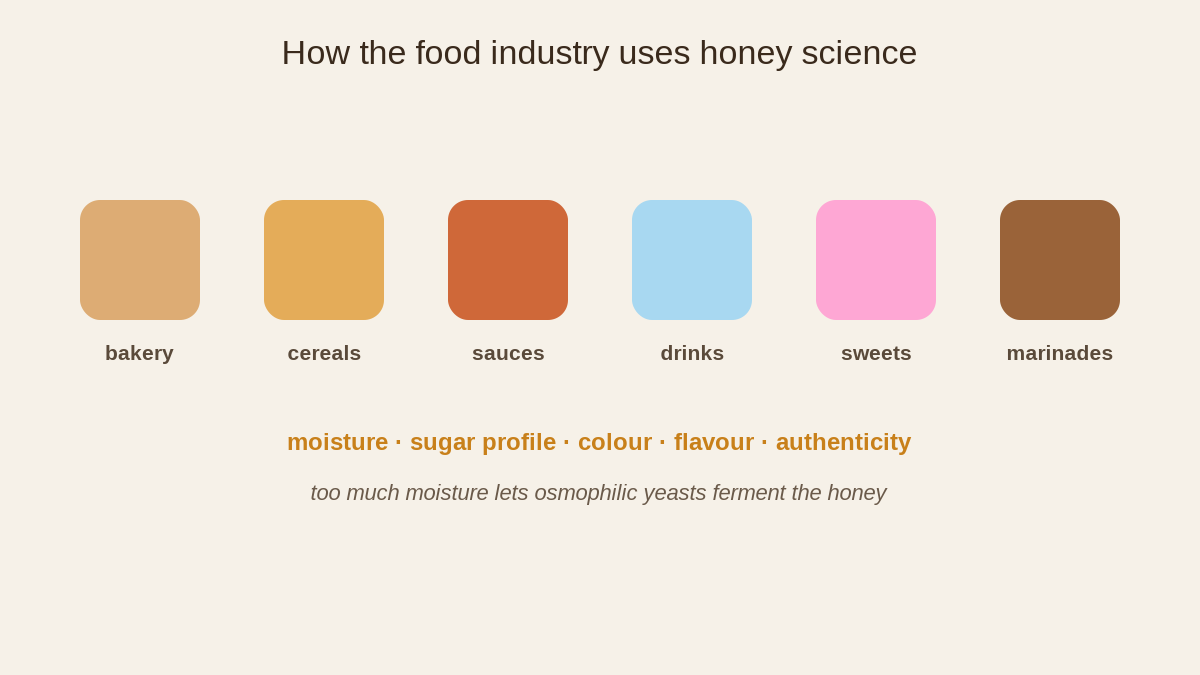
Honey is used in:
- Bakery products
- Breakfast cereals
- Sauces and dressings
- Beverages
- Confectionery
- Marinades
- Food coatings
Food manufacturers monitor honey's moisture content, sugar profile, colour, flavour and authenticity.
Moisture is particularly important.
If honey absorbs too much moisture, fermentation by osmophilic yeasts can occur.
Manufacturers also use analytical methods to assess quality and detect adulteration.
Because honey can vary naturally, standardisation is important when it is used as an ingredient in commercial food products.
10Conclusion
Honey may seem like a simple sweetener, but its behaviour is controlled by fascinating chemistry.
Its high sugar concentration influences viscosity. Its glucose content influences crystallisation. Its low water activity helps resist microbial growth. And its enzymes contribute to its chemical properties.
So the next time your honey turns cloudy or grainy, don't immediately assume it has gone bad.
You might simply be watching sugar chemistry in action.