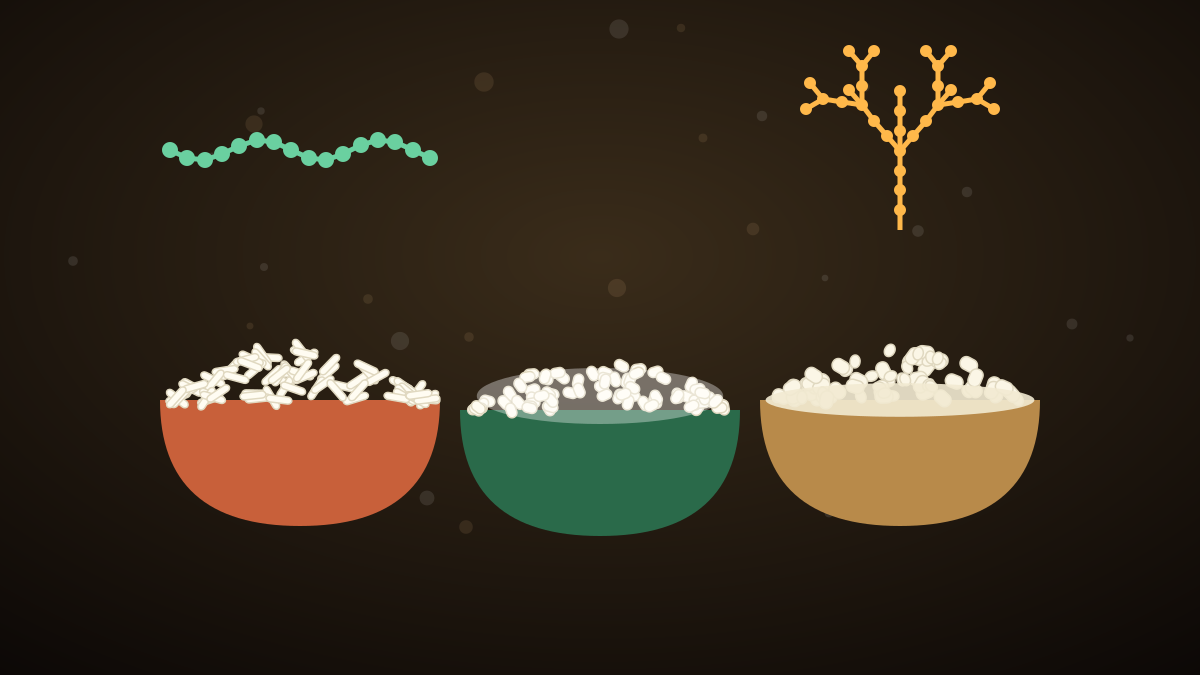
Three bowls, three textures.
Rice looks simple.
Add water, apply heat and wait.
But why does the final texture vary so much?
Some rice varieties produce separate, fluffy grains. Others become soft and sticky. And sometimes, a small mistake with water or cooking time can turn the entire pot into mush.
The secret lies in starch.
01What is rice made of?
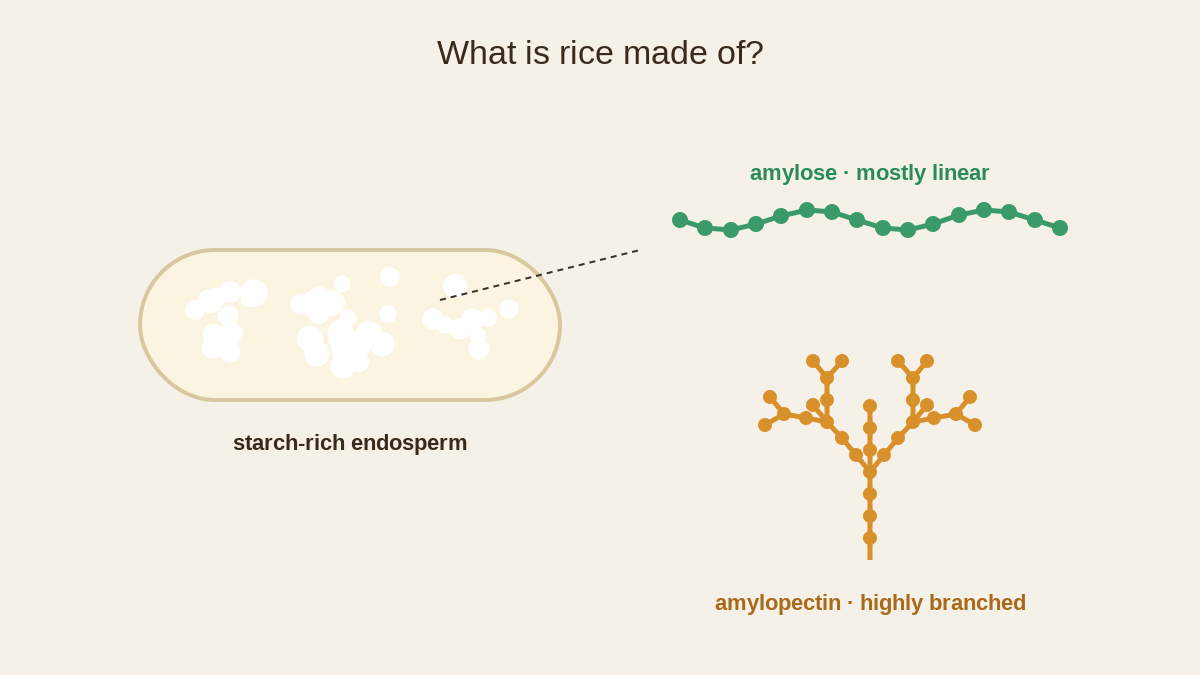
Rice contains carbohydrates, mainly in the form of starch.
Rice starch is composed primarily of two molecules:
- Amylose.
- Amylopectin.
Both are made from glucose units, but their structures are different.
Amylose has a mostly linear structure, while amylopectin is highly branched.
The balance between them is one of the important factors influencing cooked rice texture.
02What happens when rice absorbs water?
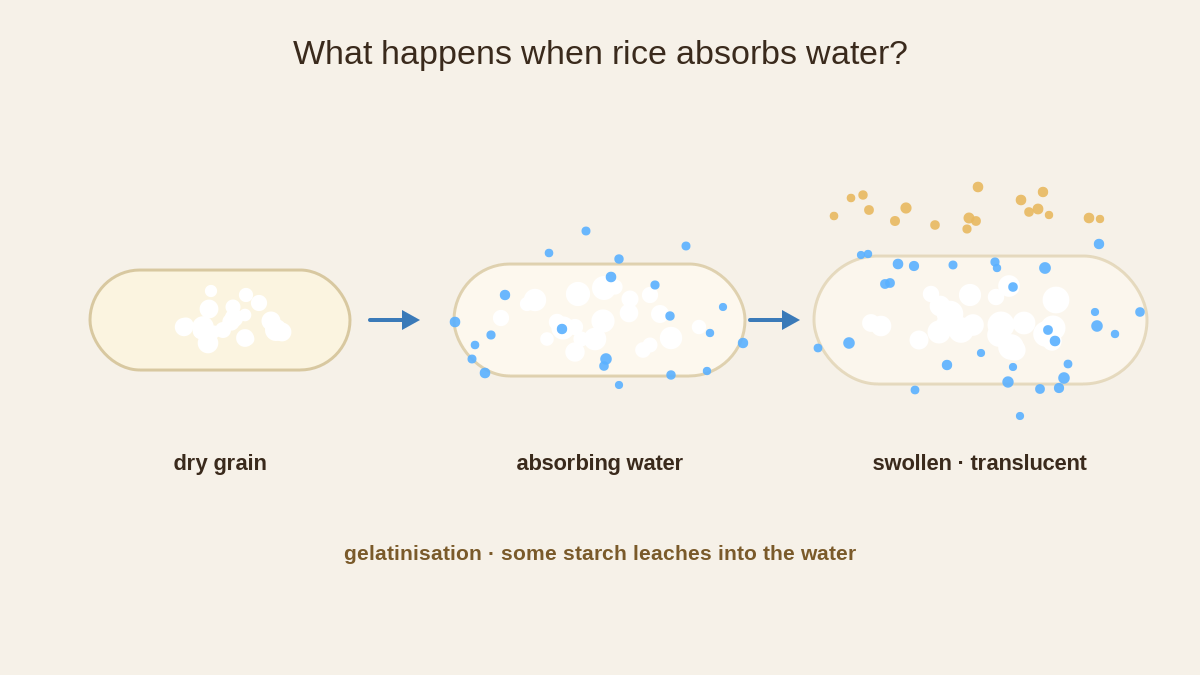
When rice is heated in water, moisture moves into the grain.
The starch granules absorb water and swell.
As heating continues, the ordered structure within starch granules becomes disrupted.
This is called gelatinisation.
Some starch molecules can also leach out of the grain into the surrounding cooking water.
These changes influence softness, stickiness and the final appearance of rice.
03The science of fluffy rice
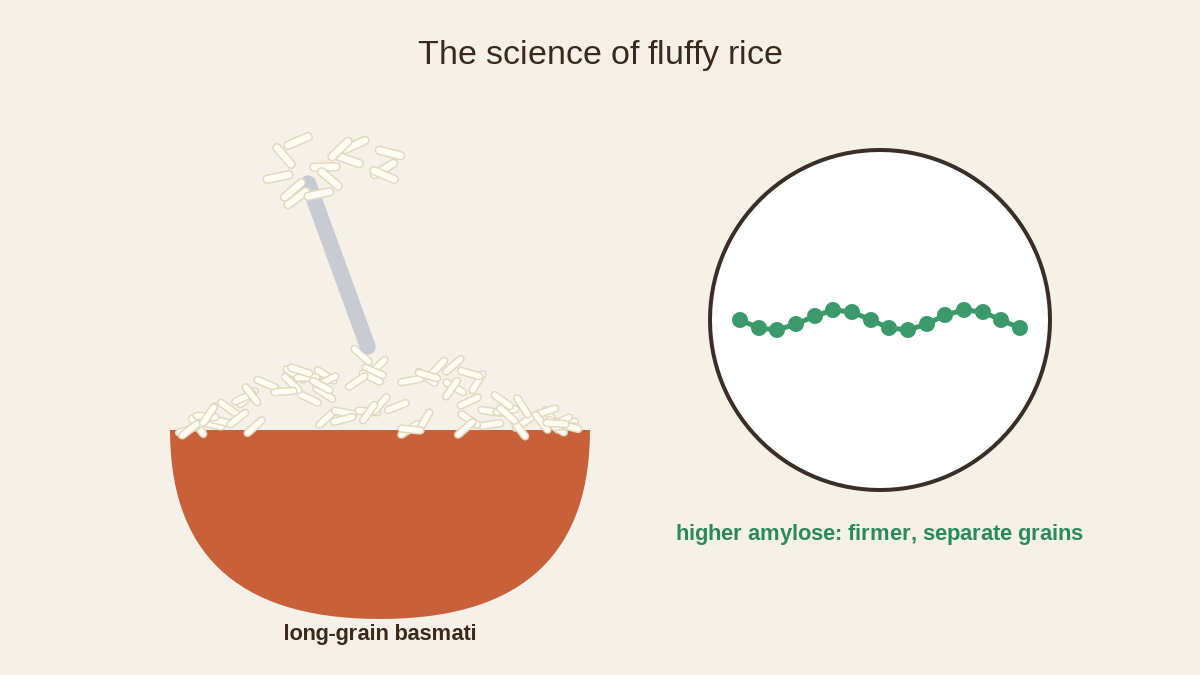
Rice with relatively higher amylose content often cooks into firmer, less sticky grains.
Amylose can help limit excessive starch swelling and influence the amount of material released during cooking.
This is why many long-grain varieties, including basmati, are commonly used when separate grains are desired.
However, variety, processing, water ratio and cooking method all matter.
04Why does rice become sticky?
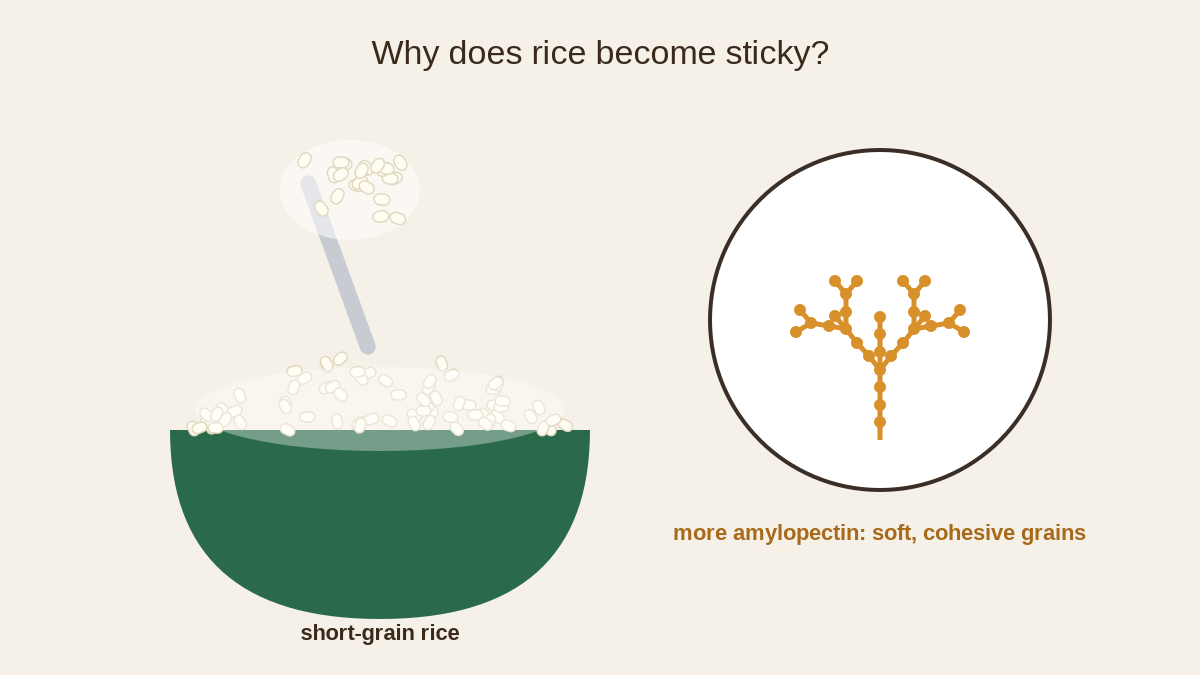
Rice with lower amylose content and a higher proportion of amylopectin often develops a softer, more cohesive texture.
Amylopectin has a highly branched molecular structure.
Starch components released during cooking can contribute to the sticky surface layer between grains.
This is why different rice varieties are chosen for different dishes.
Sticky rice is useful in foods where grains need to hold together, while other varieties are better suited to separate-grain dishes.
05Why does rice become mushy?
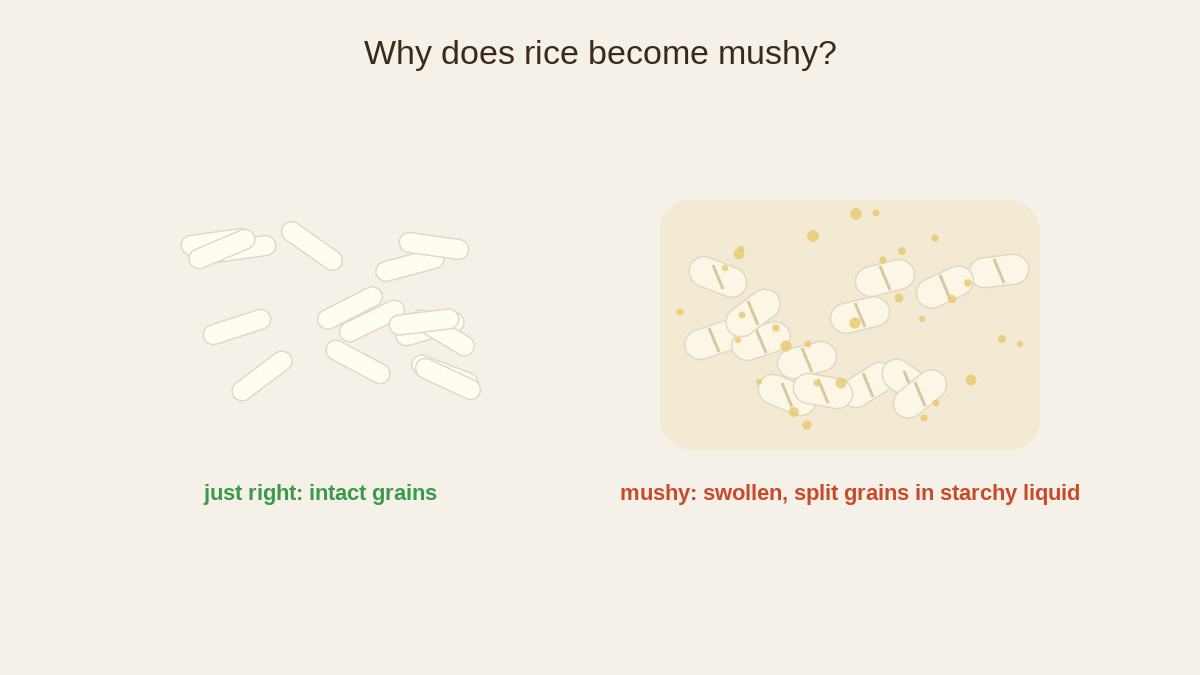
Mushy rice often results from excessive water absorption, prolonged cooking or unsuitable processing conditions.
As grains continue to absorb moisture, their internal structure becomes softer.
More starch may escape into the surrounding liquid, creating a thick, sticky mixture.
The result is a loss of individual grain structure.
The right water ratio and cooking time depend on rice variety, age, processing and cooking equipment.
06Why does rice harden after cooling?
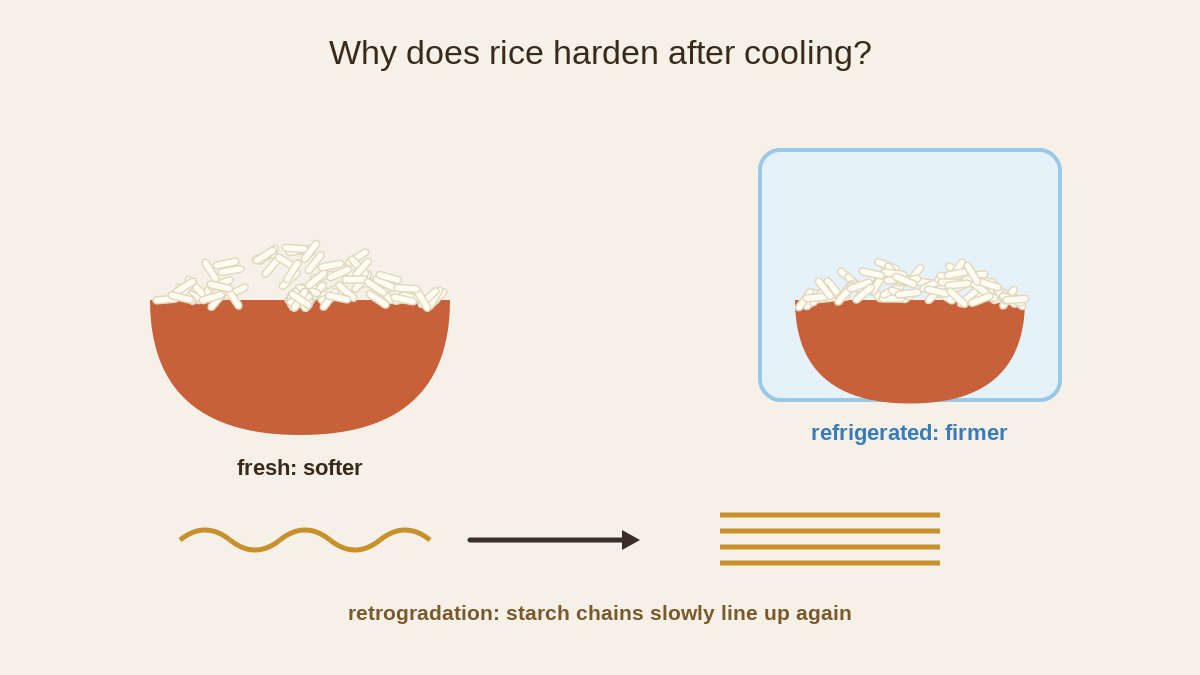
Have you noticed that refrigerated rice often becomes firmer?
This is related to starch retrogradation.
After gelatinisation, starch molecules can gradually reassociate as the rice cools.
This can increase firmness and change the texture.
The process is influenced by starch composition, storage time and temperature.
This is one reason freshly cooked rice often feels softer than rice that has been cooled and stored.
07Rice in the food industry
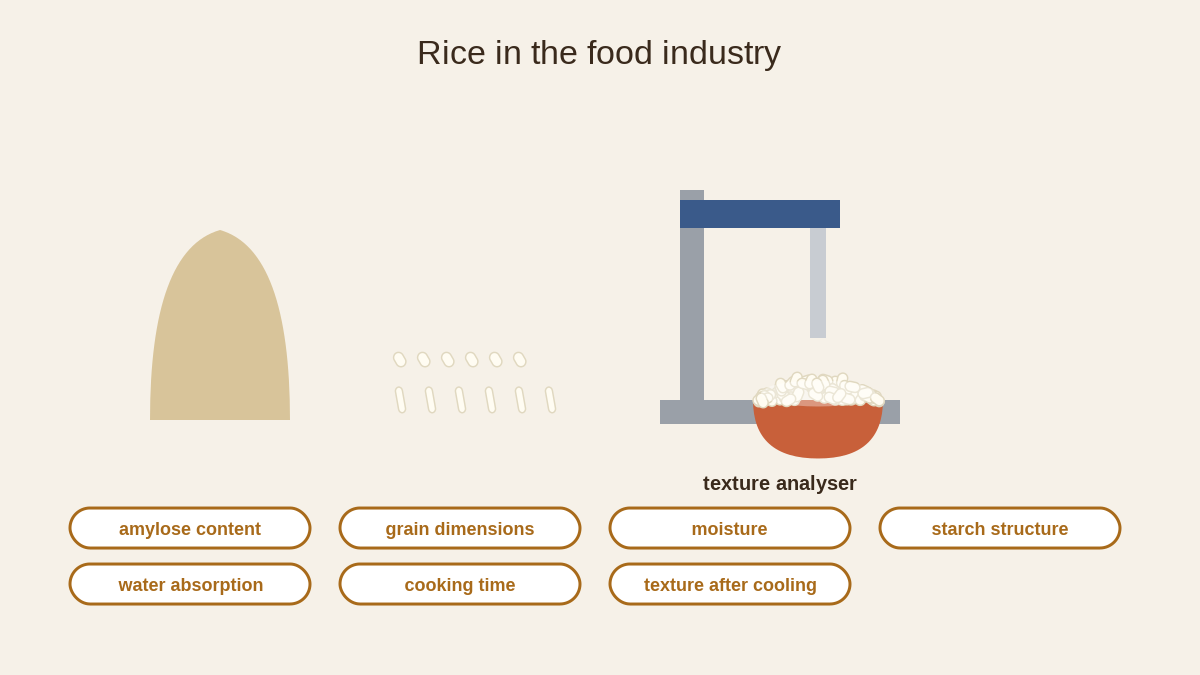
Rice manufacturers and food scientists study grain properties to achieve specific cooking qualities.
Important characteristics include:
- Amylose content.
- Grain dimensions.
- Moisture content.
- Starch structure.
- Water absorption.
- Cooking time.
- Texture after cooling.
These properties matter when developing instant rice, ready-to-eat meals, rice snacks and other rice-based products.
08Try this: compare two rice varieties
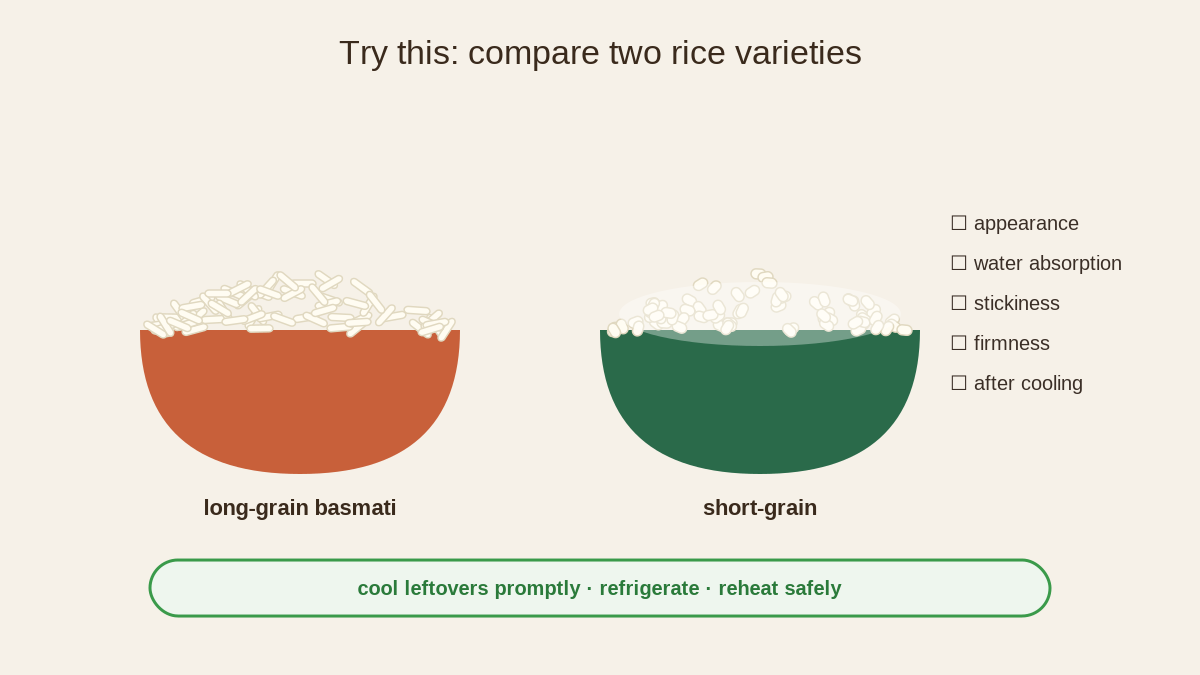
Observe how different varieties behave even when prepared in similar ways.
Food safety: Cool and store leftover rice promptly in the refrigerator, and reheat it safely.
09The big takeaway
Rice texture is not simply a matter of adding more or less water.
The molecular structure of starch plays a major role.
Amylose and amylopectin influence swelling, stickiness and firmness.
The next time you cook rice, remember that the difference between fluffy and sticky begins inside the grain.