
The stretch that makes bread possible.
Have you ever watched a baker stretch dough until it becomes almost transparent?
It seems surprising that flour and water can create something so elastic.
But this transformation is made possible by gluten.
Gluten gives many wheat-based doughs the strength and flexibility needed to stretch, trap gas and expand during baking.
Let's explore the protein network behind bread.
01What is gluten?
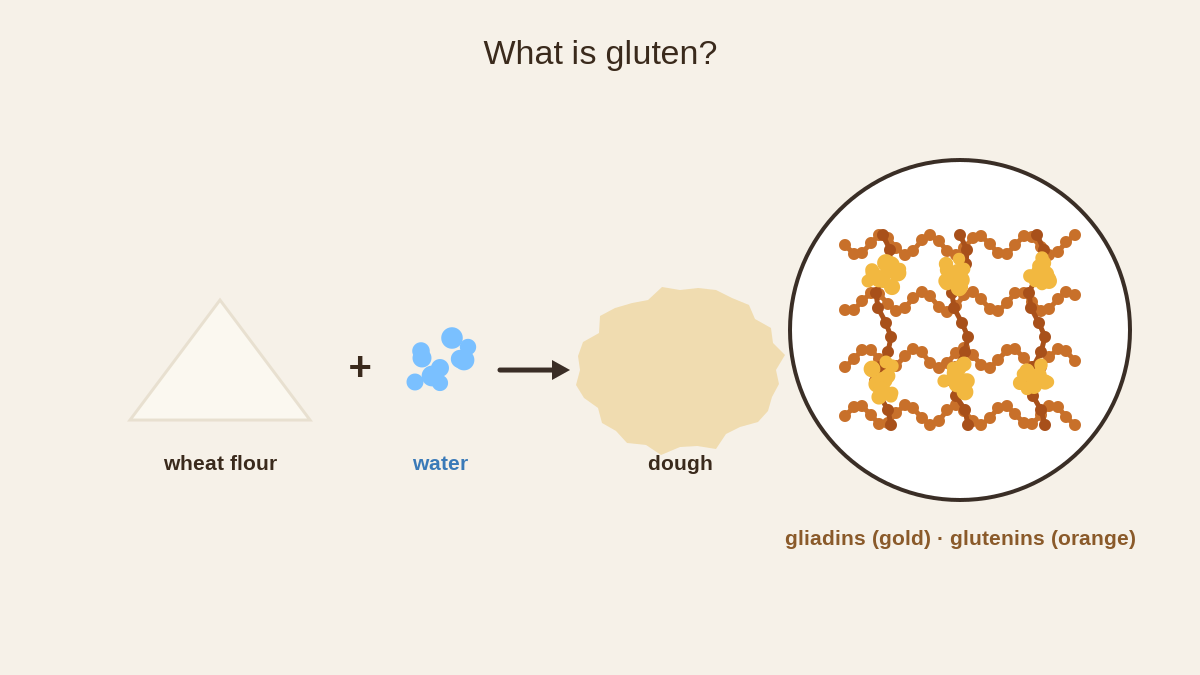
Gluten is a network of proteins that develops in hydrated wheat dough.
Two important protein groups are:
- Gliadins.
- Glutenins.
They have different functional properties, and together they contribute to dough's structure.
The balance between these proteins influences dough strength, extensibility and elasticity.
02Gliadin: the extensibility contributor
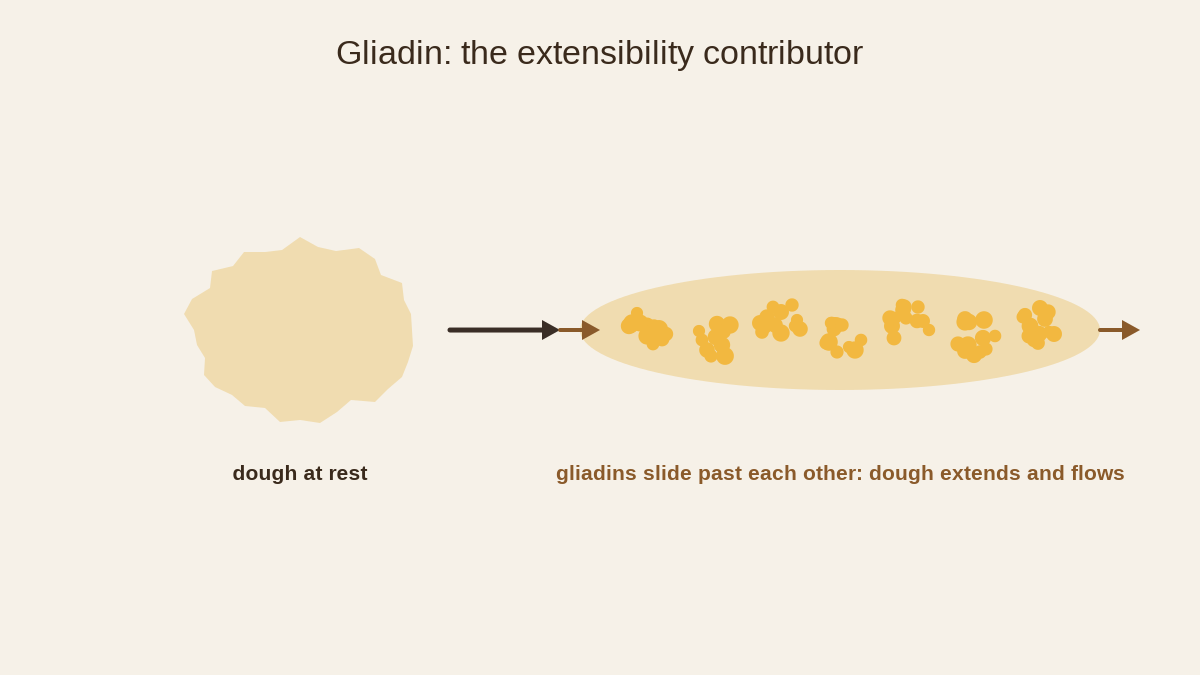
Gliadins are a group of wheat storage proteins.
They contribute strongly to dough's viscous and extensible behaviour.
In simple terms, they help dough stretch.
This property is important when dough needs to expand during fermentation and baking.
03Glutenin: the strength contributor
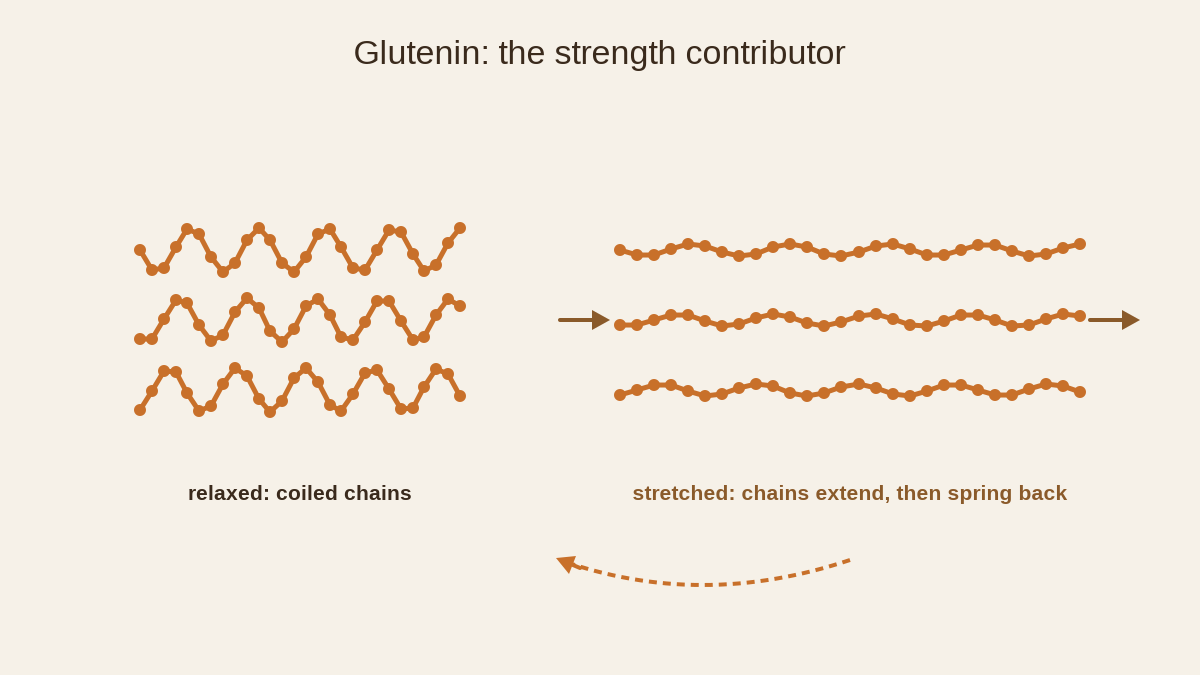
Glutenins contribute to dough strength and elasticity.
They include large polymeric protein structures that help dough resist deformation and recover some of its shape.
This is important because dough must stretch without losing all of its structural strength.
04How does gluten develop?
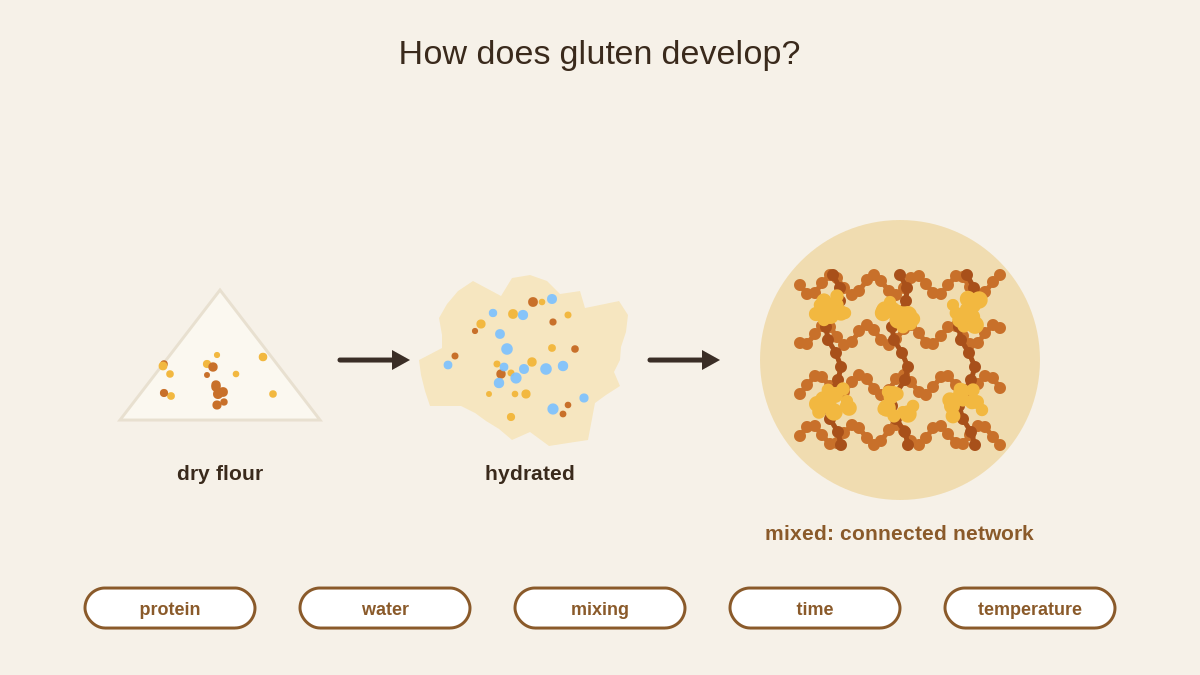
When water is added to wheat flour, the proteins become hydrated.
Mixing helps distribute water and encourages the proteins to interact.
The dough develops a connected structure with the characteristic viscoelastic properties associated with gluten.
This process is influenced by:
- Flour protein composition.
- Water quantity.
- Mixing intensity.
- Mixing time.
- Temperature.
- Other ingredients.
05How does gluten help bread rise?
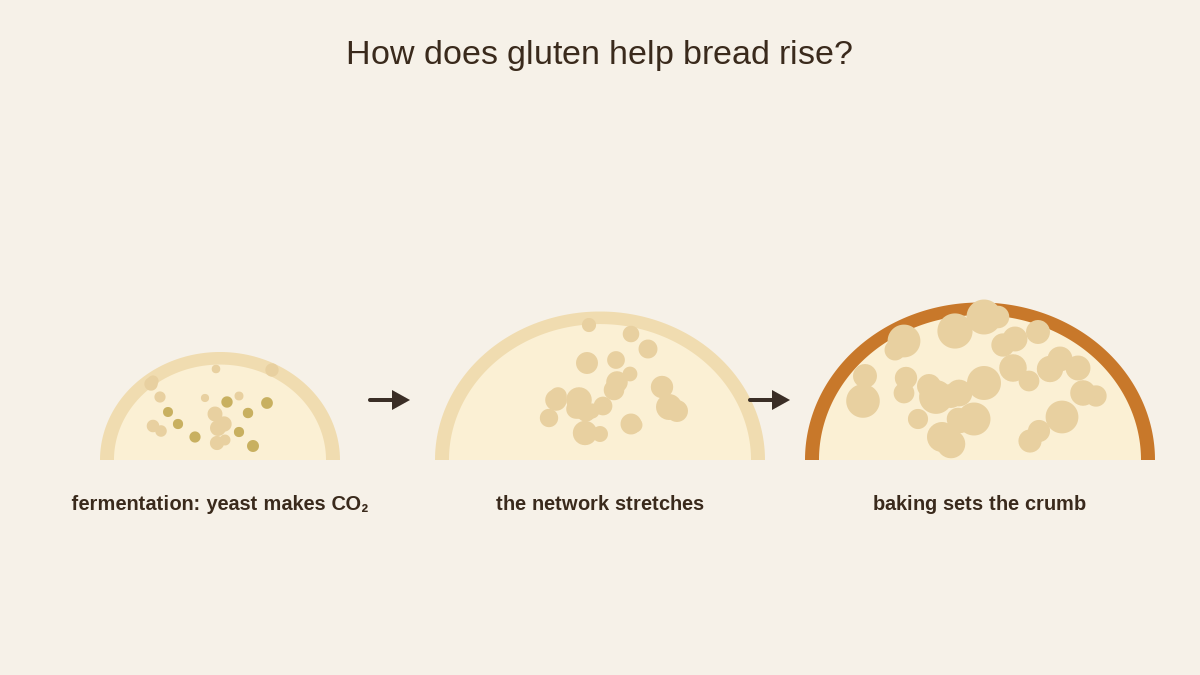
During fermentation, yeast produces carbon dioxide.
The gas forms bubbles inside the dough.
The gluten network helps retain these bubbles while allowing the dough to expand.
During baking, heat causes further expansion and eventually sets the structure.
This is how an elastic dough can become a loaf with an airy crumb.
06Why does dough sometimes tear?
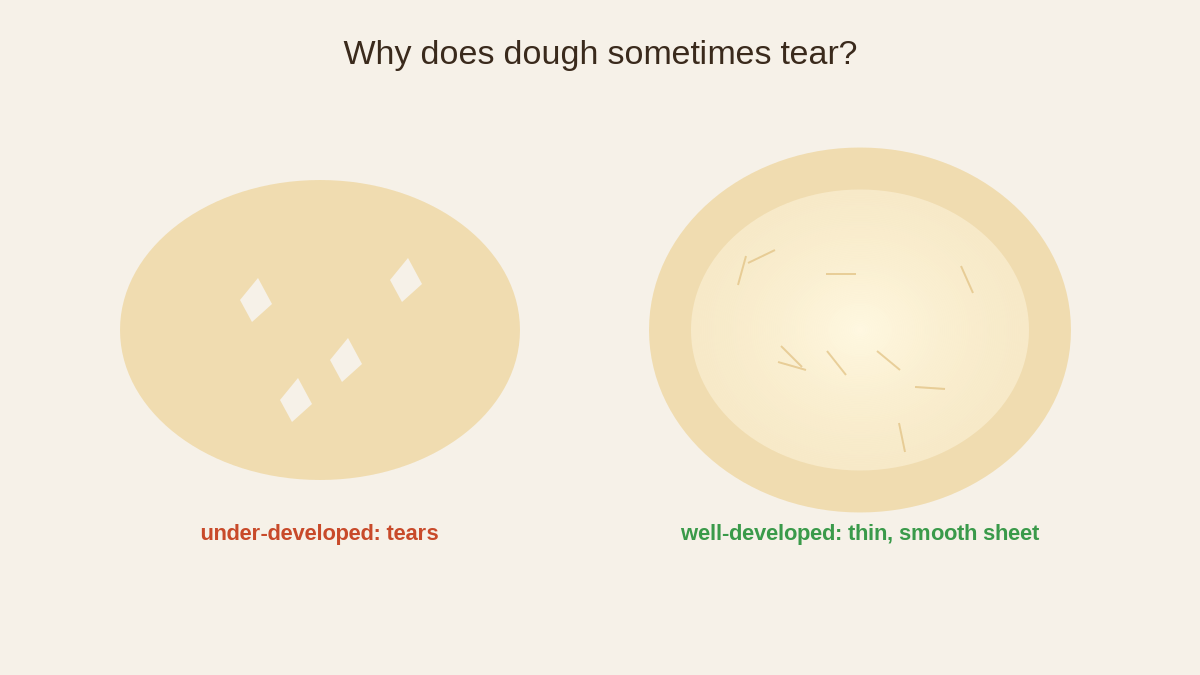
Dough can tear when its structure is insufficiently developed or when it is stretched beyond its ability to withstand the applied force.
Other factors include:
- Low hydration.
- Flour protein characteristics.
- Inadequate mixing or folding.
- Excessive handling.
- Fermentation conditions.
Some doughs benefit from resting periods because hydration and structural changes continue over time.
07Why does different flour make different bread?
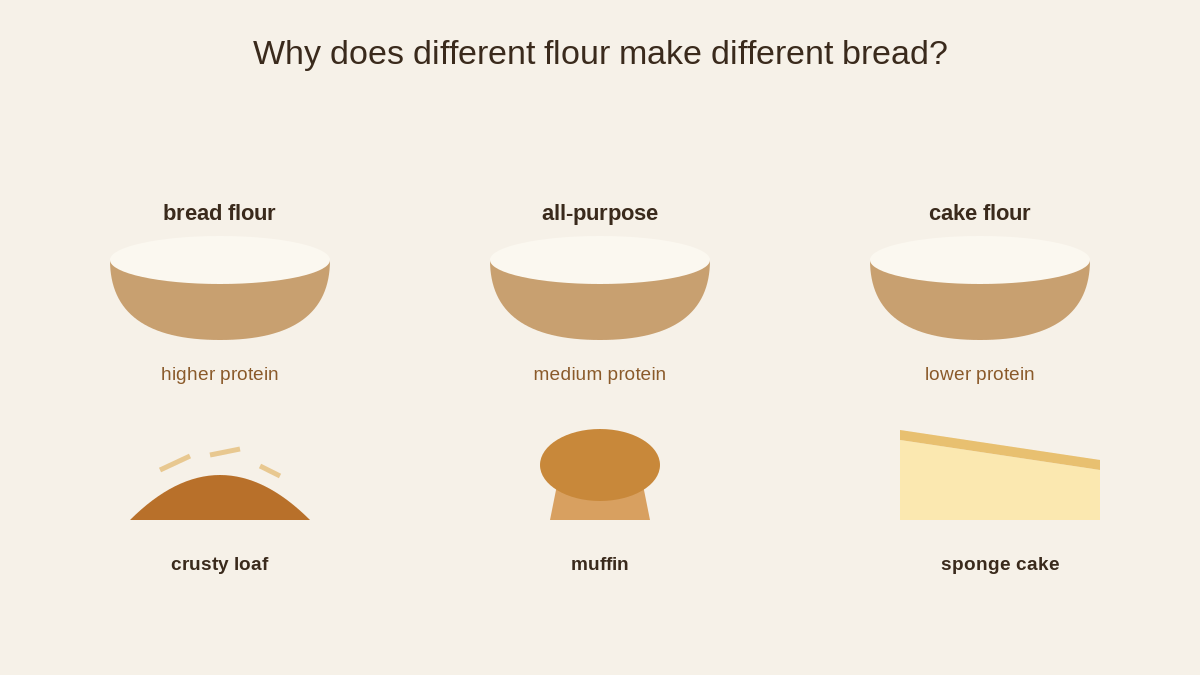
Different wheat flours have different protein contents and compositions.
Bread flour is commonly formulated to provide stronger dough performance.
Cake flour generally has lower protein content and is designed for more tender baked products.
The choice of flour influences the final structure.
This is why the same recipe can behave differently when made with different flour types.
08Try this: the gluten windowpane test
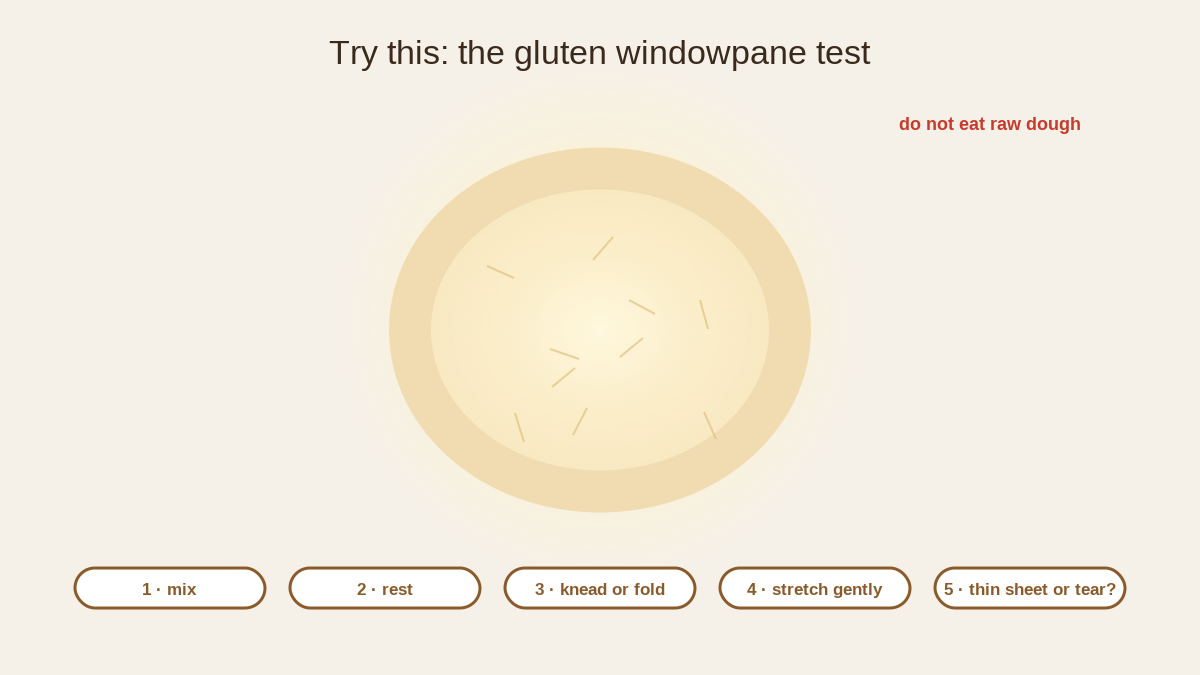
This is known as the windowpane test.
A well-developed dough can often stretch into a thin membrane before tearing.
The result depends on flour type, hydration and dough formulation.
Safety: Do not consume raw dough.
09The big takeaway
Gluten is not simply one protein.
It is a network formed by wheat proteins, especially gliadins and glutenins.
Together, they provide the balance of elasticity and extensibility that allows bread dough to stretch, trap gas and expand.
The next time you see dough rising, remember that a microscopic protein network is holding the structure together.