The secret behind flaky pastry.
Imagine biting into a freshly baked croissant.
The outside is crisp and golden. The inside is soft, buttery and filled with hundreds of delicate layers.
But how does a simple combination of flour, water and butter create such an incredible texture?
Why does pastry become flaky instead of turning into an ordinary piece of bread?
The secret is a combination of fat, moisture, gluten development and heat.
Let's explore the science behind one of the most fascinating transformations in baking.
01What makes pastry different from bread?
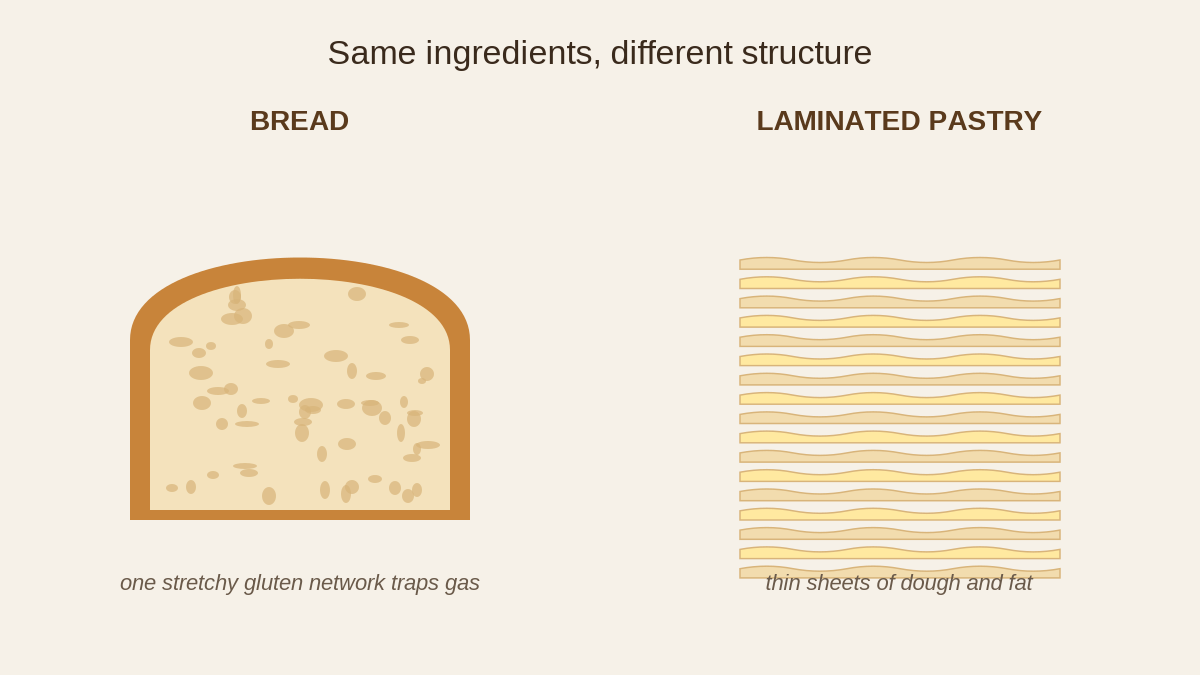
Bread and pastry may contain similar ingredients, but their structures are very different.
Bread dough is usually developed to create a strong gluten network. This network traps carbon dioxide produced by yeast fermentation, allowing the dough to rise.
Pastry, particularly laminated pastry, uses a different approach.
Instead of developing one continuous, highly elastic structure, bakers create alternating layers of dough and fat.
These layers are the foundation of flaky pastry.
The goal is to keep the butter distributed in thin sheets between layers of dough.
02Why is butter so important?
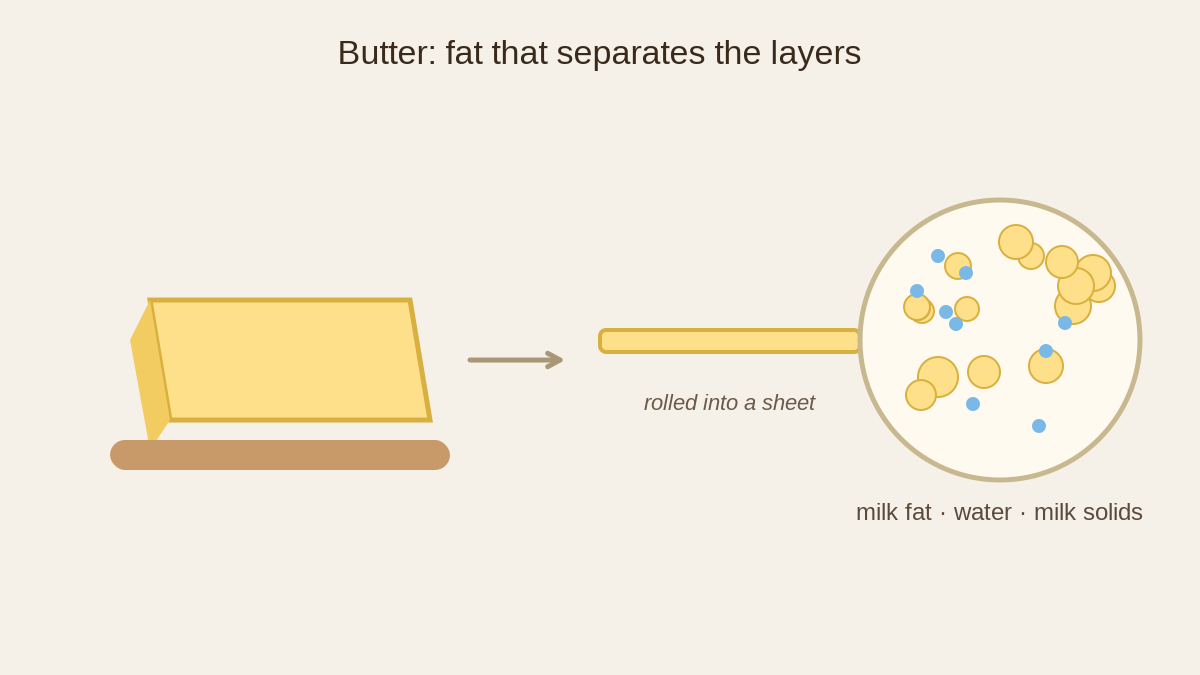
Butter is not just added for flavour. It plays a major structural role.
Butter contains milk fat, water and small amounts of milk solids.
During pastry preparation, chilled butter is incorporated into the dough in distinct layers.
The fat creates separation between the dough layers.
During baking, the water present in the dough and butter turns into steam. This steam expands and helps push the layers apart.
As the pastry sets, the separated layers create the characteristic flaky structure.
This is why butter temperature matters so much.
If the butter becomes too warm, it may blend into the dough instead of remaining in distinct layers.
If it becomes too hard and brittle, it may break into uneven pieces and create inconsistent layers.
03What is lamination?
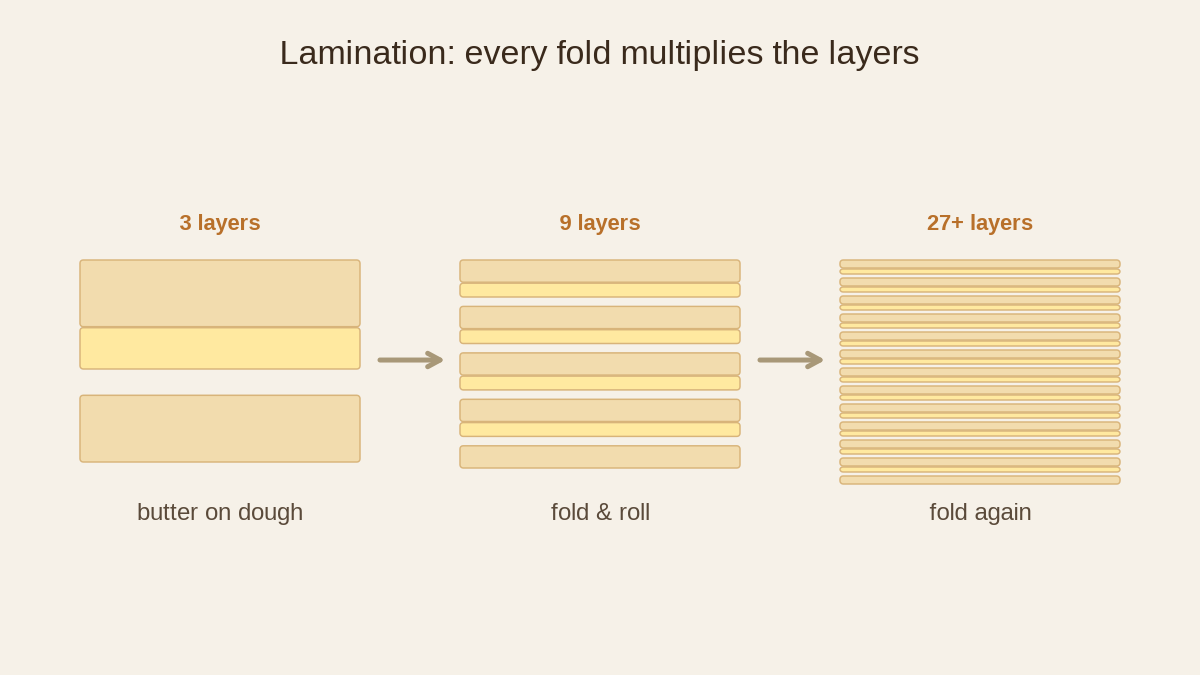
The process of repeatedly folding dough around layers of butter is called lamination.
A baker rolls the dough into a sheet, places butter inside or across it, folds it, rolls it again and repeats the process.
Each fold increases the number of layers.
Repeated folding creates a very thin, organised structure.
During baking, these layers separate and expand.
This is how croissants, puff pastry and Danish pastries achieve their distinctive texture.
04How does steam make pastry rise?
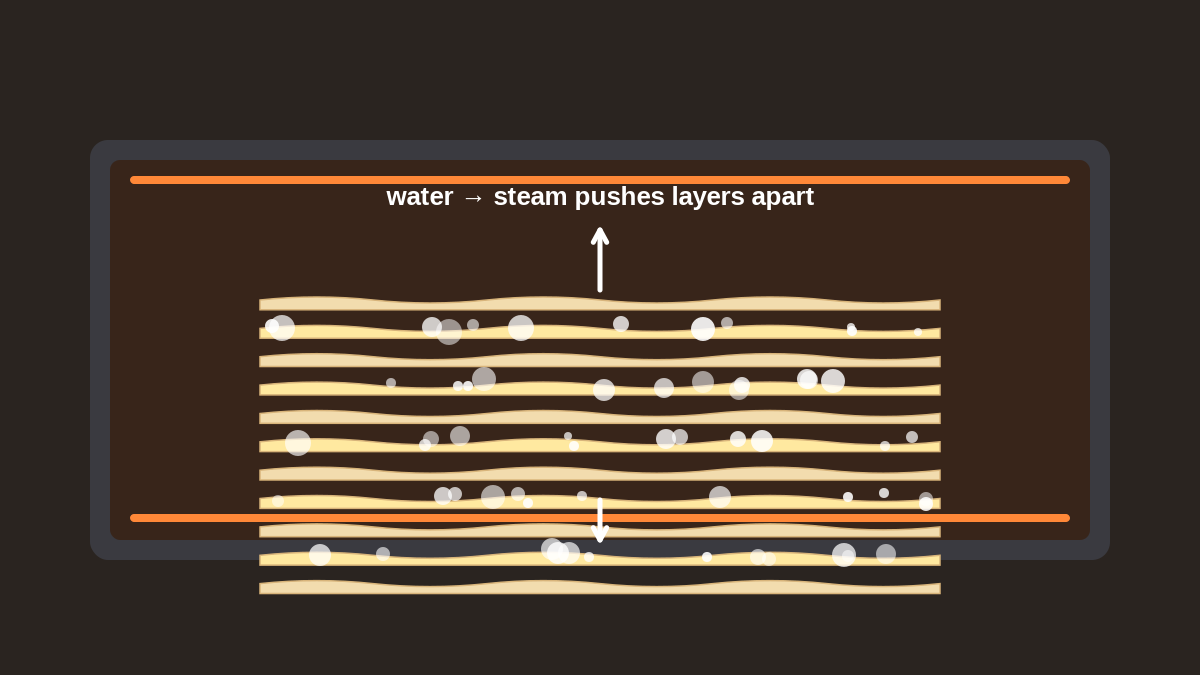
One of the most fascinating parts of pastry baking is steam.
Water changes into water vapour when heated.
As the pastry enters the oven, the water in the dough and butter heats up and produces steam.
The steam expands and creates pressure between the layers.
This helps separate the dough sheets.
At the same time, the butter melts and the dough begins to set.
Eventually, the pastry structure becomes firm enough to retain its expanded shape.
This is why traditional puff pastry can rise dramatically without requiring yeast.
Croissants, in contrast, usually combine lamination with yeast fermentation.
05Why must pastry dough stay cold?
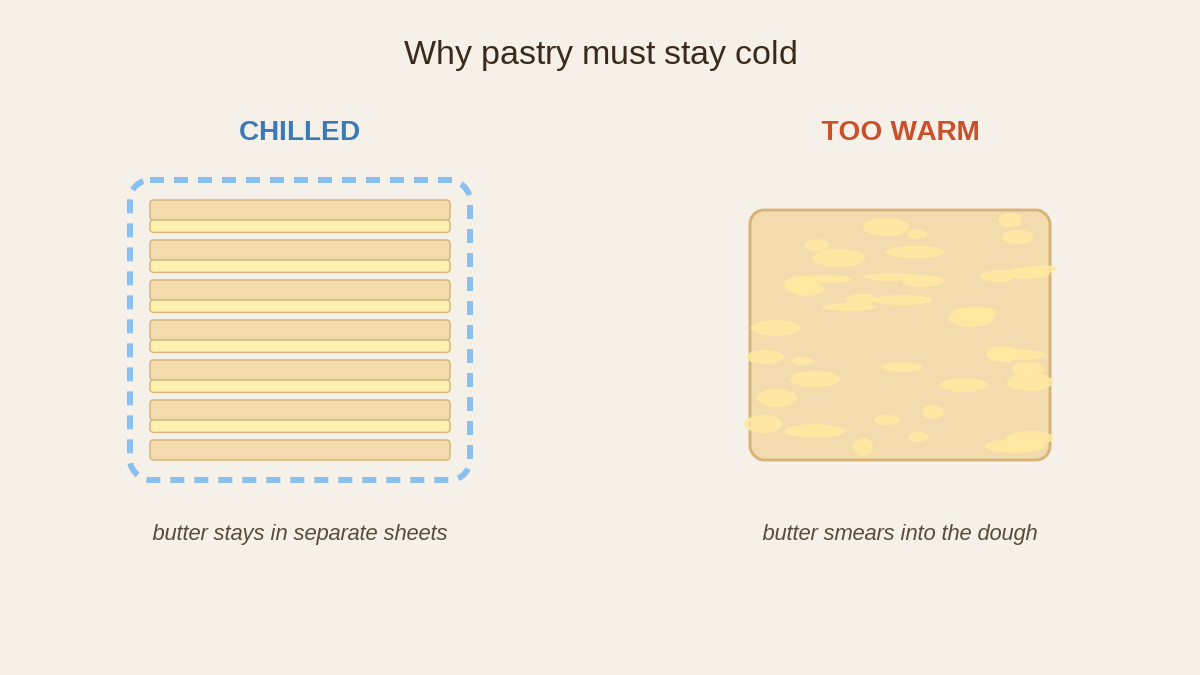
Temperature control is essential.
Cold butter remains firm enough to maintain distinct layers during rolling and folding.
If butter melts too early, it can mix into the dough and destroy the separation needed for flakiness.
Warm dough can also become sticky and difficult to handle.
This is why pastry recipes often include chilling periods between folds.
The resting period also allows gluten to relax, making the dough easier to roll without excessive shrinkage.
So chilling isn't just a convenience. It's part of the science.
06Why does pastry turn golden brown?
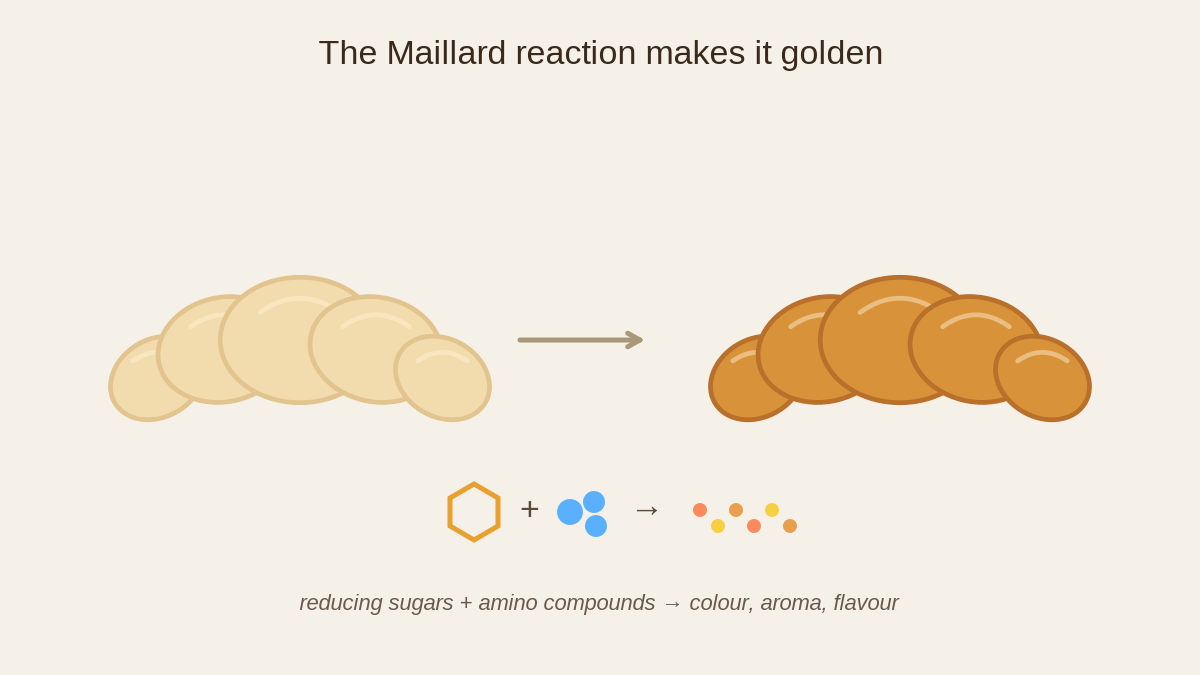
The golden colour develops largely through the Maillard reaction.
This reaction occurs between reducing sugars and amino compounds under suitable heating conditions.
It creates many of the aromas and flavours associated with baked pastry.
The surface also loses moisture, helping create a crisp exterior.
The result is the familiar contrast between a crisp, golden outside and a delicate interior.
07A simple experiment: What happens when butter melts?
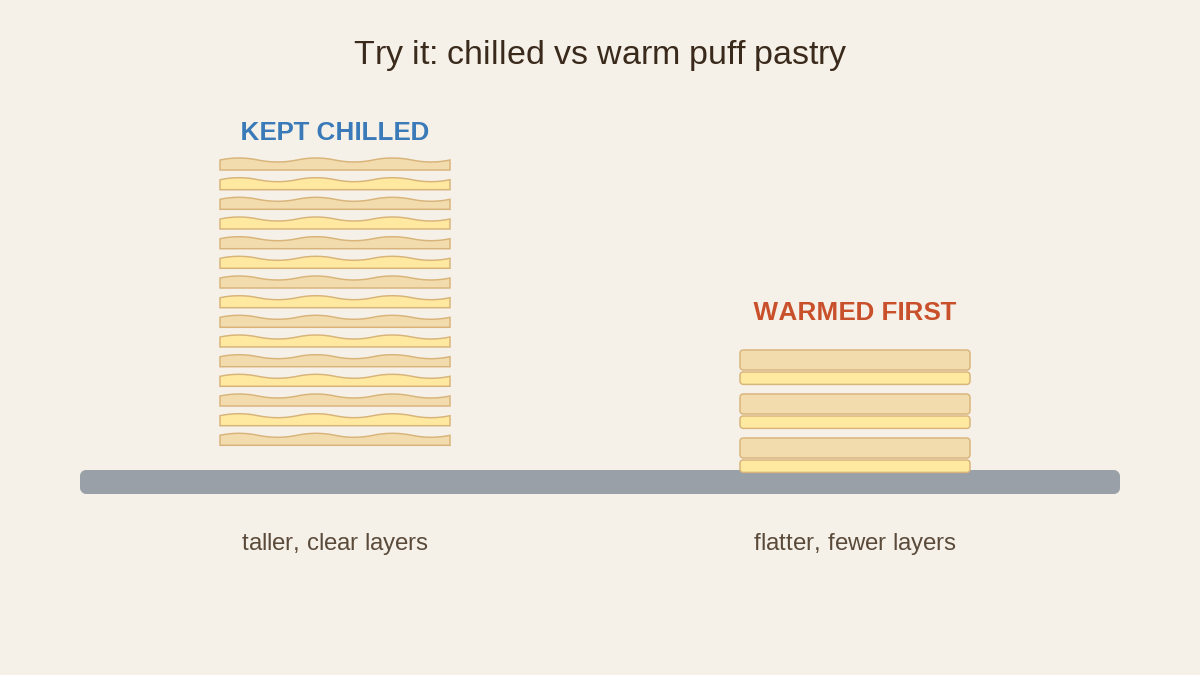
What to observe:
The chilled pastry is more likely to retain distinct fat layers during handling. If the other piece becomes excessively warm, the butter may blend into the dough and reduce the quality of the layering.
For a fair comparison, use the same pastry recipe, thickness and baking conditions.
08How the food industry uses pastry science
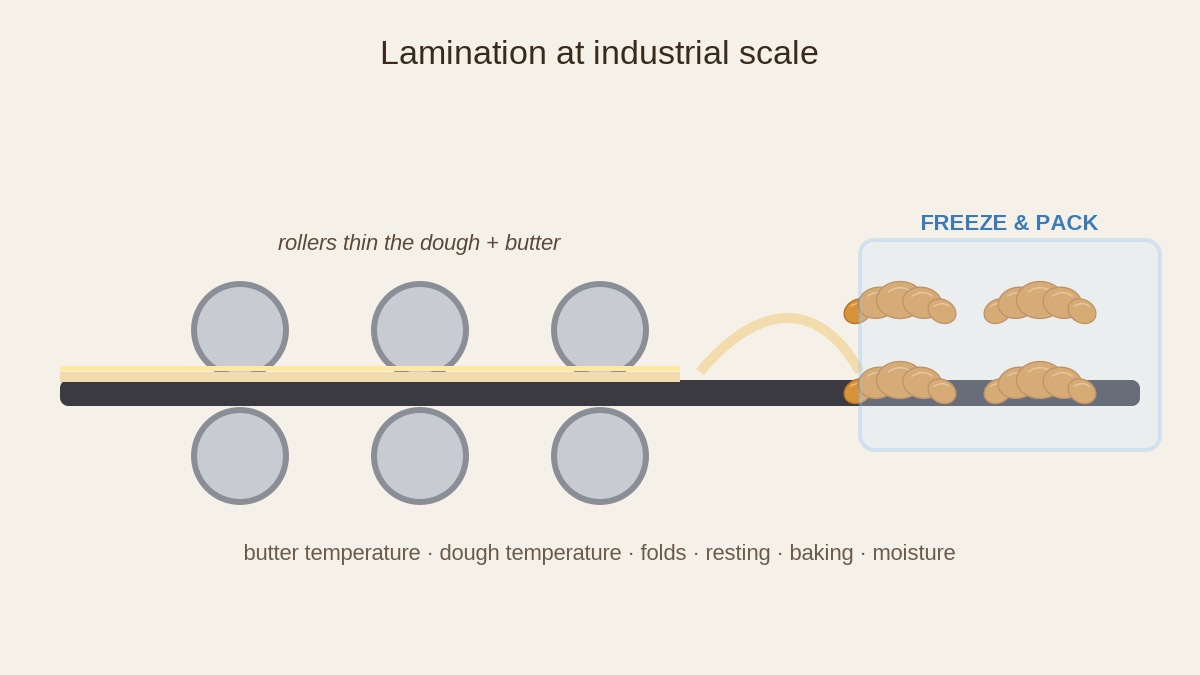
Commercial bakeries use carefully controlled lamination systems to produce consistent pastry products.
They monitor:
- Butter temperature and plasticity
- Dough temperature
- Number and thickness of folds
- Resting periods
- Baking temperature and time
- Final moisture and texture
Butter consistency is especially important.
Manufacturers may select fats with specific melting and plasticity characteristics to help maintain performance during processing.
Freezing and packaging also play important roles in maintaining pastry quality before baking.
09Conclusion
The next time you enjoy a flaky croissant or a crisp piece of puff pastry, remember what is happening inside.
Thin layers of butter separate the dough. Water turns into steam. Heat expands the layers. And the pastry structure sets into a crisp, delicate texture.
It's not magic.
It's food science.