
Milk is more complicated than it looks.
Milk looks like a simple white liquid.
But why does it sometimes form a layer of cream? Why does it foam when heated or steamed? Why does lemon juice make it curdle? And why does milk sometimes separate when added to coffee?
The answer is hidden in its proteins, fats, minerals and water.
Milk is actually a complex food system containing tiny fat droplets, protein structures and dissolved substances.
Let's explore the fascinating science behind this everyday ingredient.
01What is milk made of?
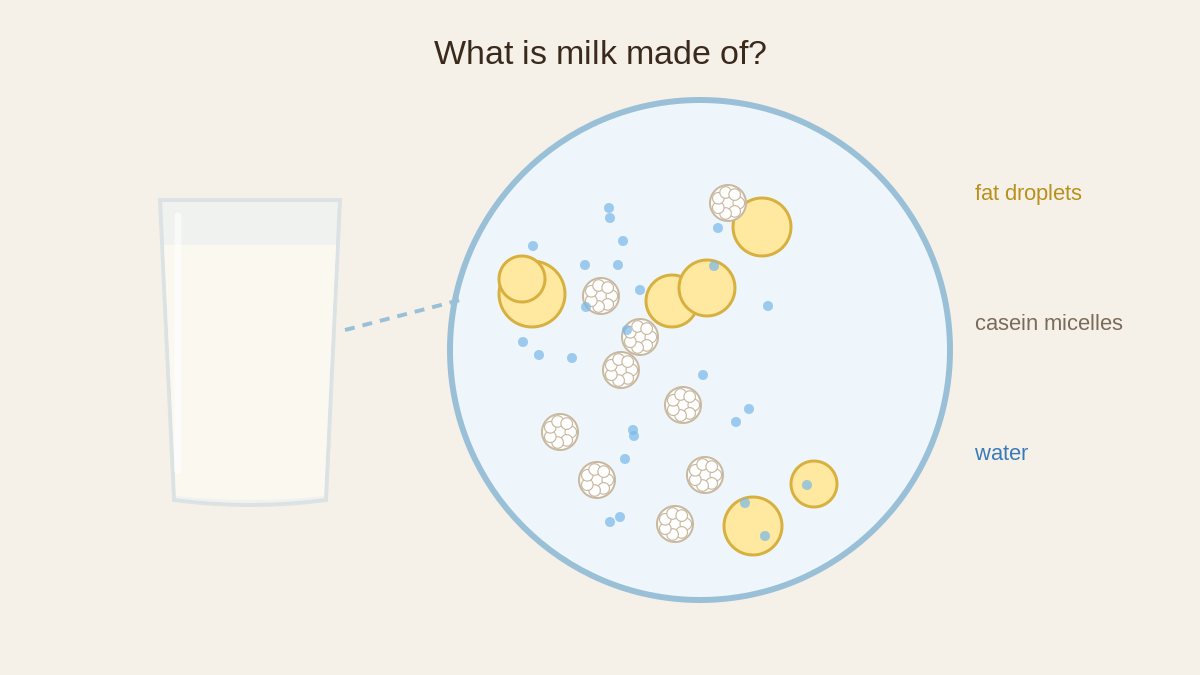
Milk contains several important components:
- Water: The main component of milk.
- Fat: Present as tiny droplets dispersed throughout the liquid.
- Proteins: Mainly casein and whey proteins.
- Lactose: The naturally occurring milk sugar.
- Minerals: Including calcium, phosphorus and potassium.
- Vitamins: Including several B vitamins and fat-soluble vitamins.
These components interact to create milk's familiar appearance, texture and behaviour.
Milk is not simply fat dissolved in water.
It is a complex mixture containing an emulsion and a protein-based colloidal system.
02Why is milk white?
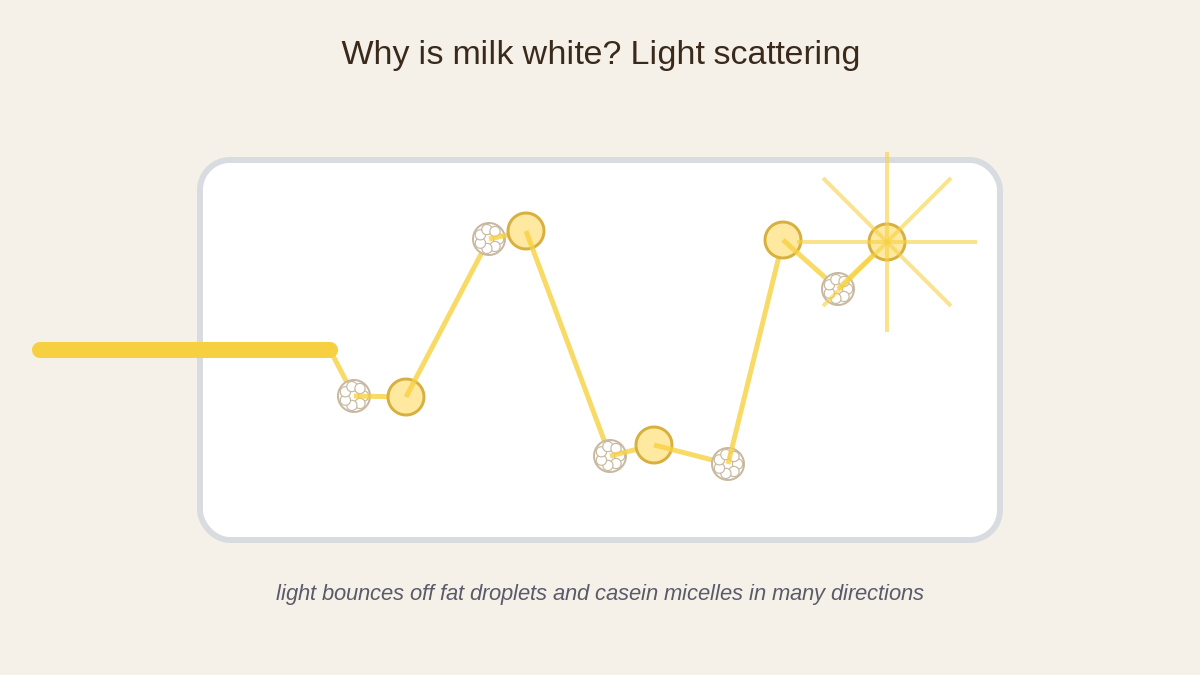
Milk's white appearance is largely caused by light scattering.
Tiny fat droplets and casein micelles interact with incoming light.
Instead of allowing light to pass straight through, these structures scatter it in many directions.
The combined scattering makes milk appear white or creamy.
The amount of fat and the size of the dispersed particles can influence its appearance.
03Why does cream rise to the top?
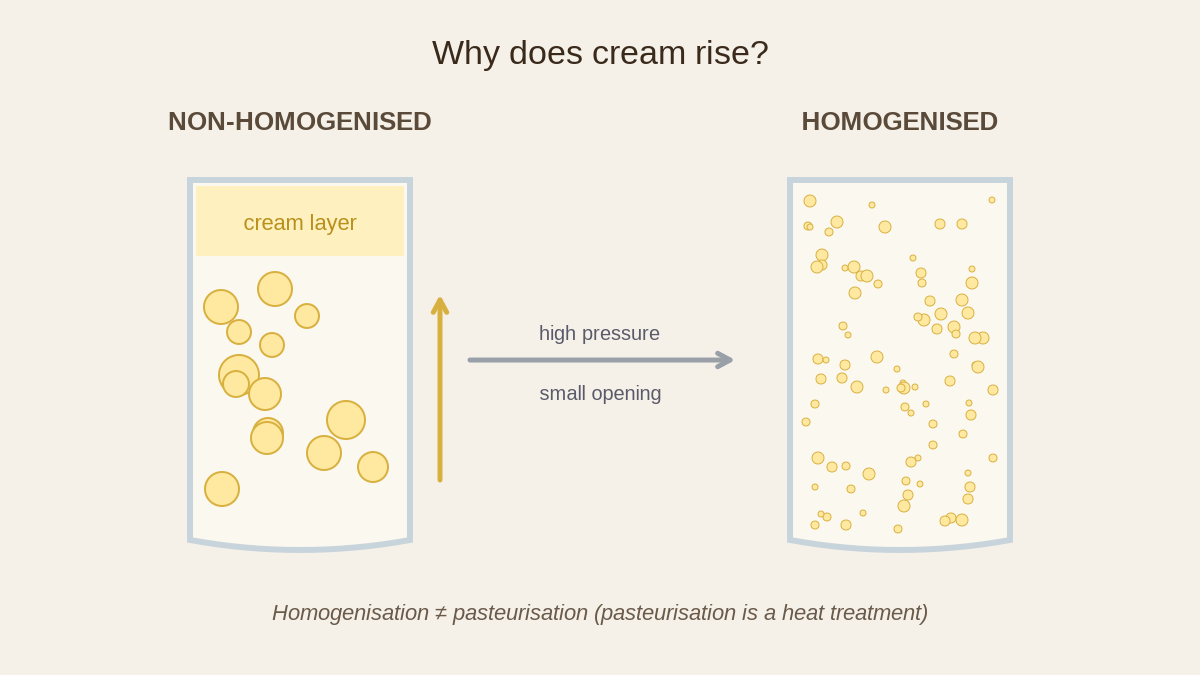
Have you ever noticed a layer of cream forming at the top of milk?
This happens because fat is less dense than the watery part of milk.
In non-homogenised milk, fat droplets can gradually move upwards and gather at the surface.
This process is called creaming.
Modern commercial milk is often homogenised.
During homogenisation, milk is forced through a small opening under high pressure.
This breaks large fat droplets into much smaller droplets.
Smaller droplets rise much more slowly, helping prevent a visible cream layer from forming during normal storage.
Homogenisation changes the physical structure of the milk, but it is not the same as pasteurisation.
Pasteurisation is a heat treatment used to reduce harmful microorganisms.
04Why does milk foam?
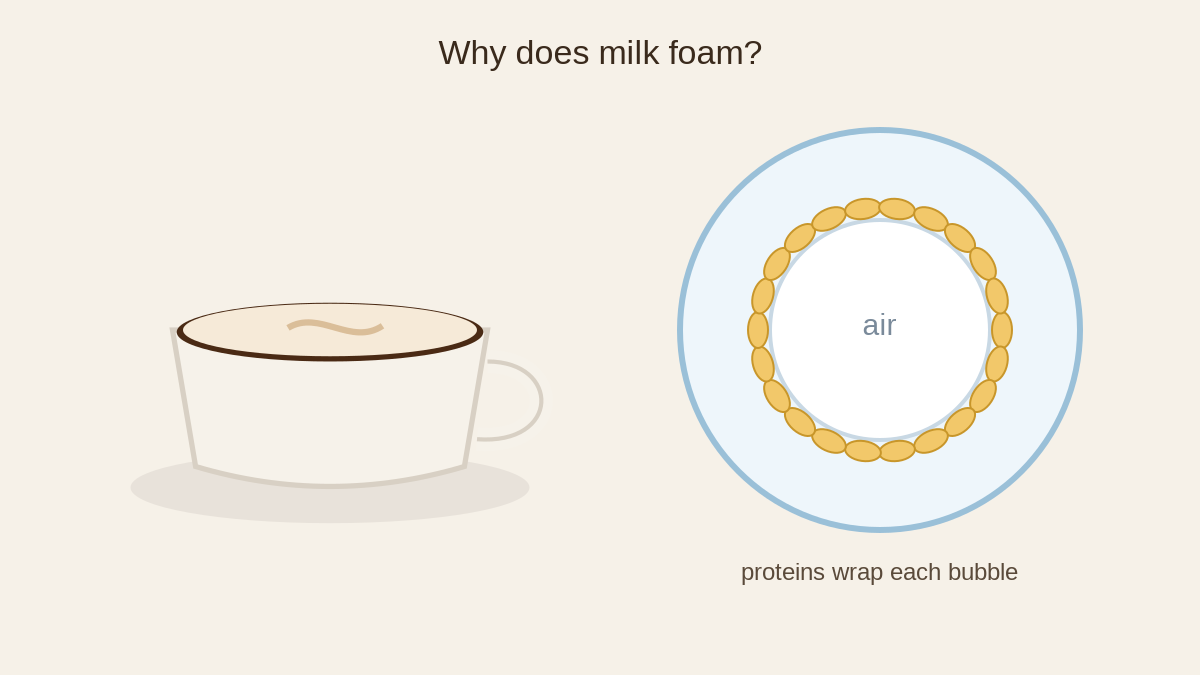
Milk foam forms when air is dispersed through milk and bubbles are stabilised.
Milk proteins play an important role.
Proteins can move towards the air-water interface of bubbles and help form a protective layer.
When milk is steamed, heat changes the behaviour of its proteins and helps create a stable foam structure.
Milk fat also influences foam quality.
Too much free fat can interfere with the stability of air bubbles, while the overall fat and protein composition affects the texture and mouthfeel.
This is why different types of milk can produce different results when steamed for coffee.
05Why does milk curdle?
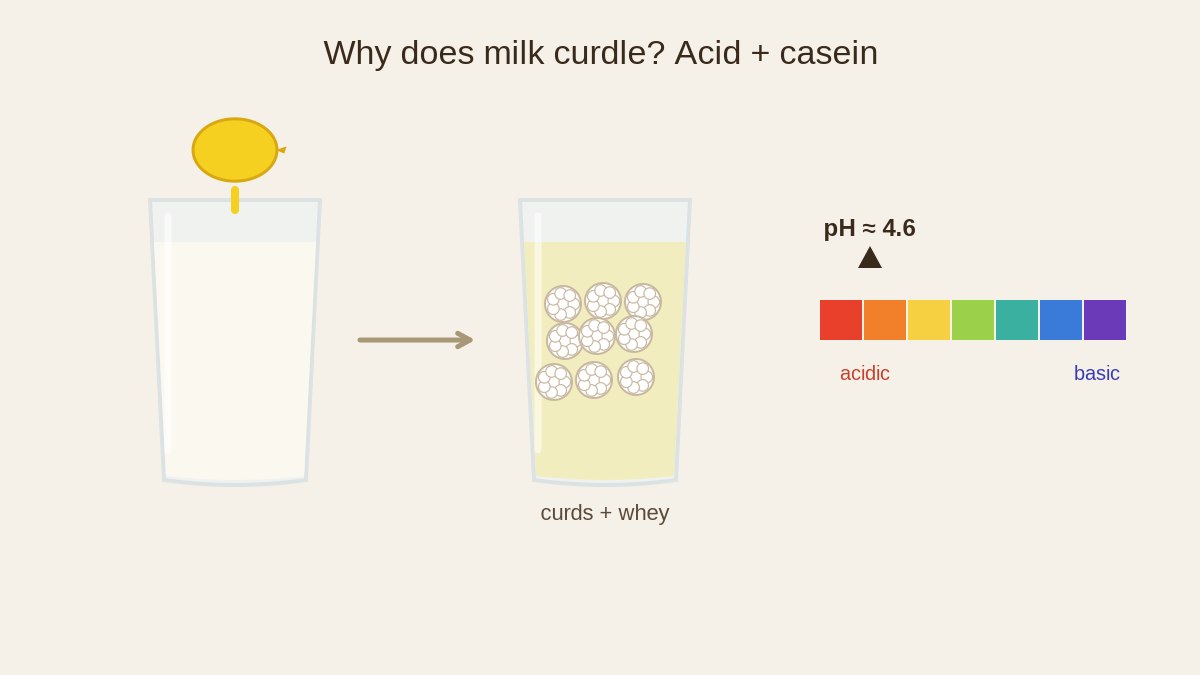
Curdling happens when milk proteins lose their normal dispersion and aggregate into visible clumps.
One common way to cause this is by adding acid.
Milk contains casein micelles that remain dispersed under normal conditions.
When the pH decreases, the electrical repulsion between these particles changes.
As the pH approaches the isoelectric point of casein, around 4.6, the proteins can aggregate.
This creates curds and separates them from the watery liquid called whey.
This is the basic principle behind making several fresh cheeses.
However, milk can also curdle because of heat, enzymes or other changes in its composition.
06Why does milk sometimes separate in coffee?
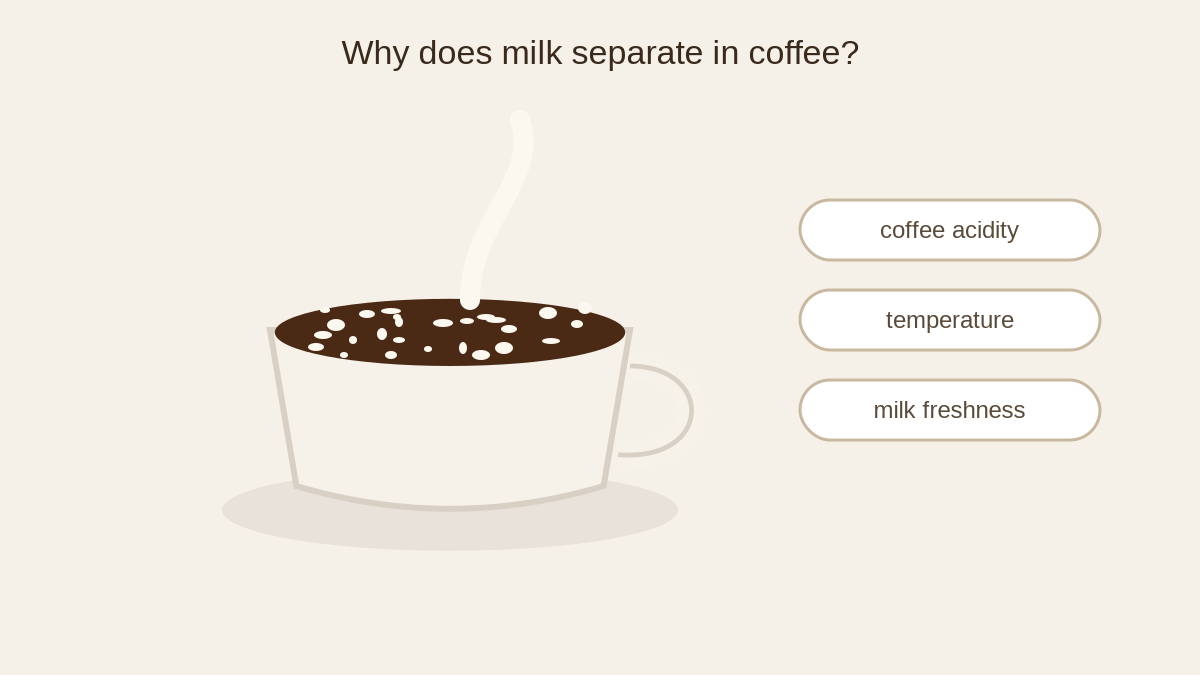
Have you ever added milk to coffee and noticed tiny white flakes appearing?
This can happen because coffee is acidic.
The acidity of coffee, combined with temperature and milk composition, can destabilise milk proteins.
Older milk may also be more vulnerable because its acidity can increase during storage.
The exact result depends on coffee acidity, milk freshness, temperature and formulation.
Using fresh milk and avoiding excessive temperature differences can help reduce unwanted separation.
07What happens when milk is heated?
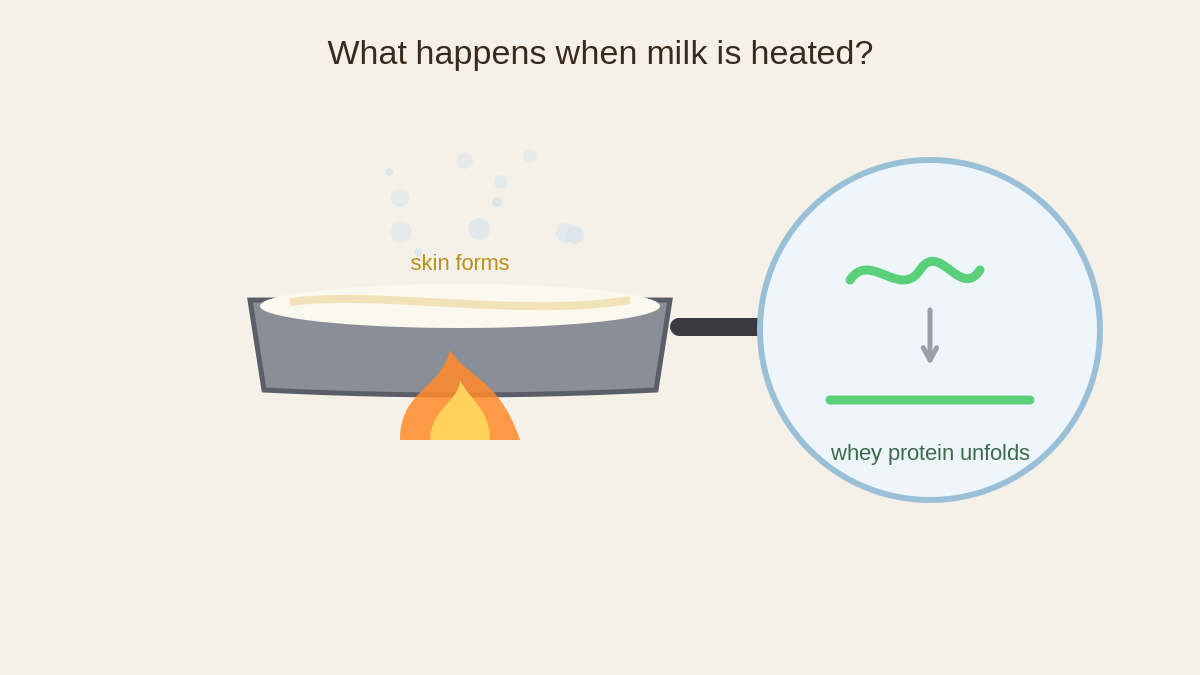
Heating milk causes several changes.
Whey proteins can unfold and denature.
Some of these proteins can interact with casein micelles.
At the same time, water evaporates from the surface, and a thin skin may form.
This skin contains concentrated milk proteins and fat.
If milk is heated for too long or at an excessively high temperature, flavour and texture can change.
Controlled heat treatment is essential in commercial dairy processing.
08A simple experiment: Make milk curdle
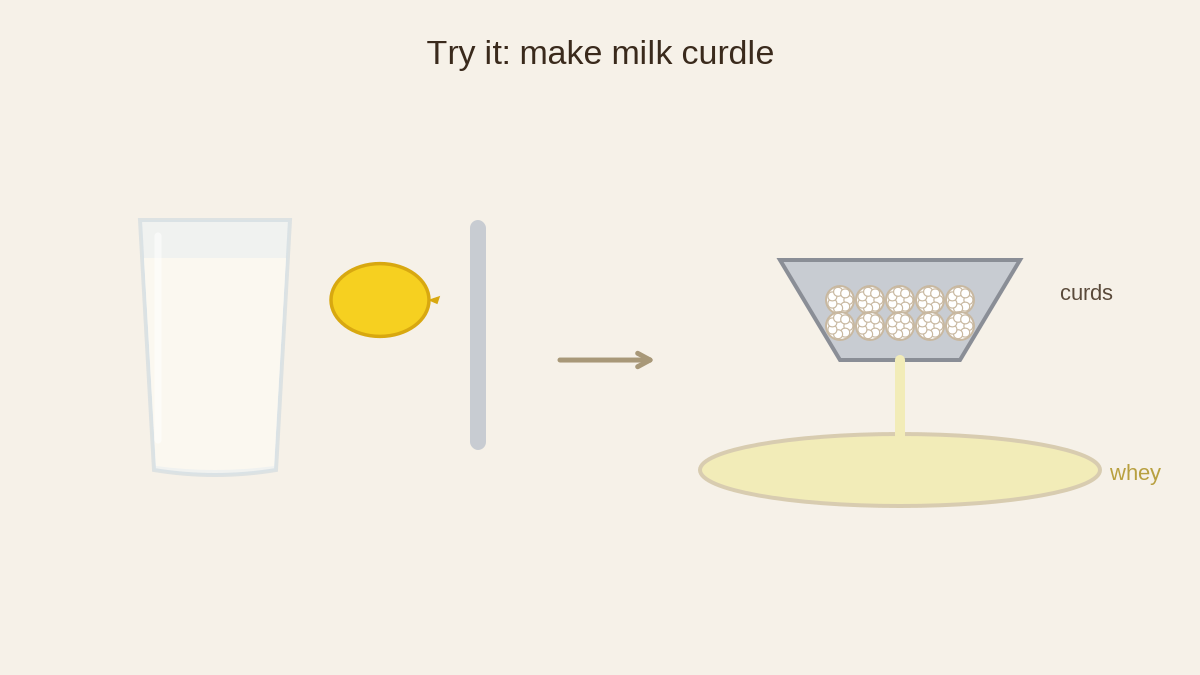
What is happening?
The acid lowers the pH of the milk.
As the pH approaches the isoelectric point of casein, the proteins aggregate and form curds.
This is a simple demonstration of the chemistry used in some cheese-making processes.
Do not consume the experiment mixture unless you have prepared it using a suitable food-safe recipe and ingredients.
09How the dairy industry uses milk science
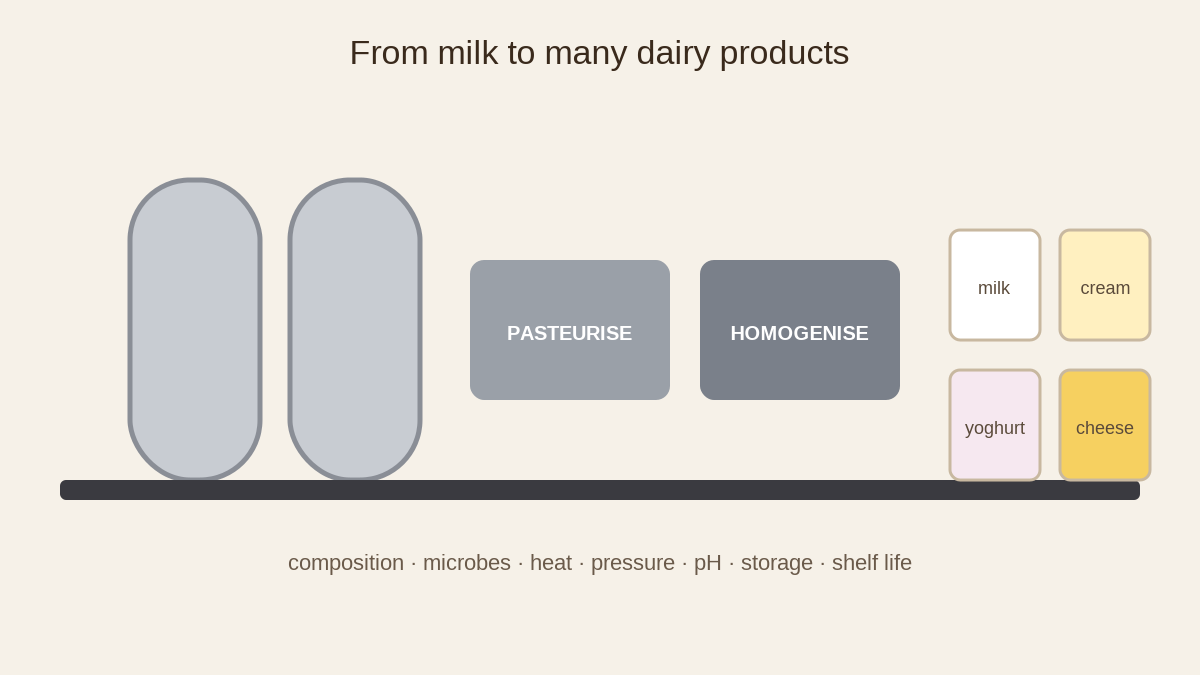
Commercial dairy processing relies heavily on food science.
Manufacturers monitor:
- Fat and protein composition
- Microbiological quality
- Pasteurisation temperature and time
- Homogenisation pressure
- Acidity and pH
- Storage temperature
- Shelf life and packaging
Milk may also be processed into cream, butter, yoghurt, cheese, milk powder and other dairy ingredients.
Each product requires different processing conditions.
For example, yoghurt production uses controlled fermentation, while cheese-making uses coagulation and whey separation.
10Conclusion
Milk may look simple, but its behaviour is controlled by an extraordinary combination of proteins, fat droplets, minerals and water.
Homogenisation changes the size of fat droplets. Proteins help stabilise foam. Acids cause casein to aggregate. And heat transforms milk's structure.
The next time you pour milk into your coffee or steam it for a latte, remember the science happening inside your cup.