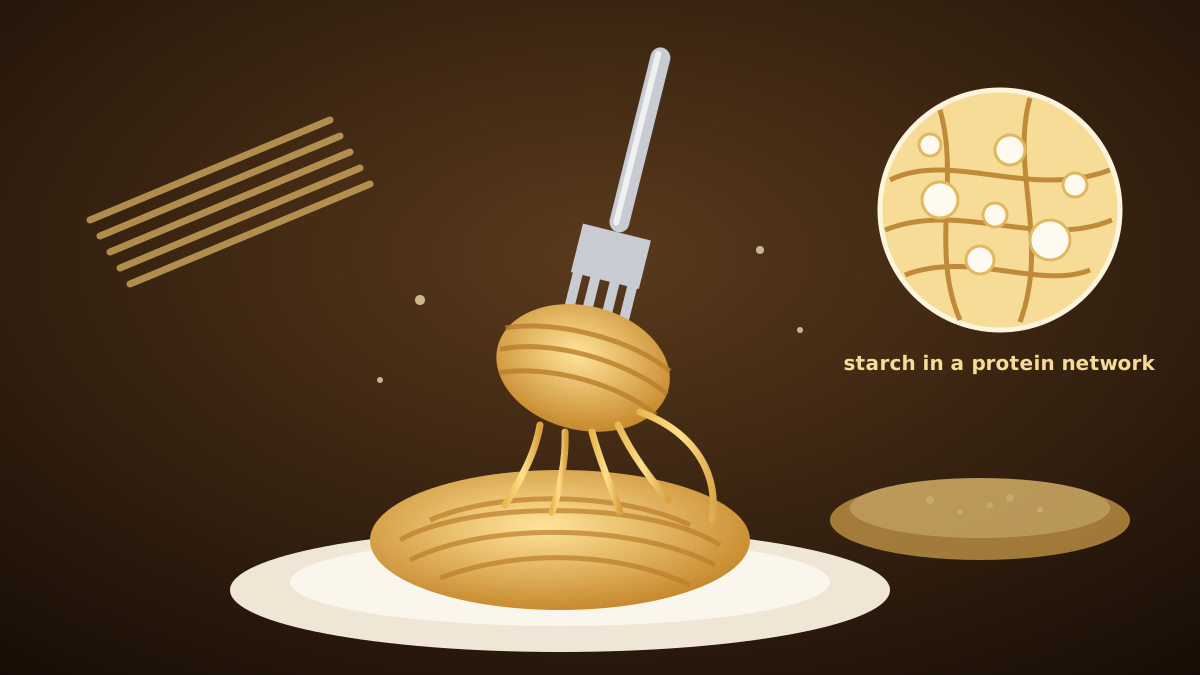
The secret inside every pasta strand.
Pasta looks simple.
Flour, water, sometimes eggs — shaped into hundreds of different forms.
Yet something remarkable happens when you drop dry pasta into boiling water.
It softens. It expands. Its texture changes completely.
Cook it for too long, and it becomes mushy. Remove it at just the right moment, and it has that satisfying bite Italians call al dente.
But what actually happens inside a pasta strand while it cooks?
The answer involves two important components: starch and proteins.
And understanding their behaviour can completely change the way you cook pasta.
01What is pasta really made of?
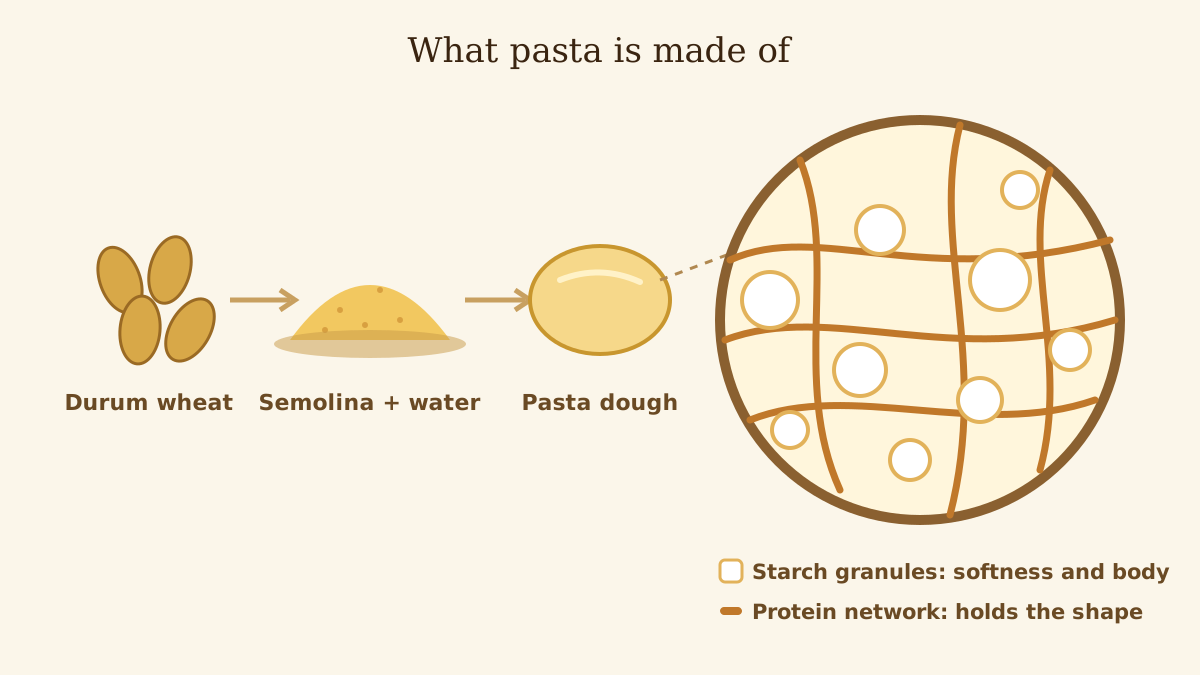
Traditional dried pasta is commonly made using durum wheat semolina and water.
Durum wheat is particularly useful because it has a strong protein structure and produces a firm dough.
Two major components influence pasta texture:
Starch: The carbohydrate component that absorbs water and changes during cooking.
Proteins: Mainly gluten-forming wheat proteins that help create the dough's structure.
When semolina and water are mixed, the proteins hydrate and form a network.
This network surrounds and holds starch granules within the pasta structure.
Think of it as a microscopic framework.
The starch provides much of the softness and body, while the protein network helps the pasta maintain its shape.
This balance is one reason pasta can become tender without immediately falling apart.
02What happens when pasta enters boiling water?
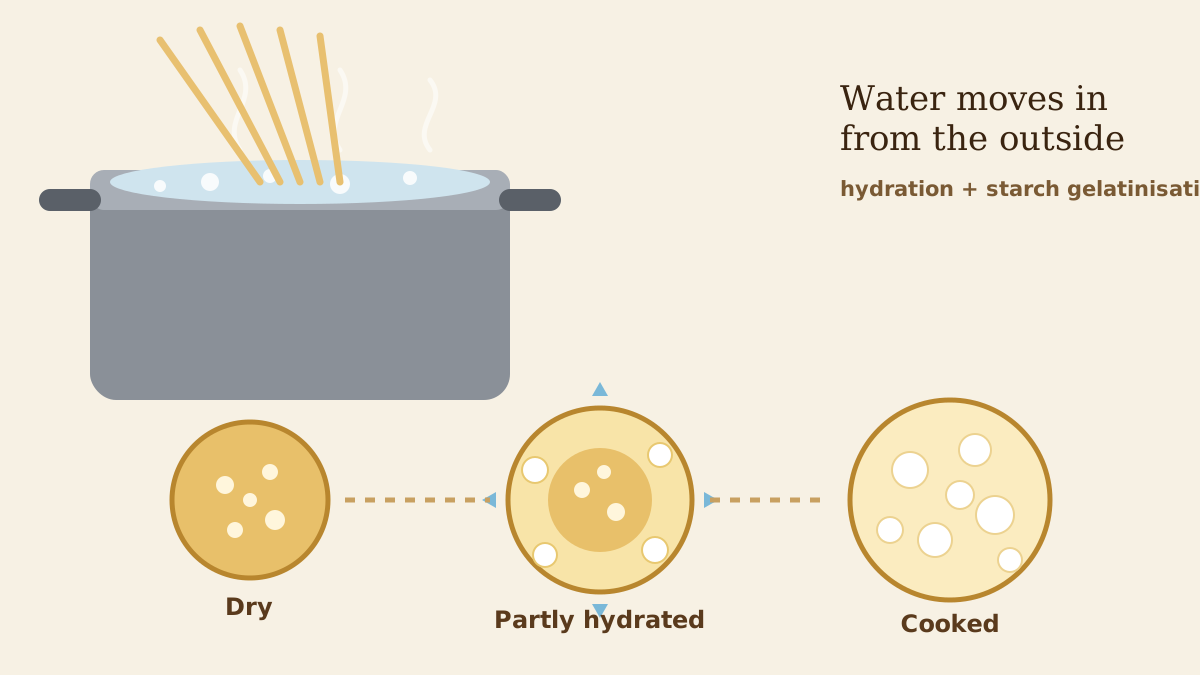
When dry pasta enters hot water, water begins moving into its structure.
This process is called hydration.
Initially, the outside absorbs water faster than the centre.
As cooking continues, water gradually penetrates deeper into the pasta.
At the same time, heat causes starch granules to undergo a process called gelatinisation.
Starch granules absorb water, swell and lose some of their organised internal structure.
Some starch molecules, particularly amylose, can move out of the granules into the surrounding water.
This contributes to the cloudy appearance of pasta cooking water.
The pasta becomes softer because its internal structure is changing.
But there is another important component controlling how it feels when you bite into it.
Its protein network.
03The secret behind al dente
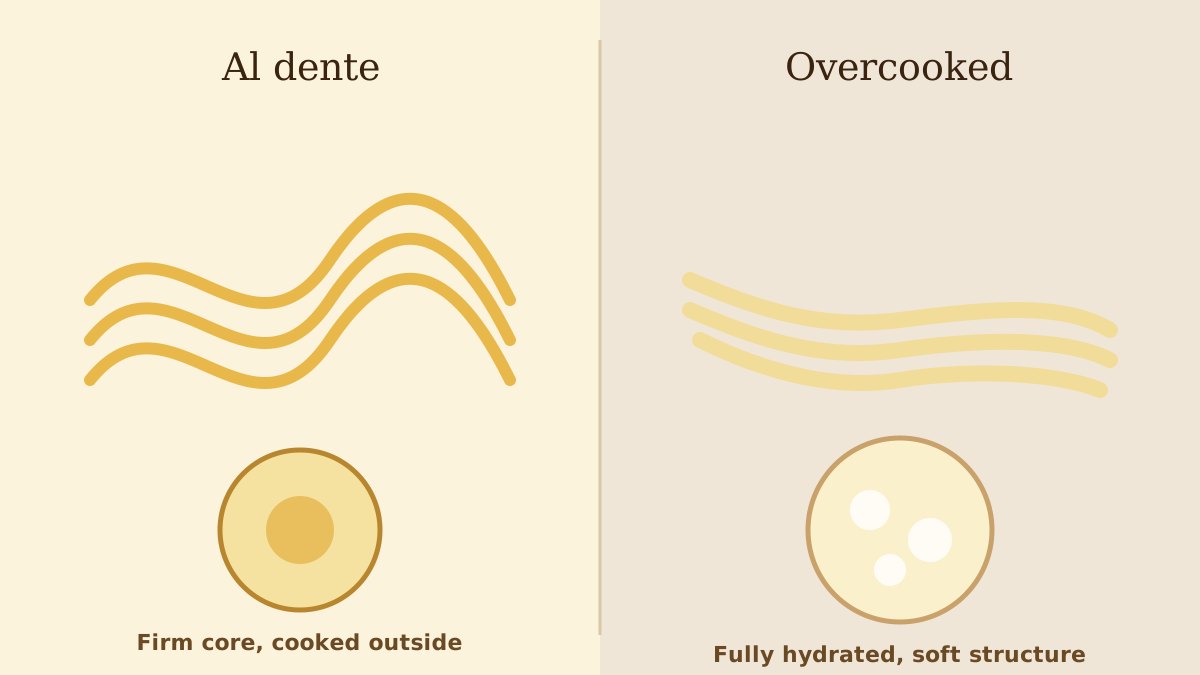
Al dente literally means "to the tooth."
It describes pasta that is cooked but still offers a slight resistance when bitten.
Why does this happen?
During cooking, hydration and starch gelatinisation progress through the pasta.
If cooking stops at the right stage, the pasta retains a structure that provides a firm, satisfying bite.
The centre may be less hydrated than the outside, but the texture should not be hard or chalky.
Cook it longer, and the structure continues to soften.
The starch becomes increasingly hydrated, and the pasta loses more of its firmness.
Eventually, the result can become mushy.
The ideal cooking time depends on pasta shape, thickness, formulation and manufacturing method.
This is why tasting pasta is often more reliable than following a timer alone.
04Why does pasta water become cloudy?
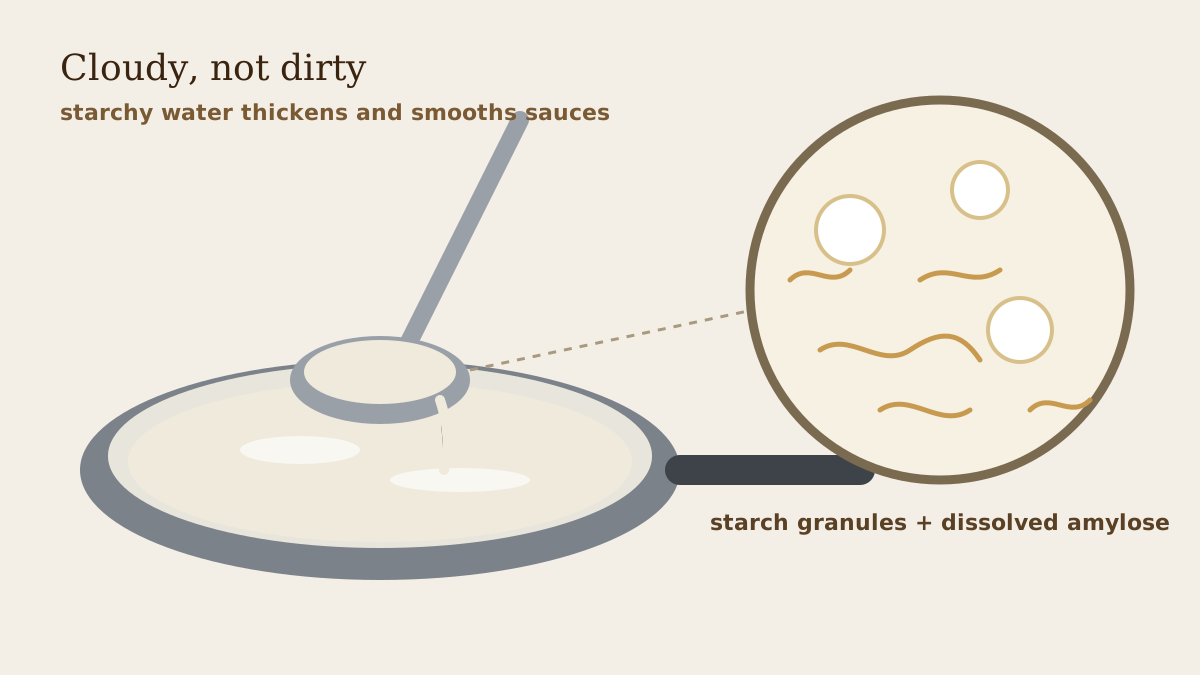
Have you noticed that the water left after cooking pasta often looks cloudy?
It isn't dirty water.
Much of that cloudiness comes from starch released from the pasta surface during cooking.
As pasta hydrates, some starch components enter the surrounding water.
The amount depends on factors such as:
- Pasta formulation
- Shape and surface area
- Cooking conditions
- Water-to-pasta ratio
- Whether the pasta has been stirred
This starch-containing water can be extremely useful in cooking.
When added to a sauce, it can help improve consistency and contribute to a smoother, more cohesive mixture.
The starch helps increase viscosity, while mixing can help disperse fat droplets throughout the sauce.
That is one of the secrets behind restaurant-style silky pasta sauces.
05Why does pasta sometimes stick together?
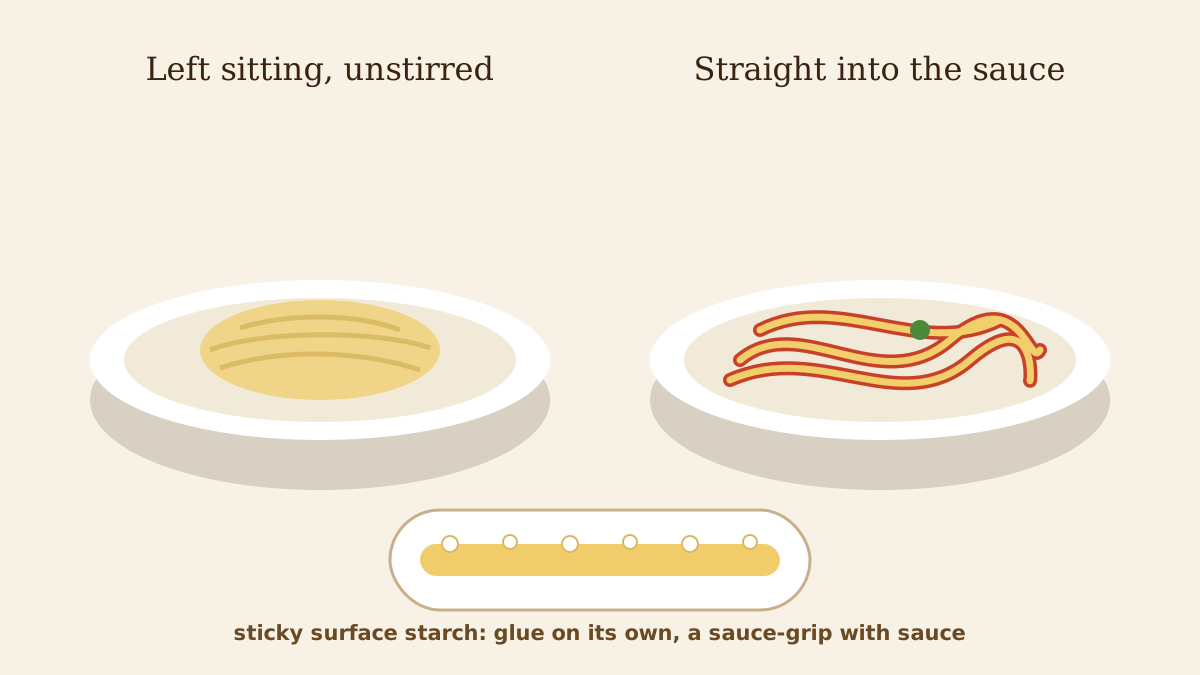
Pasta sticking is a common kitchen problem.
But why does it happen?
When pasta first enters hot water, starch on its surface begins to hydrate.
If strands remain pressed together, the sticky surface starch can help them adhere.
Several factors influence sticking:
- Insufficient stirring during the initial cooking stage.
- Overcrowding.
- Excessive surface starch.
- Leaving cooked pasta sitting without sauce or appropriate handling.
Stirring gently during the early stages helps separate the strands.
06Why do different pasta shapes exist?
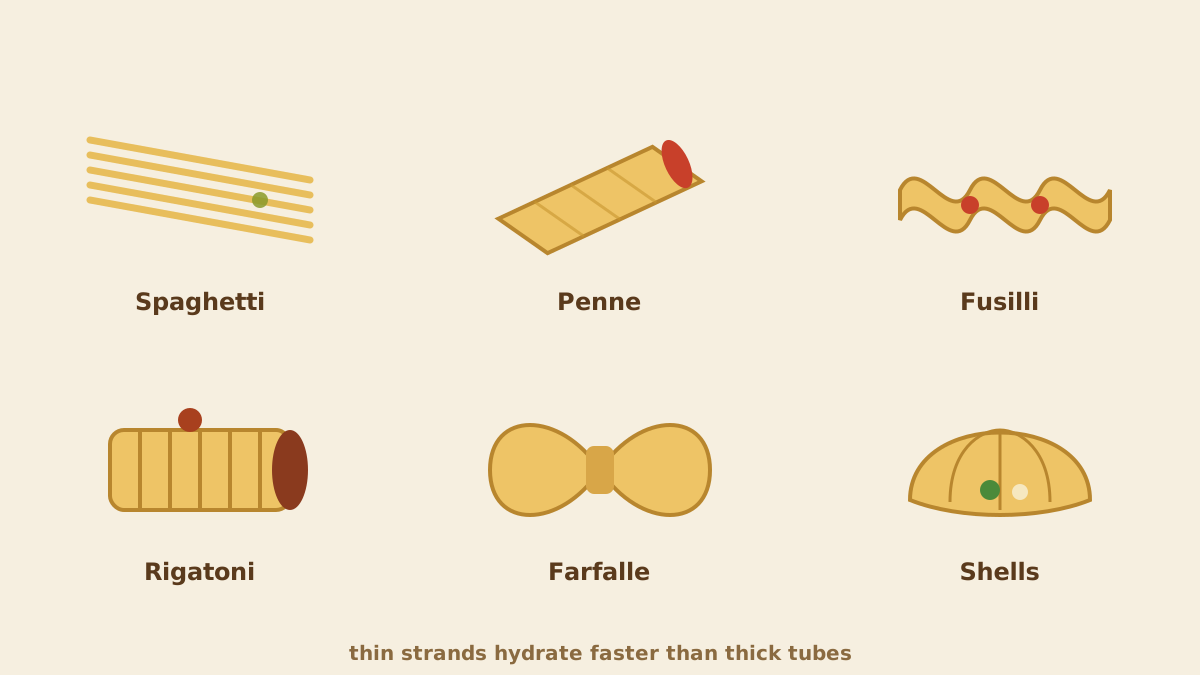
Pasta shapes are not just decorative.
They influence cooking behaviour and how sauce interacts with the pasta.
Spaghetti: Long, smooth strands work well with many oil-based and lighter sauces.
Penne: Hollow tubes can hold sauce inside and around their surfaces.
Fusilli: Twisted shapes provide grooves that help capture thicker sauces.
Rigatoni: Large ridges and hollow centres work well with chunky sauces.
Shell pasta: Its curved shape can hold small pieces of vegetables, cheese and sauce.
Shape also influences cooking time.
Thin strands generally hydrate faster than thick tubes because water has a shorter distance to travel into their centre.
Pasta design is therefore a combination of food engineering, cooking performance and sensory experience.
07Fresh pasta vs dried pasta
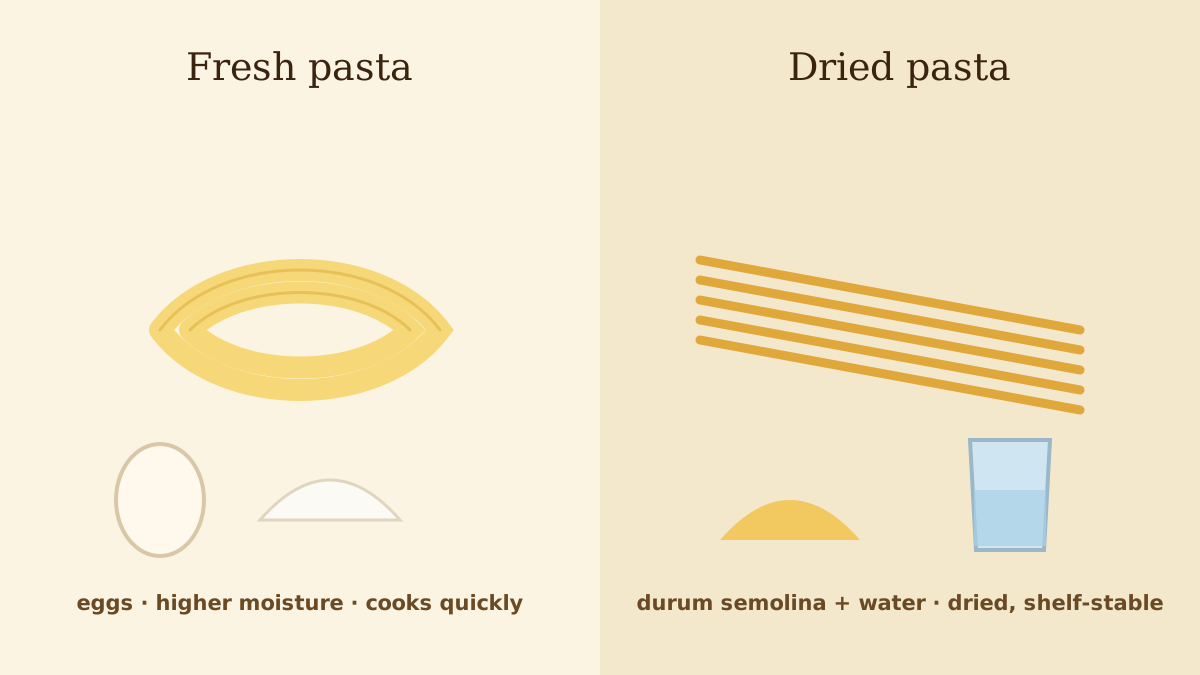
Fresh and dried pasta are not simply different versions of the same product.
They often have different formulations and structures.
Dried pasta is commonly produced from durum wheat semolina and water. It is shaped and dried under controlled conditions to reduce moisture and create a shelf-stable product.
Fresh pasta may contain eggs and typically has a higher moisture content. It is often softer and cooks more quickly.
Their cooking behaviour differs because of their ingredients, moisture content, thickness and structure.
Fresh egg pasta can develop a tender, delicate texture, while dried durum pasta often provides a firmer bite.
Neither is automatically superior.
They serve different culinary purposes.
08The food industry: engineering the perfect pasta
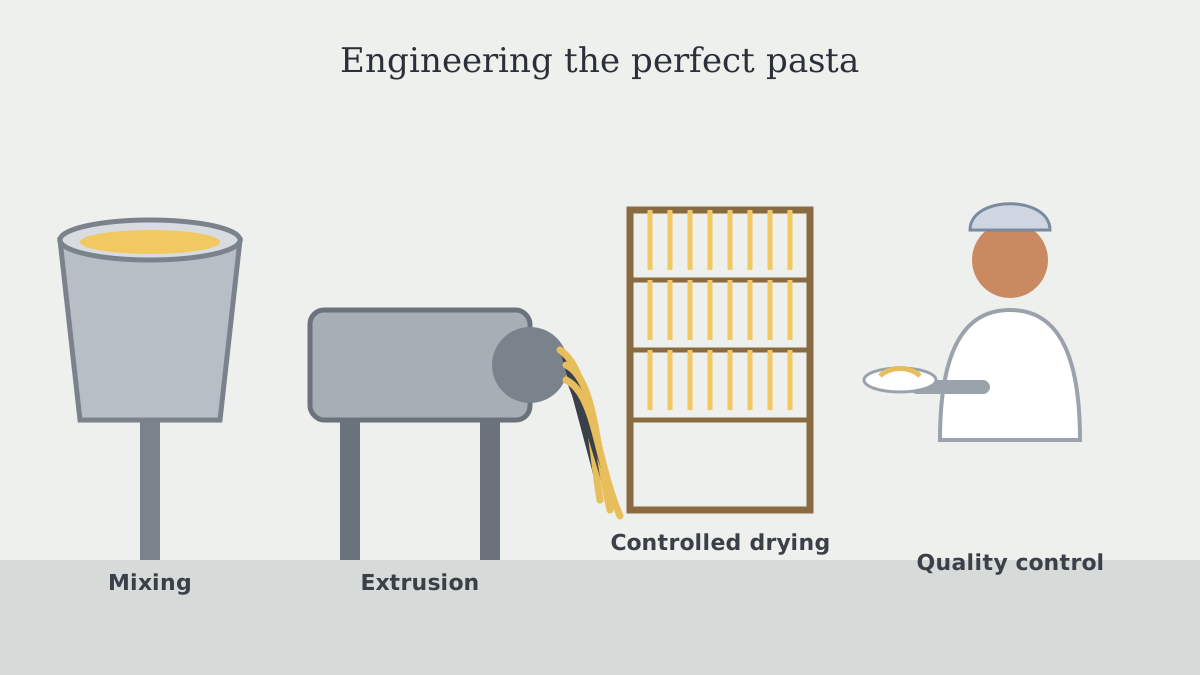
Commercial pasta production is a carefully controlled process.
Manufacturers monitor several factors:
- Wheat quality and protein content
- Semolina particle size
- Water addition
- Dough mixing
- Extrusion pressure
- Drying temperature and humidity
- Final moisture content
Drying is particularly important.
If moisture is removed too quickly or unevenly, internal stresses can develop and affect product quality.
Manufacturers therefore use controlled drying schedules to achieve consistent moisture and structural properties.
Quality-control teams may assess cooking time, firmness, cooking loss, colour and texture.
The goal is to produce pasta that cooks consistently and maintains the desired bite.
09Try this: the pasta cooking experiment
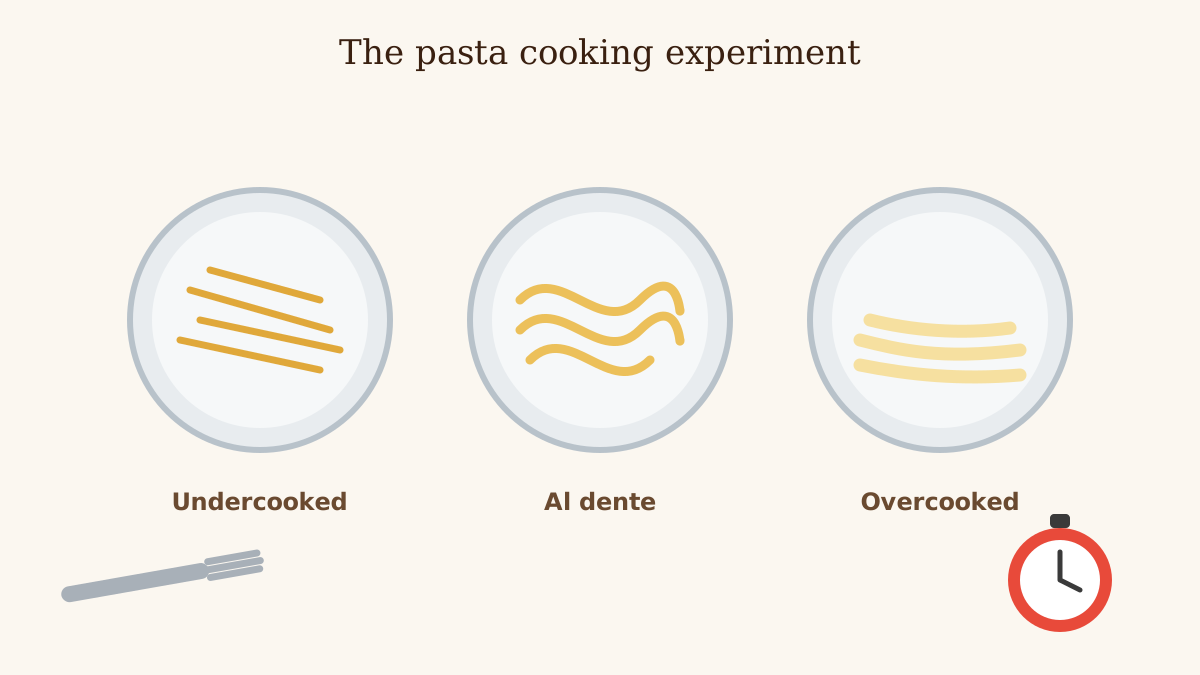
Let's investigate how cooking time changes pasta texture.
What you are learning: Cooking changes the hydration and structure of starch and proteins, influencing the final texture.
10The big takeaway
Pasta is much more than flour and water.
Its texture is controlled by the interaction between starch, proteins, heat and water.
The next time you cook spaghetti, remember that the difference between mushy and perfectly al dente pasta is a fascinating example of food chemistry.