The invisible world that transforms food.
What if we told you that some of the most delicious foods in the world are created with the help of living microorganisms?
Milk becomes yoghurt. Cabbage becomes sauerkraut. Flour and water become sourdough bread.
And none of this happens by magic.
It happens through fermentation, a biological process in which microorganisms such as bacteria and yeast transform food components into new substances.
These tiny organisms can change the flavour, aroma, texture and sometimes the shelf life of food.
But how can something invisible create such extraordinary results?
Let's enter the microscopic world of fermentation.
01What exactly is fermentation?
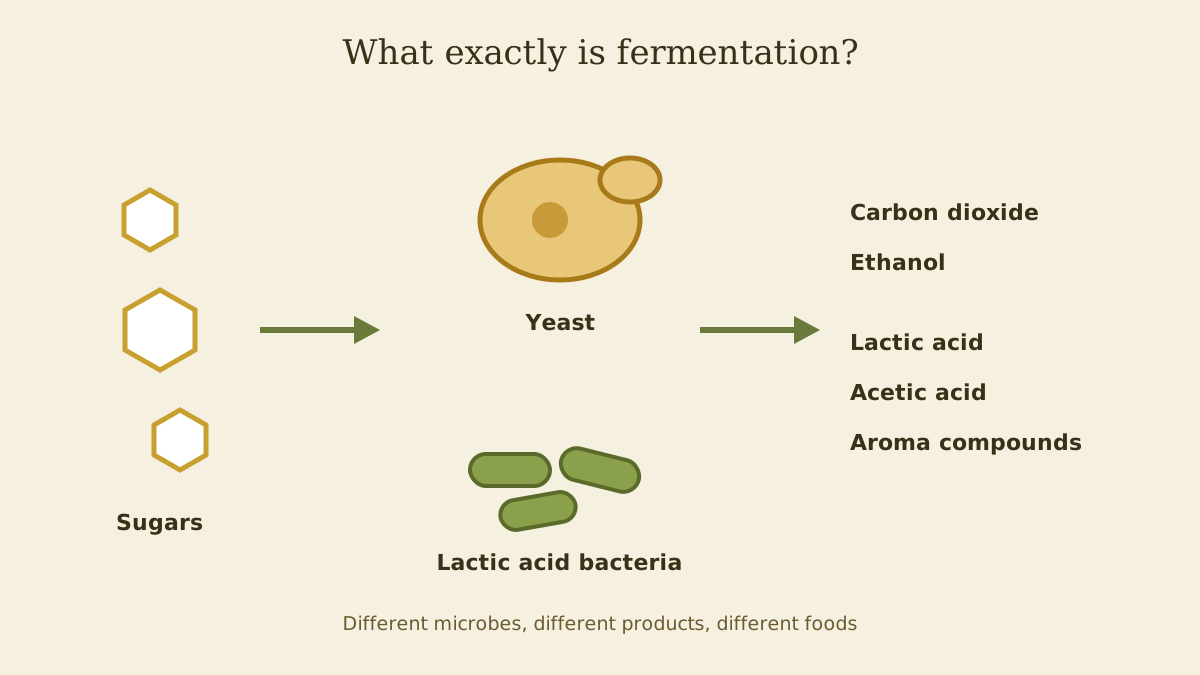
Fermentation is a metabolic process in which microorganisms convert food components into other compounds.
Depending on the microorganism and conditions, these products can include:
- Lactic acid
- Carbon dioxide
- Ethanol
- Acetic acid
- Various aroma and flavour compounds
Different microorganisms perform different jobs.
Lactic acid bacteria convert fermentable carbohydrates into lactic acid and other metabolites.
Yeasts can convert sugars into carbon dioxide and ethanol through alcoholic fermentation.
Some other bacteria contribute to the production of acetic acid and other flavour compounds.
The important point is that fermentation is not one single process.
It is a collection of biological transformations, each producing different characteristics in food.
And the most fascinating part?
Different microorganisms can create completely different foods from similar starting ingredients.
02How does milk turn into yoghurt?
Milk is mostly water, but it also contains proteins, fats, lactose and minerals.
One of its major proteins is casein.
To make yoghurt, specific bacterial cultures are added to milk. Common yoghurt cultures include:
- Streptococcus thermophilus
- Lactobacillus delbrueckii subsp. bulgaricus
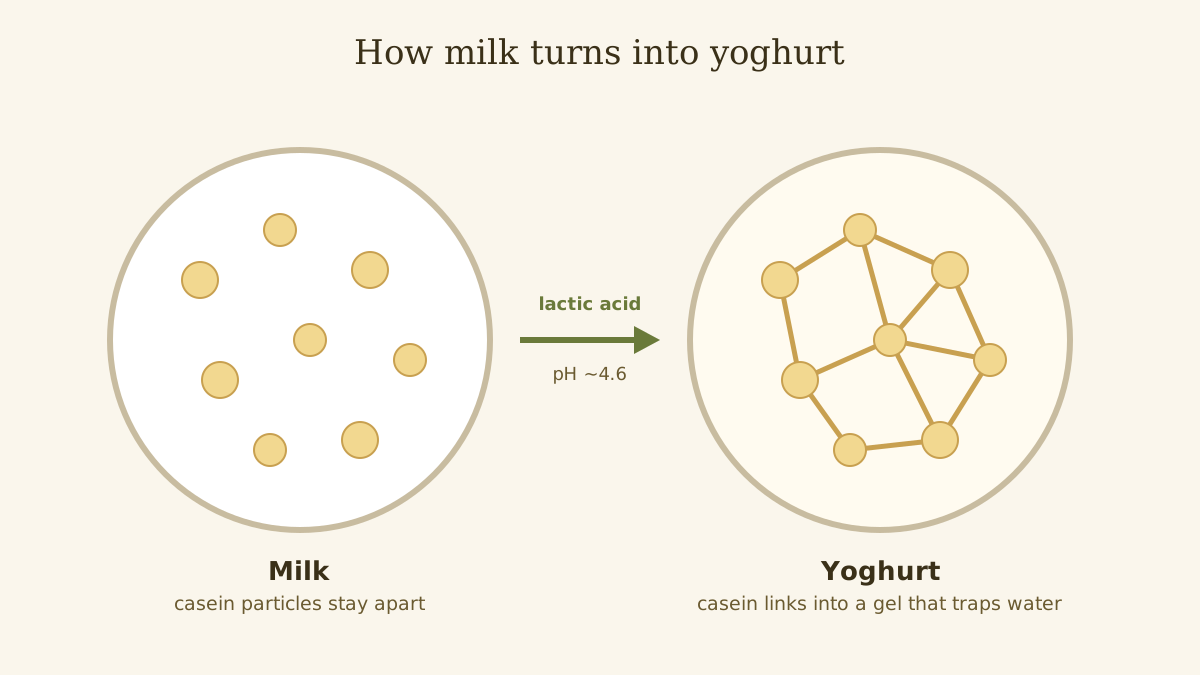
These bacteria use lactose, the natural sugar in milk, and produce lactic acid.
As lactic acid accumulates, the pH of milk decreases.
This changes the behaviour of casein proteins.
As the pH approaches approximately 4.6, casein particles lose much of their normal electrostatic stability and form a connected gel network.
That network traps water and other milk components.
The result?
Milk becomes thick, creamy yoghurt.
03The magic of sourdough bread
Sourdough is one of the most fascinating examples of a microbial ecosystem.
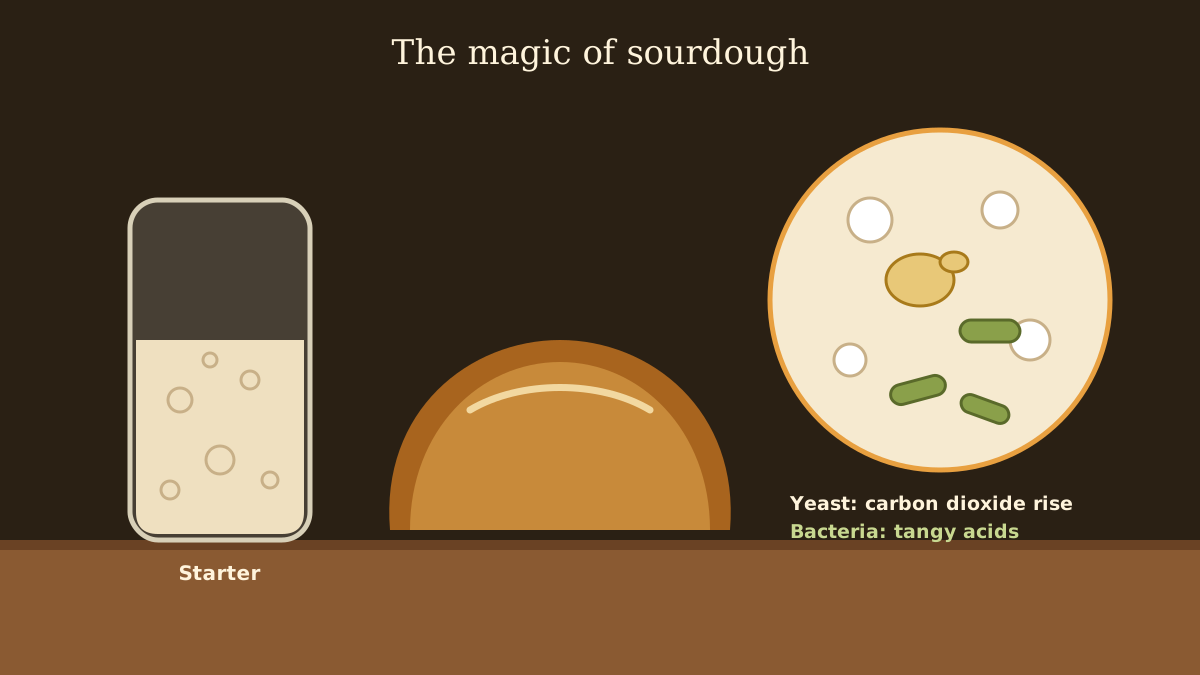
Unlike bread made with commercial baker's yeast alone, sourdough starter typically contains a community of yeasts and lactic acid bacteria.
They work together.
Yeasts produce carbon dioxide.
This gas becomes trapped within the dough's gluten network, helping the dough expand and rise.
Lactic acid bacteria produce organic acids and other metabolites.
These contribute to sourdough's characteristic tangy flavour and complex aroma.
The result is a loaf with:
- A distinctive sour flavour
- A complex aroma
- An open crumb structure, depending on the recipe and process
- A crisp crust when properly baked
The exact microbial community depends on ingredients, environment, feeding schedule and fermentation conditions.
This means two sourdough starters can behave differently even when made using similar ingredients.
A sourdough starter is essentially a small, active microbial ecosystem living in your kitchen.
04Why does cabbage become sauerkraut?
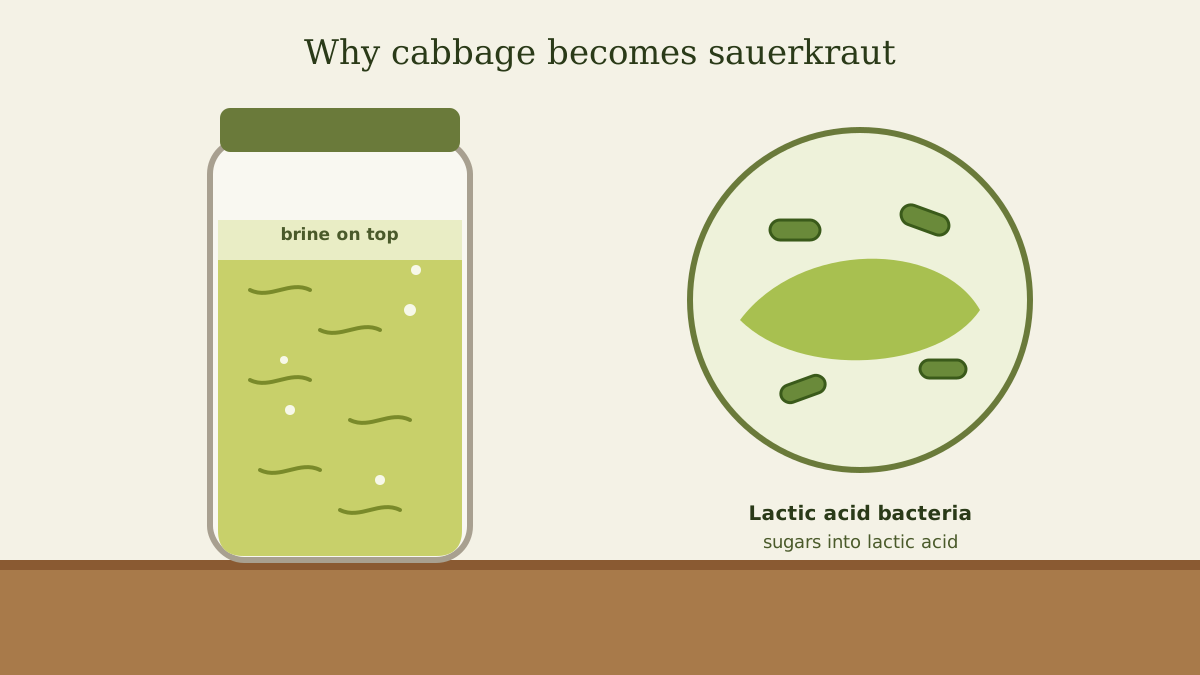
Take an ordinary cabbage.
Add salt.
Keep the cabbage submerged in its own released liquid or an appropriate brine, and allow the right microorganisms to grow under controlled conditions.
You can create sauerkraut.
But what is happening inside the jar?
Salt helps draw water out of the cabbage through osmosis and contributes to creating a suitable environment for lactic acid bacteria.
These bacteria use available sugars and produce lactic acid.
As acidity increases, the pH decreases.
This helps create the characteristic sour flavour and changes the microbial environment.
The salt concentration, temperature, cabbage quality and fermentation time all influence the final result.
05Fermentation vs spoilage: what is the difference?
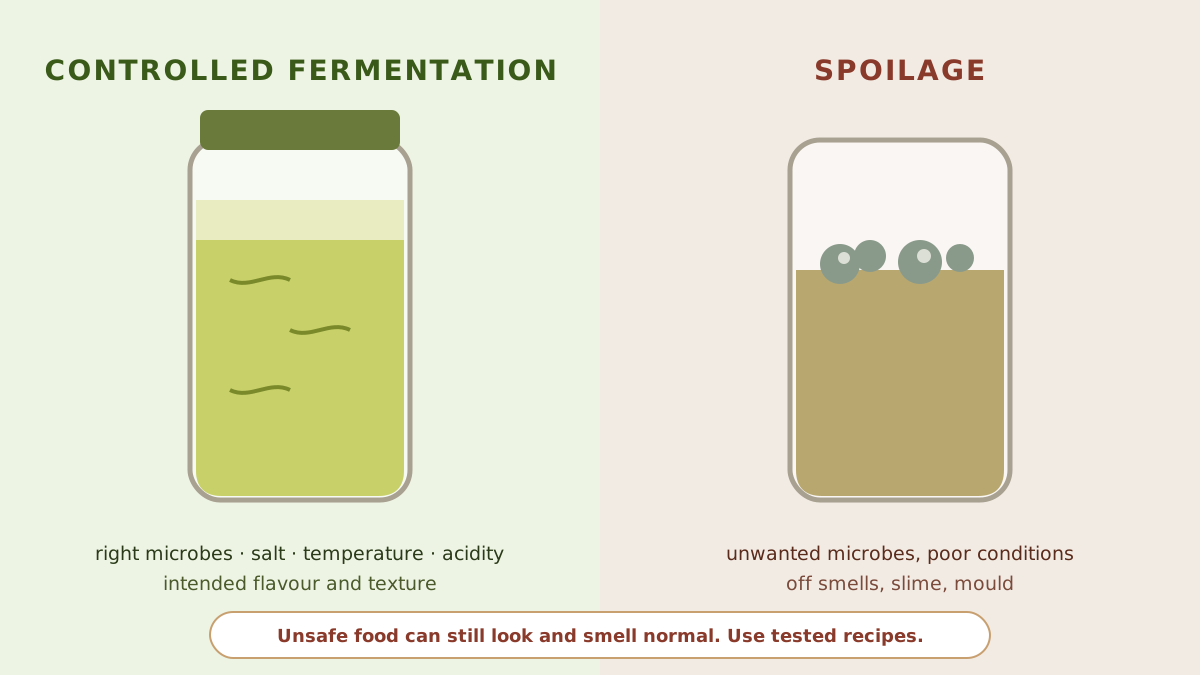
Fermentation and spoilage can both involve microorganisms.
So how do we distinguish them?
The difference lies in the microorganisms involved, the conditions, the process and the outcome.
Controlled fermentation
- Uses suitable microorganisms.
- Follows an appropriate process.
- Controls important factors such as salt, temperature and acidity.
- Produces intended flavours and textures.
Spoilage
- May involve unwanted microorganisms.
- Can cause unpleasant odours, flavours, textures and visible changes.
- May occur when storage or processing conditions are unsuitable.
But here's an important food-safety lesson:
Not all dangerous microorganisms produce visible signs of spoilage.
A food can look and smell normal and still be unsafe.
06How fermentation changes flavour
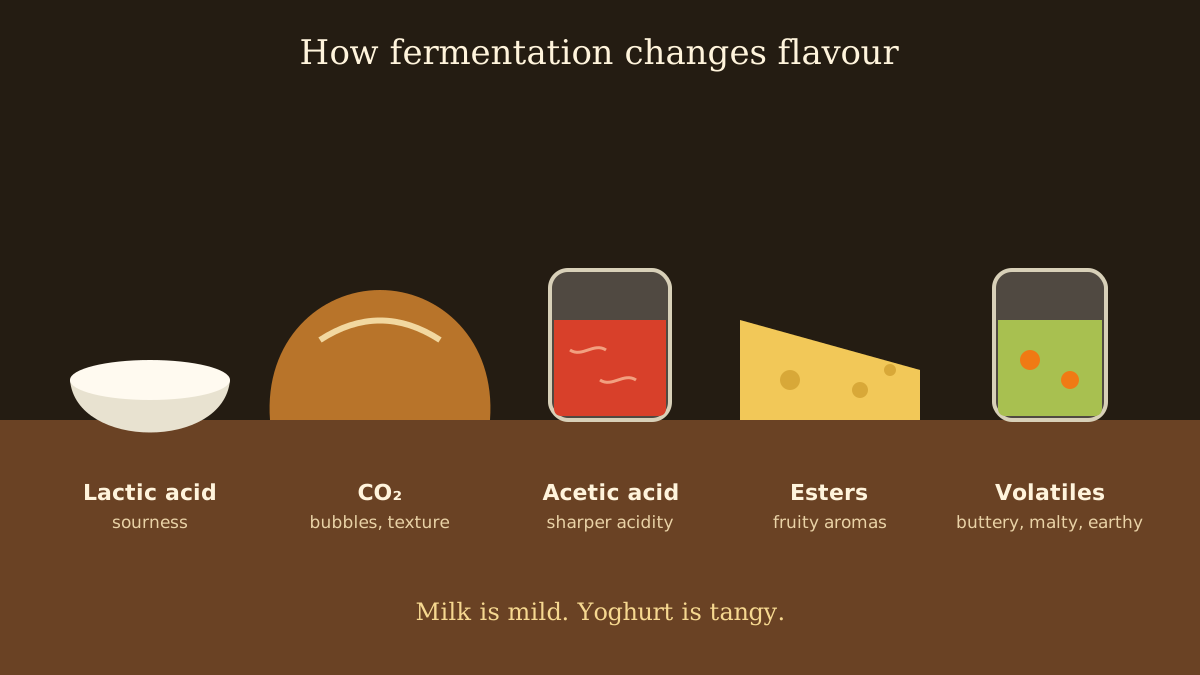
Fermentation does more than preserve or transform food.
It creates flavour.
Microorganisms produce a variety of compounds that contribute to the final sensory experience.
For example:
- Lactic acid creates sourness.
- Acetic acid contributes a sharper acidic note.
- Carbon dioxide creates bubbles and influences texture.
- Esters can contribute fruity aromas.
- Other volatile compounds create buttery, malty, earthy or complex notes.
This explains why fermented foods can taste so different from their original ingredients.
Milk is mild.
Yoghurt is tangy.
Cabbage is relatively neutral.
Sauerkraut is sour and aromatic.
The ingredients may be simple, but microbial metabolism creates a completely different sensory experience.
07Fermentation in the food industry
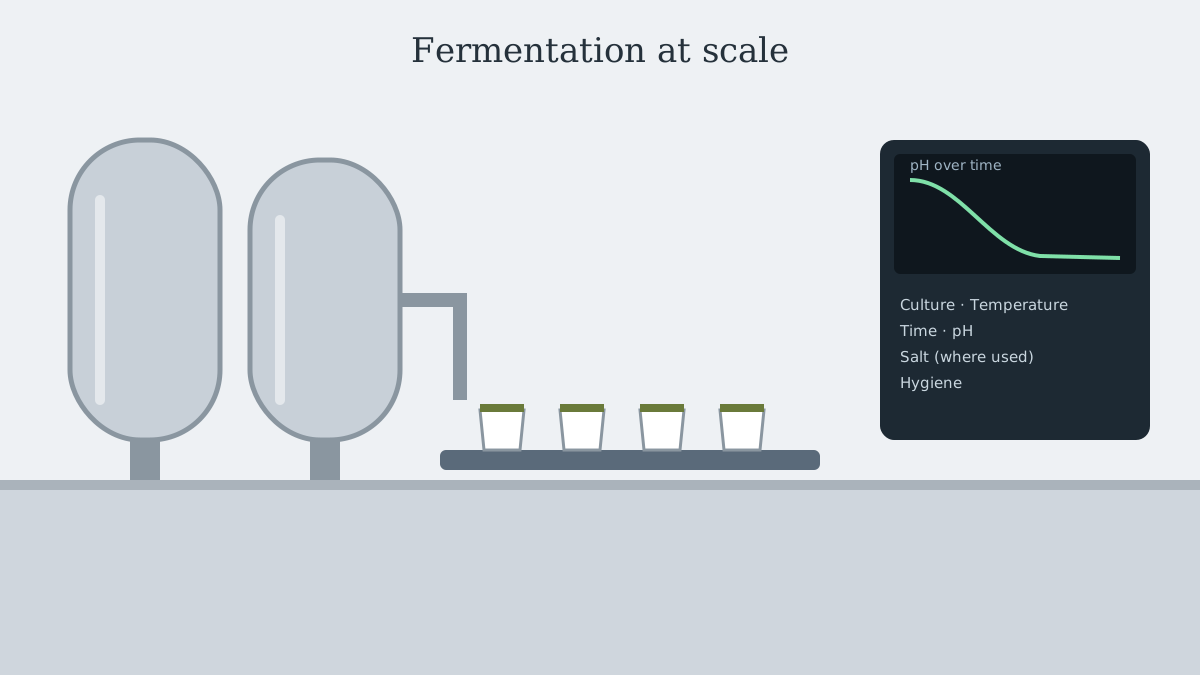
Fermentation is used on a large scale across the food industry.
Manufacturers rely on carefully selected microorganisms and controlled processing conditions.
Examples include:
- Dairy: Yoghurt and certain cheeses depend on microbial cultures.
- Bakery: Yeast fermentation helps dough rise and develops flavour.
- Vegetables: Fermented products such as sauerkraut and kimchi rely on controlled lactic acid fermentation.
- Beverages: Yeast fermentation is used in the production of various fermented drinks.
For manufacturers, important control parameters include:
- Culture selection
- Temperature
- Fermentation time
- pH
- Salt concentration, where applicable
- Hygiene and contamination prevention
A small change in conditions can affect fermentation speed, flavour, texture and consistency.
This is why fermentation is both a traditional food craft and a modern food-science discipline.
08Try this: the yeast and balloon experiment
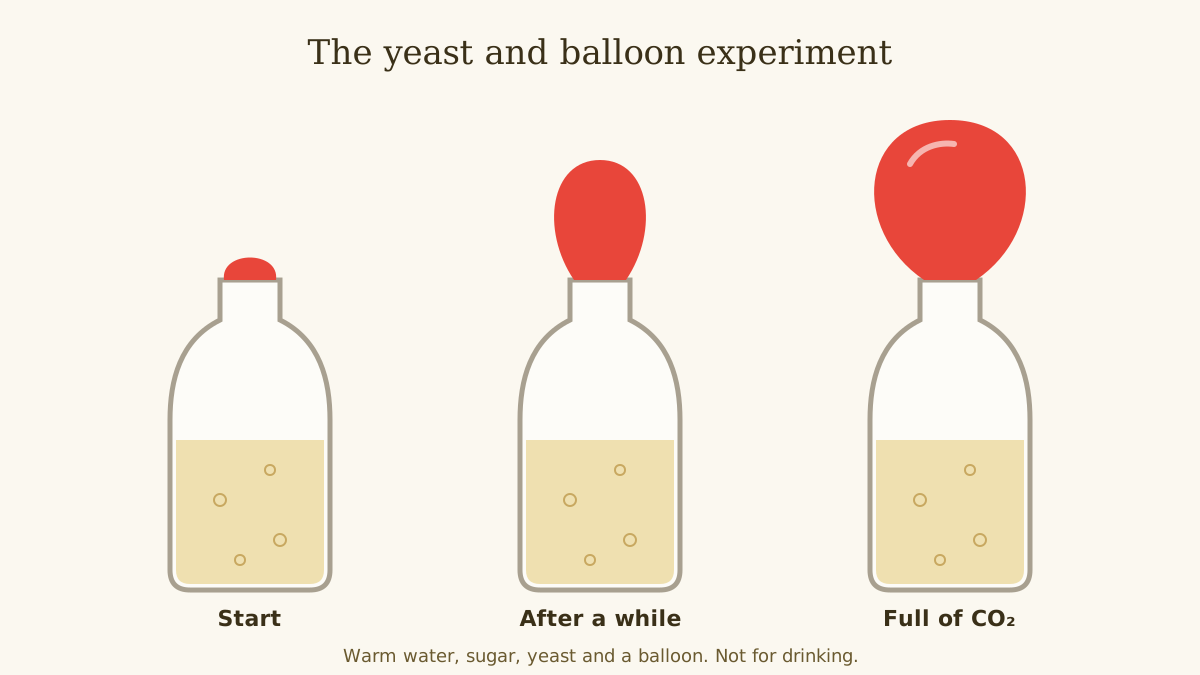
Want to see fermentation in action?
You can observe yeast producing carbon dioxide using a few simple ingredients.
09The big takeaway
Fermentation shows us that microorganisms are not always something to eliminate.
Under the right conditions, they can be valuable partners in food production.
They help transform ingredients, create complex flavours, influence texture and contribute to the production of some of our most familiar foods.
The next time you eat yoghurt, sourdough or sauerkraut, remember:
There is an entire microscopic world behind every bite.