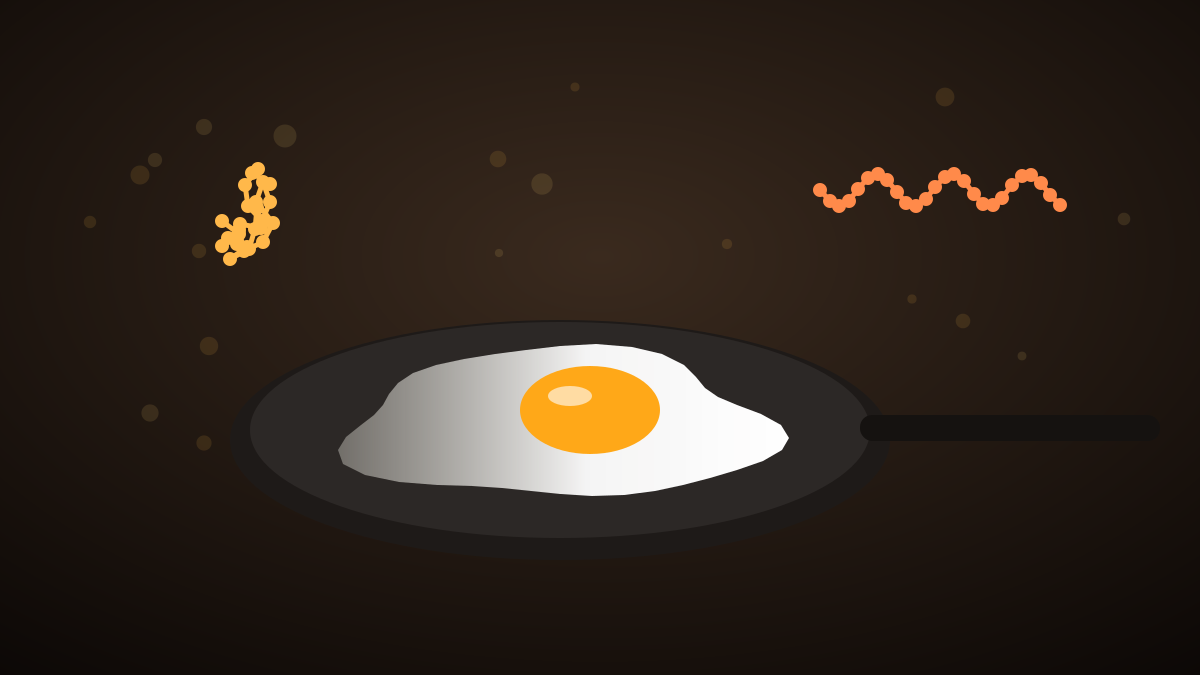
From transparent to white.
A raw egg white is transparent, slippery and liquid.
But once it meets heat, something remarkable happens.
It turns white, thickens and becomes firm.
The egg hasn't simply dried out. Its proteins have changed their structure and formed a new network.
This process is called protein denaturation and coagulation.
Let's explore the science behind one of the most familiar transformations in the kitchen.
01What is inside an egg?
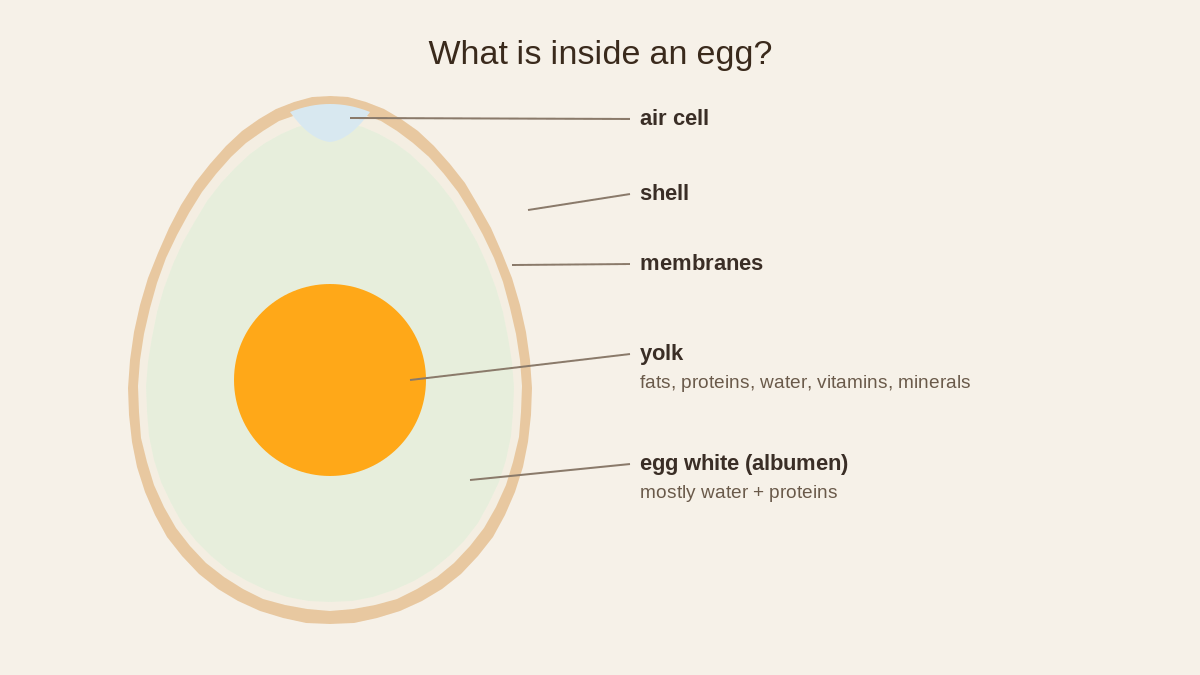
An egg contains several components, but the two most familiar are the white and the yolk.
Egg white is composed mostly of water, with a mixture of proteins.
The yolk contains fats, proteins, water, vitamins and minerals.
These two parts behave differently during cooking because their compositions and structures are different.
02What is protein denaturation?
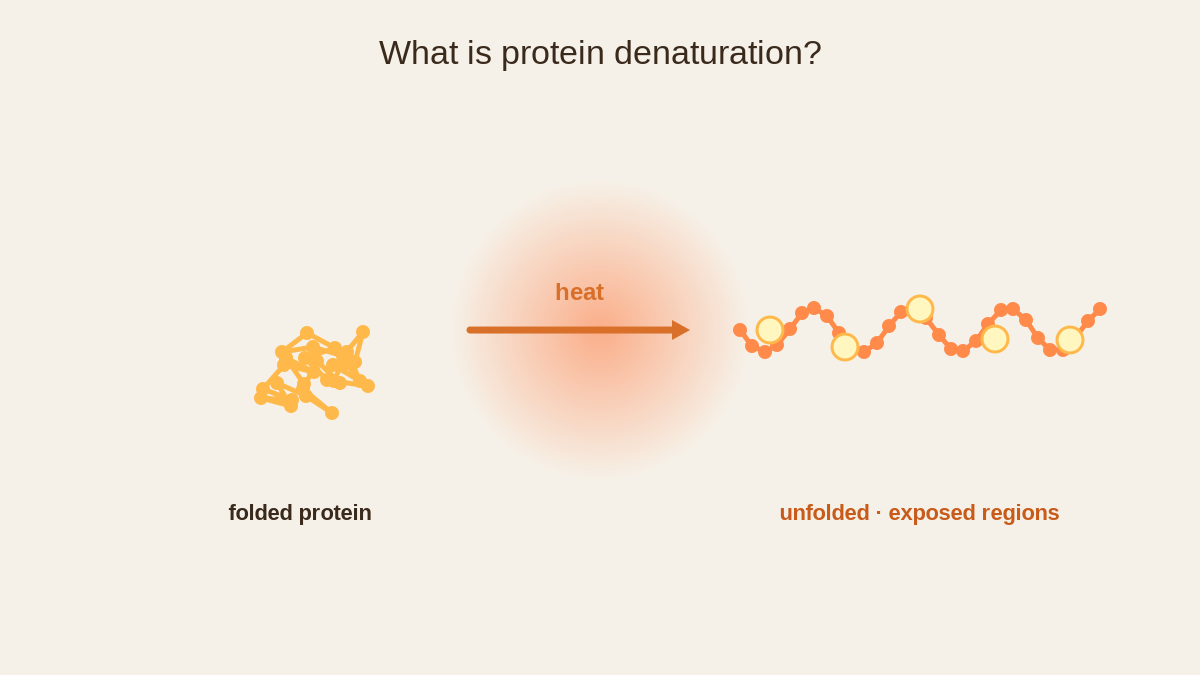
Proteins are made of chains of amino acids folded into complex three-dimensional structures.
Their shape influences how they behave.
When an egg is heated, the energy disrupts interactions that help maintain the proteins' original structure.
The proteins unfold.
This is called denaturation.
The proteins do not simply vanish. Their original shapes change, exposing regions that can interact with other proteins.
03How does a liquid become solid?
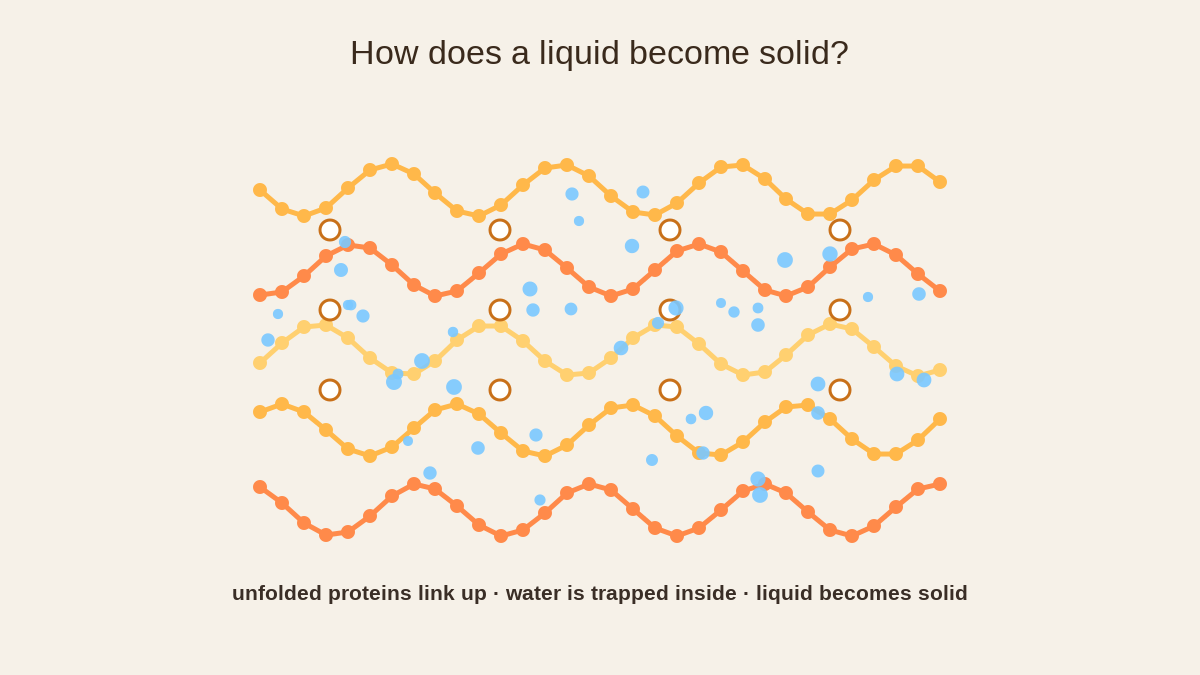
After unfolding, egg proteins can aggregate and form connections with one another.
They create a three-dimensional network.
This network traps water and other components, giving the cooked egg its firm structure.
The transformation is known as coagulation.
This is why a cooked egg white no longer flows like a raw egg white.
04Why does the egg turn white?
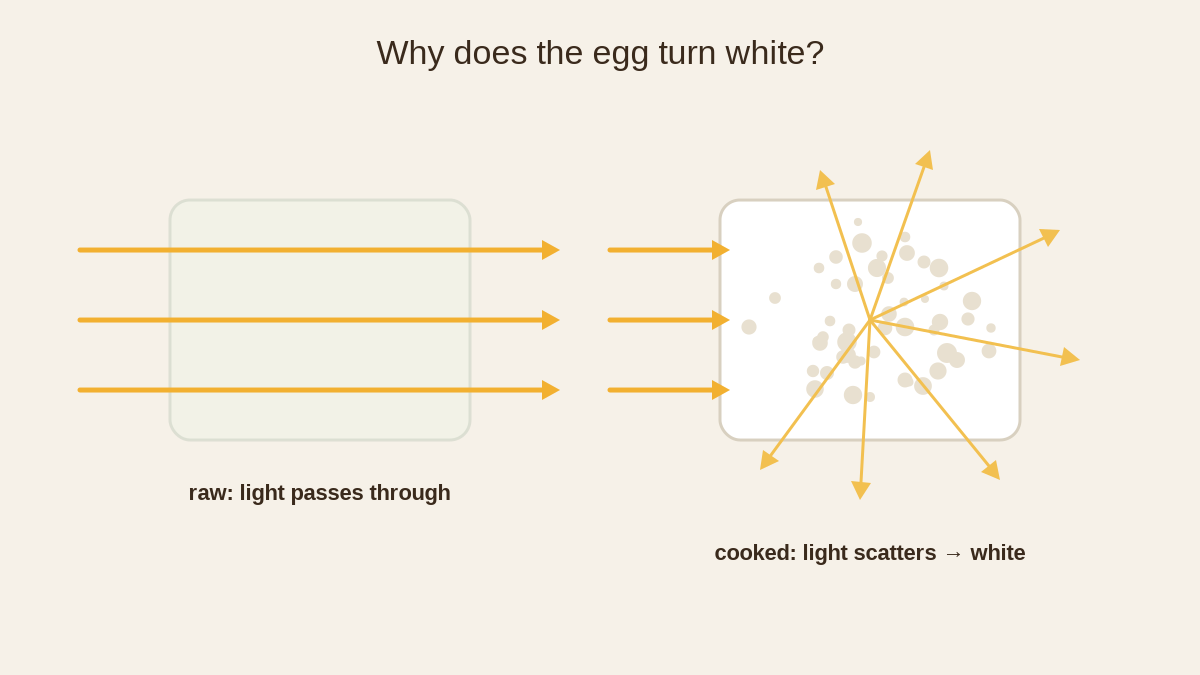
A raw egg white allows light to pass through relatively clearly.
As proteins denature and aggregate during cooking, the structure becomes more heterogeneous.
These structures scatter light in different directions.
That scattering makes the cooked egg white appear white and opaque.
The colour change is a visible sign of structural transformation.
05Why does an overcooked egg become rubbery?
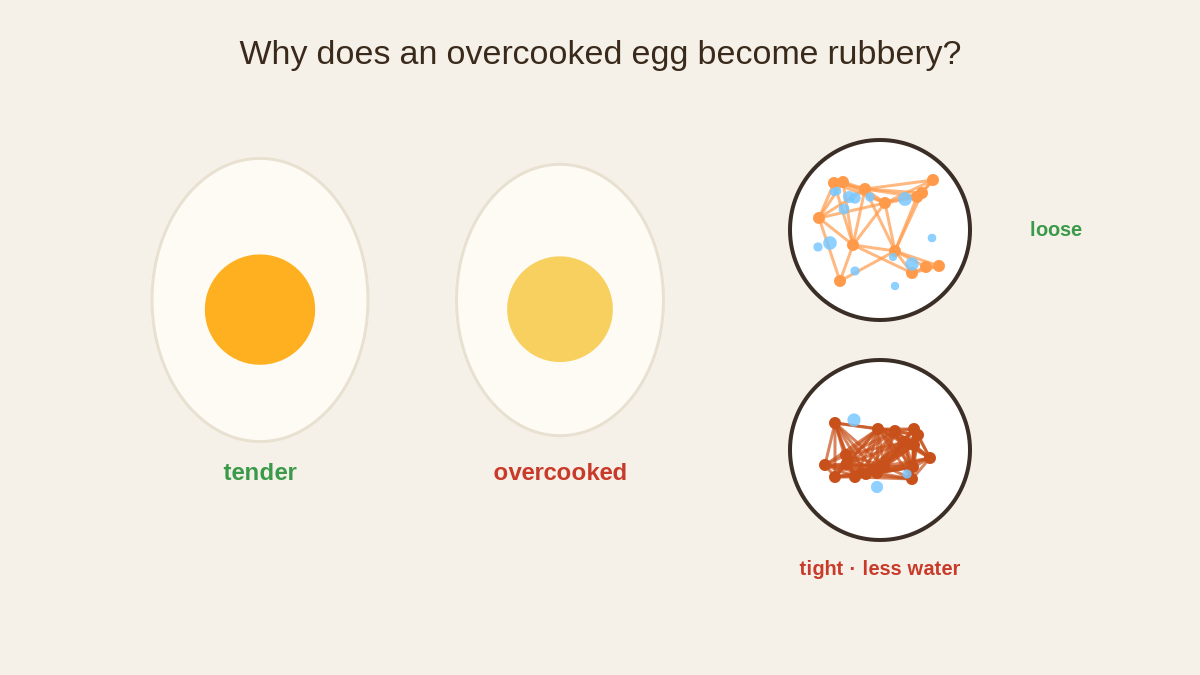
Cooking time and temperature influence the final texture.
When an egg is heated, proteins form a network.
If heating continues excessively, that network can become tighter and the egg may lose more moisture.
The result is a firmer, rubberier texture.
This explains why cooking time matters so much when preparing eggs.
06What causes the green ring around a hard-cooked egg?
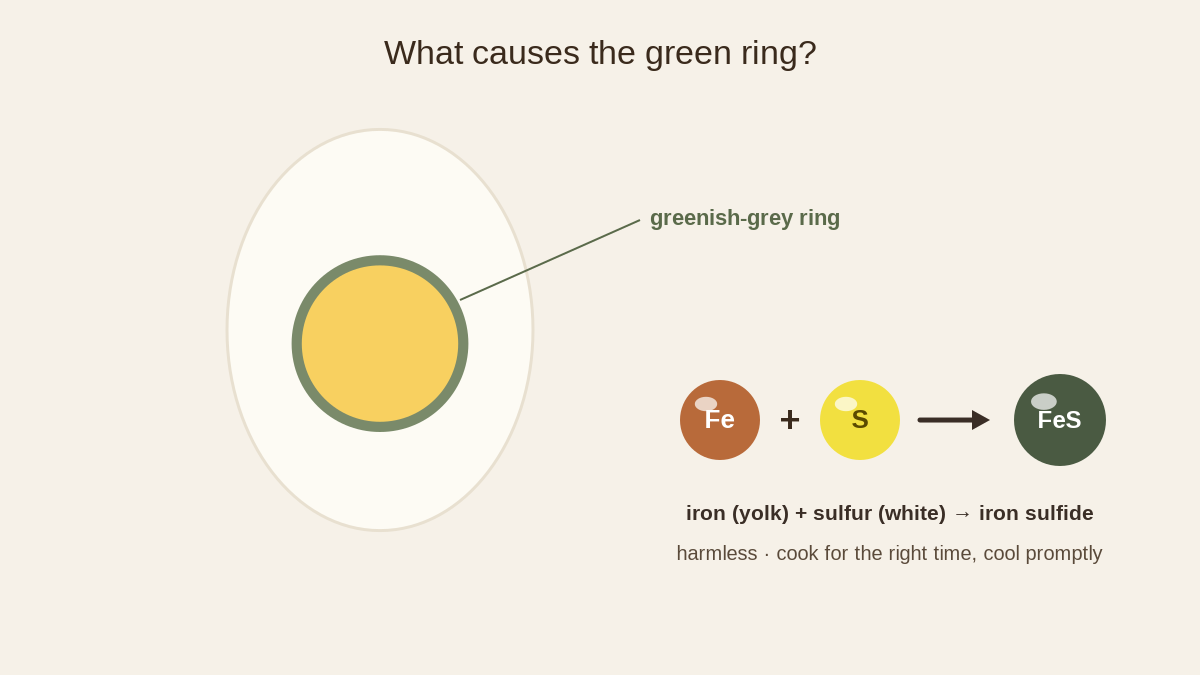
Sometimes a hard-cooked egg develops a greenish-grey ring around the yolk.
This happens when sulfur compounds from the egg white react with iron from the yolk.
The reaction can form iron sulfide, which produces the characteristic discolouration.
It is generally harmless and is often associated with excessive cooking or slow cooling.
A suitable cooking time and prompt cooling can help reduce its formation.
07Eggs in food manufacturing
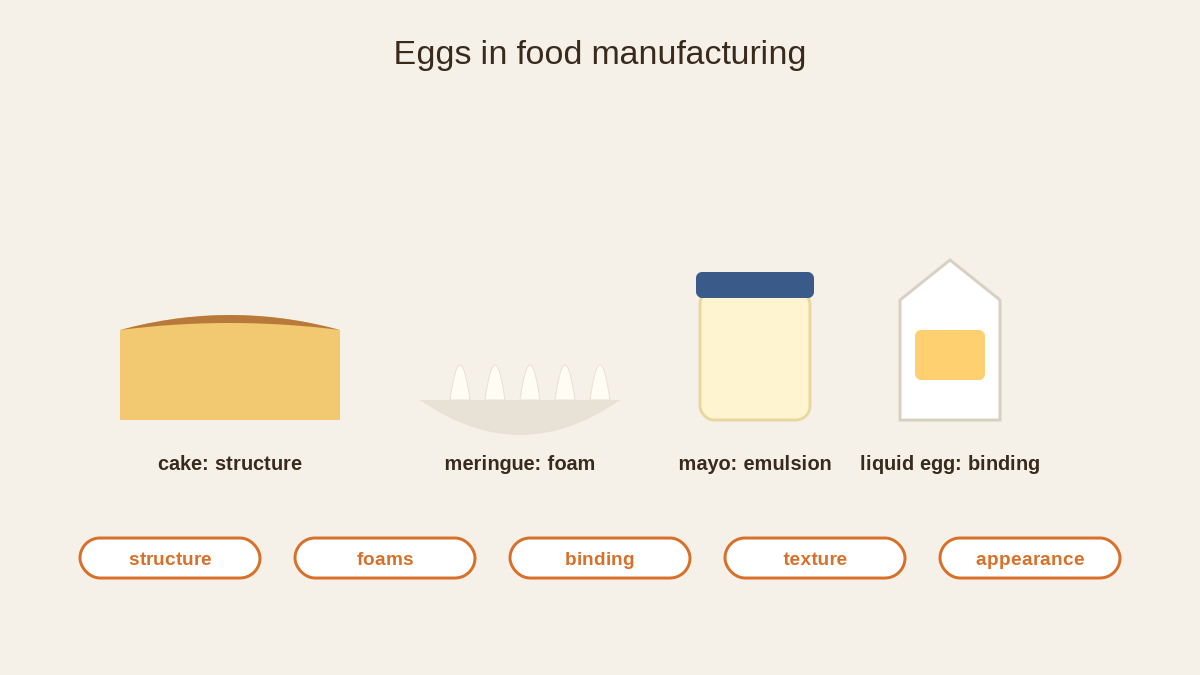
Egg proteins perform several important functions in food manufacturing.
They can:
- Form structure in baked goods.
- Stabilise foams.
- Help bind ingredients.
- Contribute to texture.
- Influence the appearance of products.
For example, egg whites are used to create meringue, while egg yolks contribute to the emulsifying properties of mayonnaise.
The same protein chemistry that transforms an egg in your frying pan is important in many commercial food products.
08Try this: the egg cooking comparison
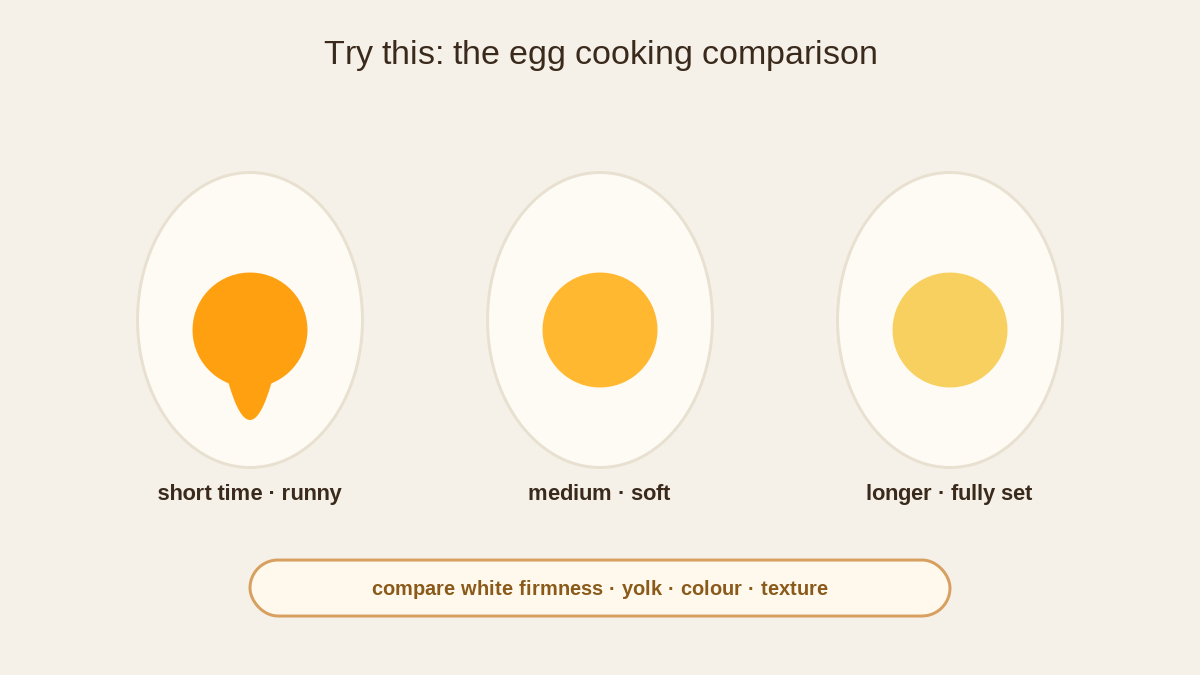
Observe how time and heat change the protein structure.
09The big takeaway
Cooking an egg is a simple demonstration of protein chemistry.
Heat unfolds proteins, encourages them to interact and creates a network that transforms liquid egg white into a firm structure.
The next time you crack an egg into a hot pan, remember: you're watching proteins reorganise in real time.