Listen to your food.
What if the secret to enjoying a potato chip isn't just its flavour, but the sound it makes when you bite into it?
That satisfying CRUNCH isn't accidental.
It is the result of physics, chemistry, engineering and even neuroscience.
And your brain is paying attention to every little crack.
01The sound of deliciousness
Have you ever bitten into a crisp, crunchy snack and immediately felt satisfied?
Now imagine eating that exact same snack, but without hearing a single sound.
Would it feel the same?
Research in sensory science suggests that the sounds produced during eating can influence how we perceive food texture and freshness.
Crunch is an important part of the eating experience.
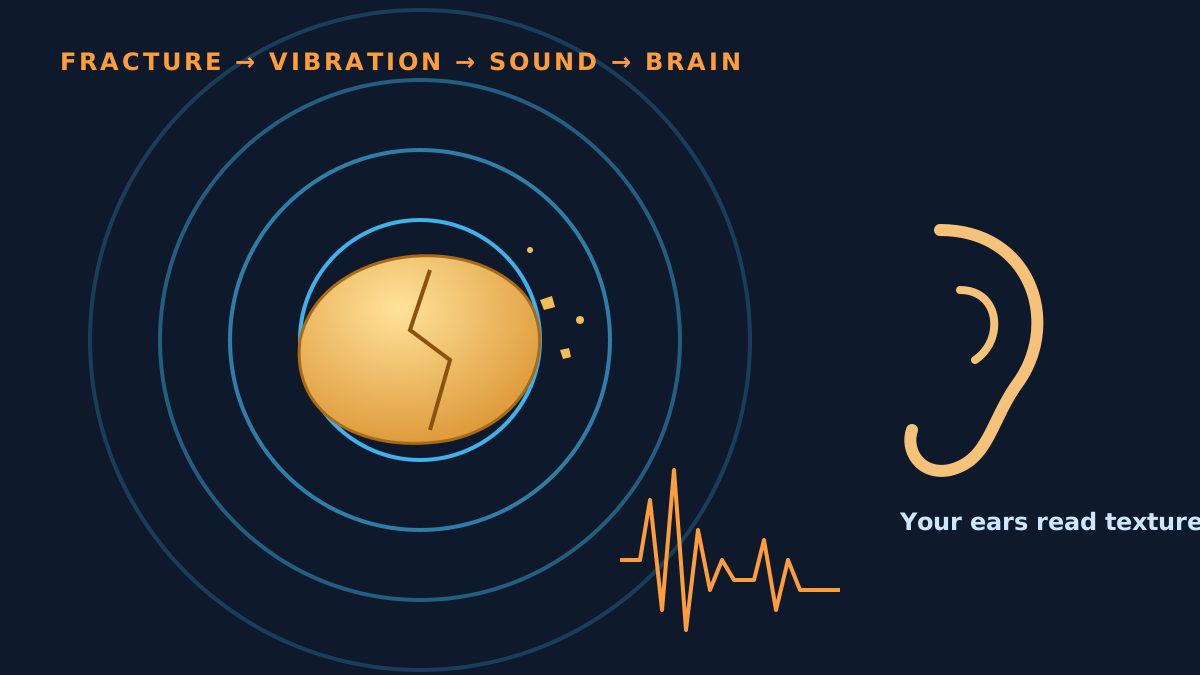
When you bite into a crisp food, tiny structural fractures occur. These fractures generate vibrations that travel through the food, your jaw and the surrounding air.
Your ears detect these sounds, and your brain interprets them as information about texture.
02What actually makes food crunch?
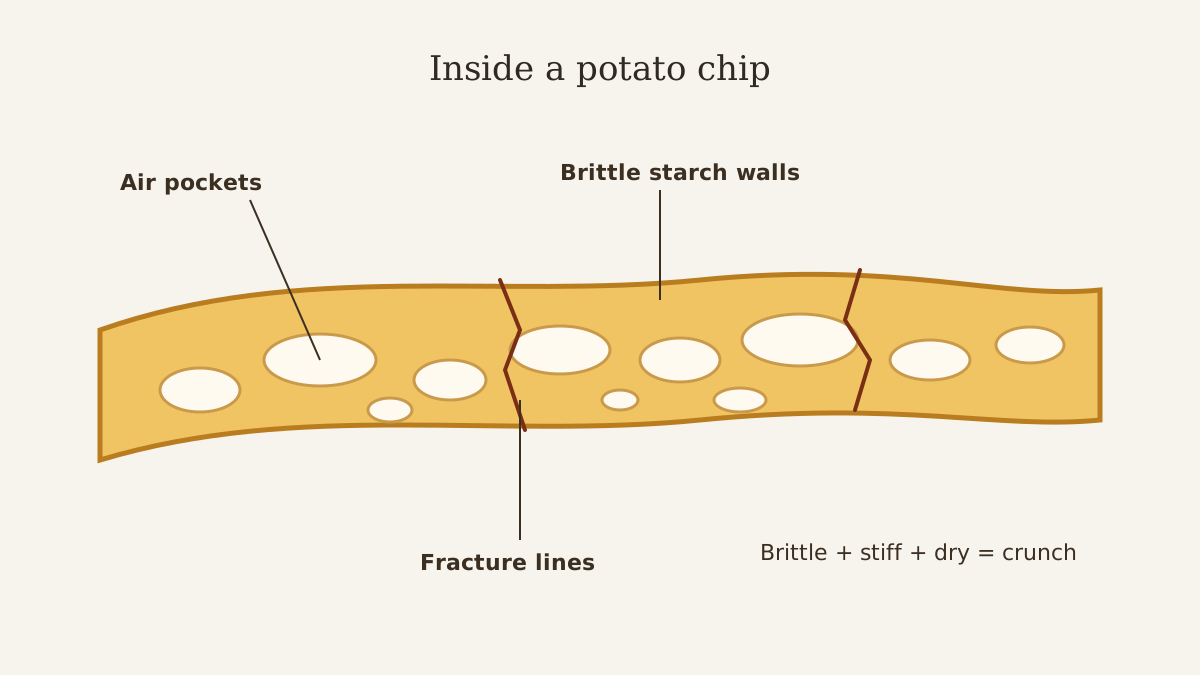
Crunch is fundamentally a mechanical event.
Crispy foods tend to have structures that fracture suddenly rather than bend smoothly.
Think about the difference between:
- A fresh carrot snapping.
- A soft cooked carrot bending.
- A potato chip shattering.
- A piece of stale bread compressing.
These foods behave differently because their internal structures and mechanical properties are different.
Crispness is associated with properties such as brittleness, stiffness, fracture behaviour and moisture content.
When a brittle food breaks, it often produces multiple small fractures.
Those fractures create the characteristic crunchy sound.
03The enemy of crunch: water
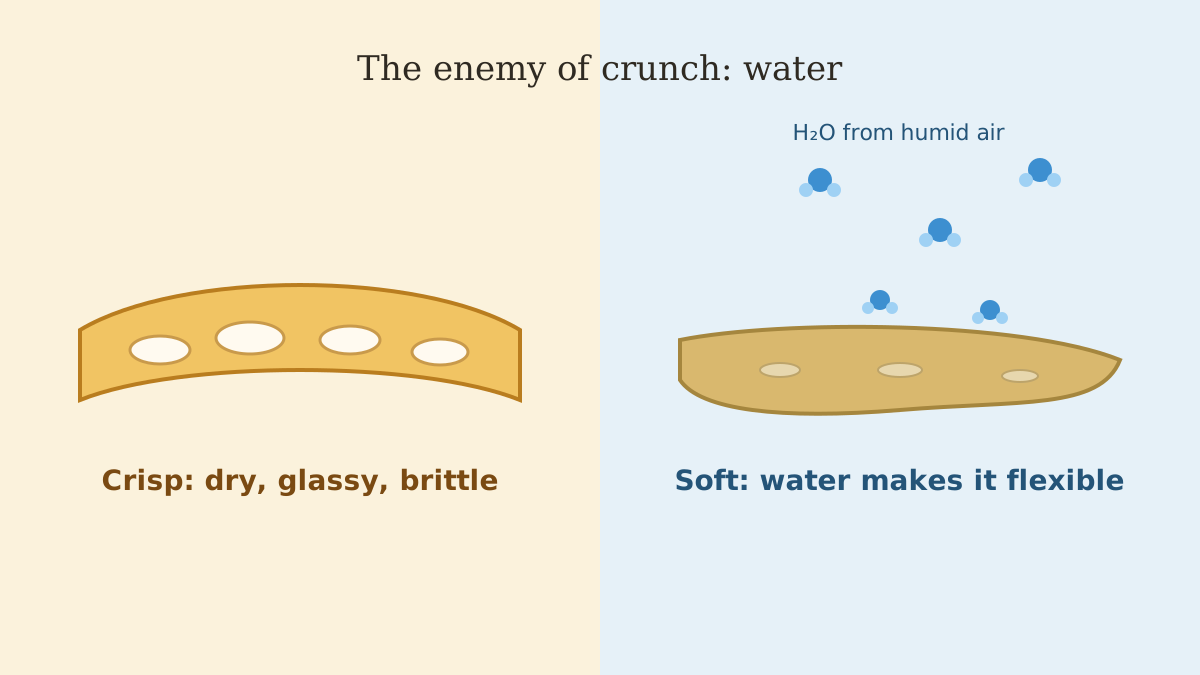
Why does an open packet of chips sometimes become disappointingly soft?
The answer is moisture.
Many crispy foods have structures that are highly sensitive to water.
When they absorb moisture from the surrounding environment, water interacts with their structural components.
This can make the food less brittle and more flexible.
In many starch-based snacks, moisture also lowers the glass transition temperature of the amorphous regions.
In simpler language, the food structure becomes less rigid under ordinary storage conditions.
That's why a crispy snack can lose its crunch without actually being spoiled.
04Your brain is listening
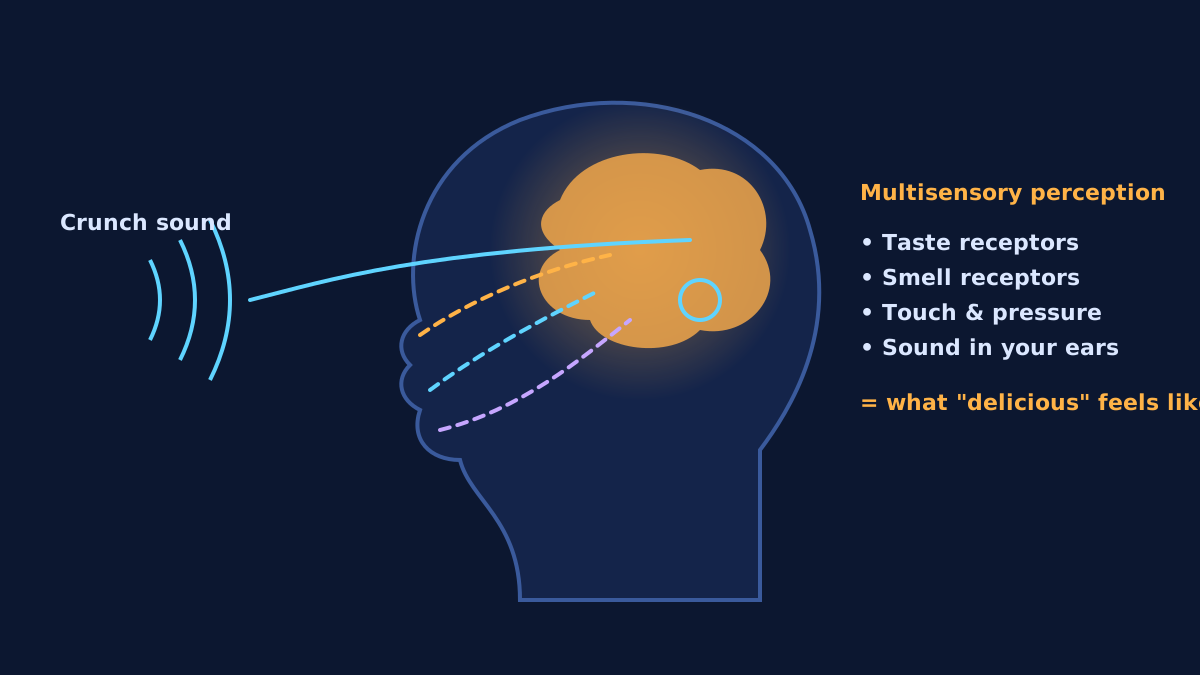
Here's where things become even more fascinating.
Your brain doesn't experience taste as an isolated sensation.
It combines information from multiple senses.
When you eat, your brain receives information from:
- Taste receptors.
- Smell receptors.
- Touch and pressure receptors in your mouth.
- Sound reaching your ears.
This combination is called multisensory perception.
The sound of a crisp bite can contribute to how you judge its texture and freshness.
In sensory research, changing the sound of food while someone eats can change their perception of the food itself.
05Why does a fresh apple sound different from a soft one?
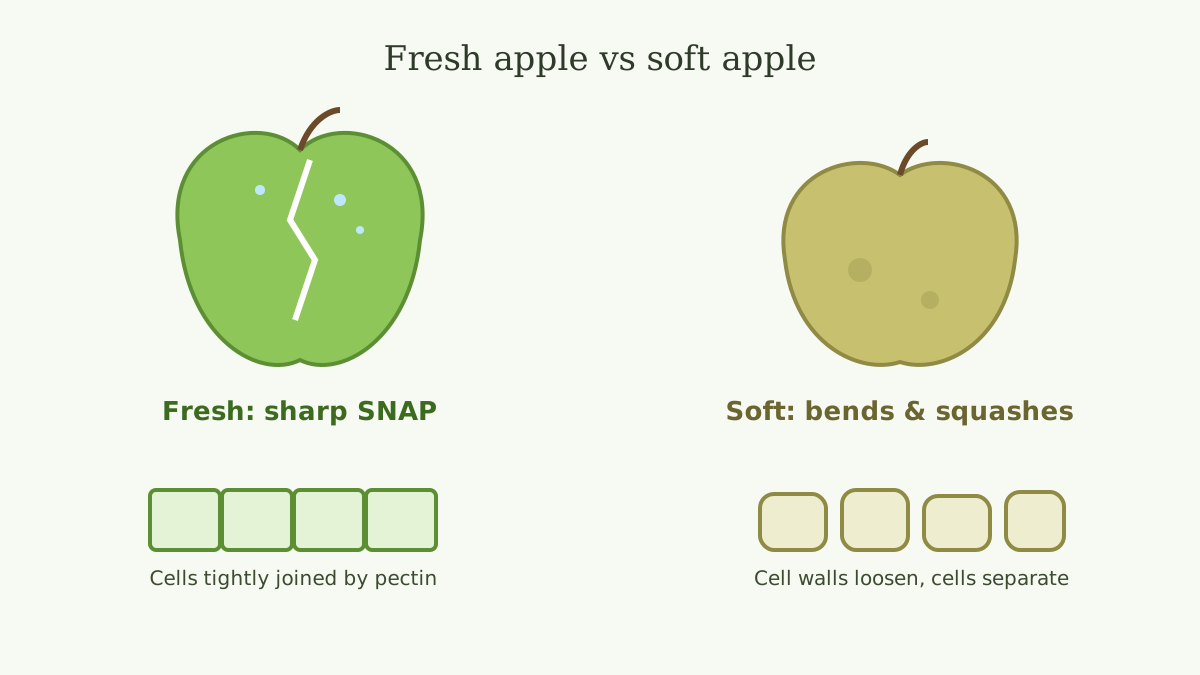
Think about biting into a fresh apple.
You hear a sharp, distinctive snap.
Now imagine biting into an apple that has been sitting around for too long.
The sound is different. The texture is different. Even the overall experience feels different.
Why?
Fresh plant tissues have cells held together by structural components, including cell walls and pectin-rich middle lamellae.
As fruit ages and softens, changes in cell-wall structure and cell adhesion can alter its mechanical properties.
This changes how the tissue fractures when you bite into it.
A fresh apple generally fractures more sharply, while a softened apple tends to deform more easily.
Your ears and mouth detect these differences together.
06The food industry's crunch engineering
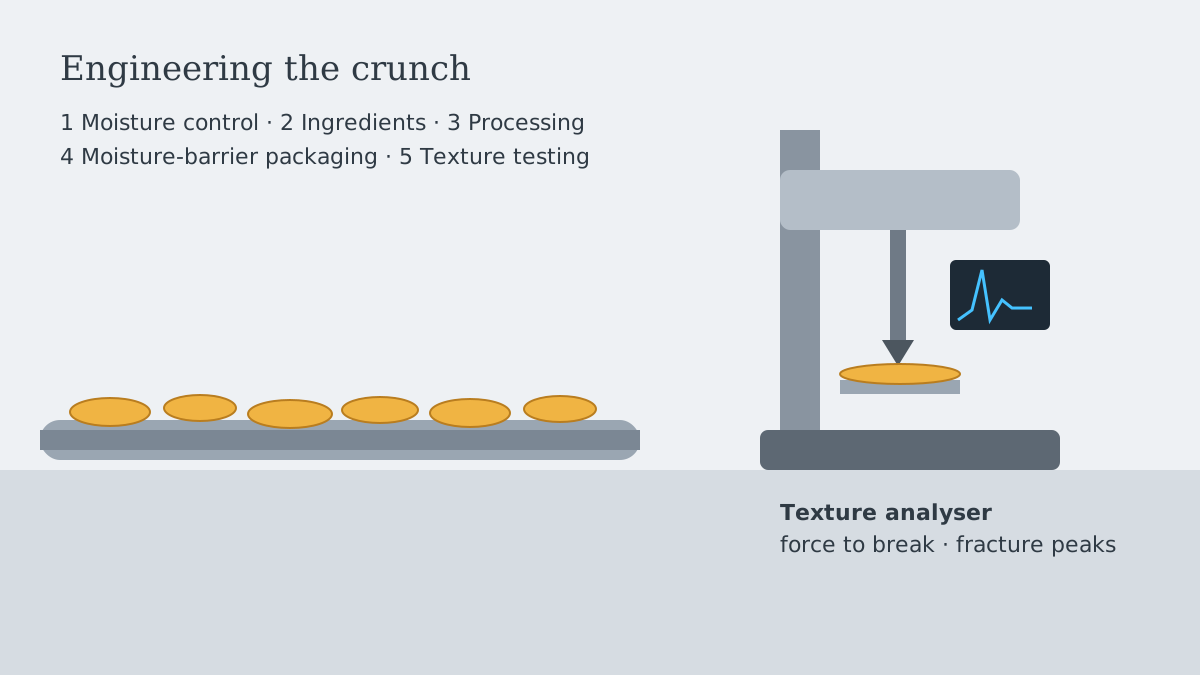
Crunch isn't just something food manufacturers hope to achieve.
It is something they actively engineer.
Food scientists work with several factors to develop the desired texture:
- Moisture control. Keeping moisture within the right range helps preserve crispness.
- Ingredient selection. Different starches, proteins and other ingredients influence the final structure.
- Processing conditions. Frying, baking, extrusion and drying can create very different internal structures.
- Packaging. Moisture-barrier packaging helps prevent snacks from absorbing water during storage.
- Texture testing. Food laboratories use texture analysers to measure the force needed to break or compress food.
The goal is to create a product that delivers a consistent sensory experience every time someone takes a bite.
07Can you hear the difference? A mini food experiment
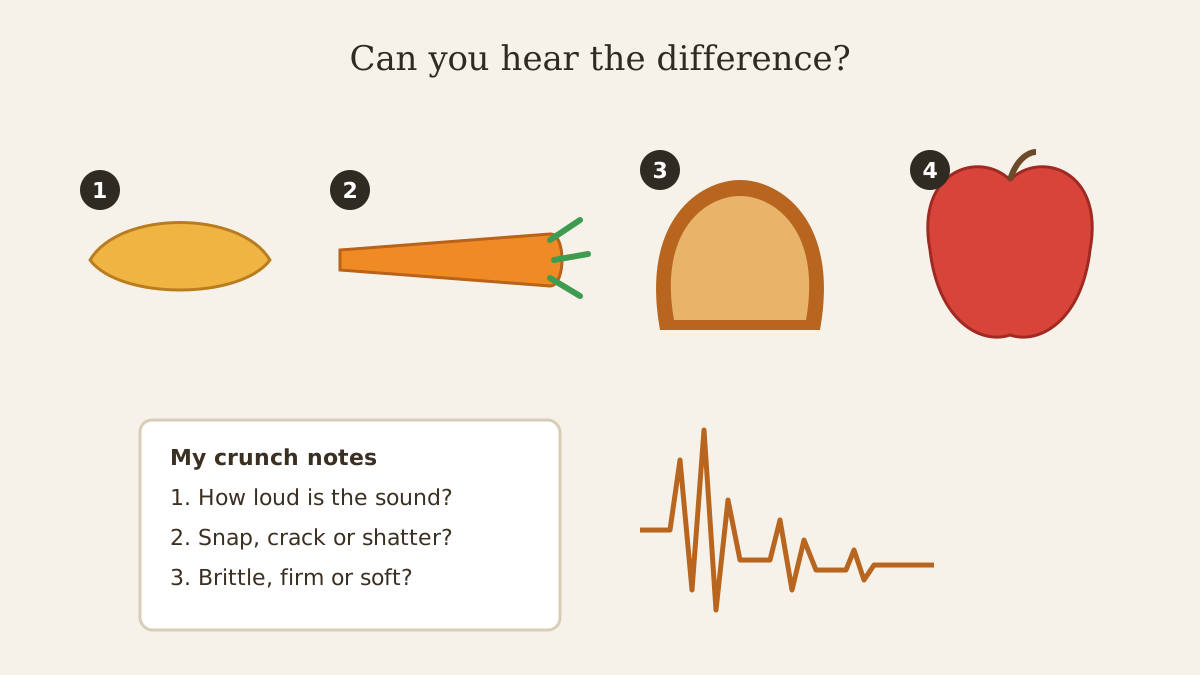
Let's put your senses to the test.
Find four foods:
- A potato chip.
- A fresh carrot.
- A slice of toasted bread.
- A fresh apple.
Now bite into each one slowly.
Pay attention to three things:
- How loud is the sound?
- Does the food snap, crack or shatter?
- Does the texture feel brittle, firm or soft?
Notice how different foods create completely different sound experiences.
You have just performed a small sensory-science experiment.
And you didn't need a laboratory to do it.
08The final bite
The next time you hear that satisfying crunch, remember:
It isn't simply the sound of food breaking.
It is a physical event, a mechanical fracture and a sensory signal.
- Your mouth feels it.
- Your ears hear it.
- Your brain interprets it.
And together, these systems help create the experience we call delicious.
Sometimes, the best flavour begins with a sound.