The chemistry inside your morning cup.
Coffee is one of the most fascinating examples of food chemistry.
A small roasted bean can produce a drink that tastes fruity, nutty, chocolatey, floral, bitter or acidic.
But here's the strange part.
The coffee bean doesn't naturally contain all those aromas in their final form.
Many develop during roasting.
Others become noticeable during brewing.
And the way you grind, heat and extract coffee changes what finally reaches your cup.
So how does a simple bean create such a complex sensory experience?
Let's explore the science behind coffee.
01Where does coffee begin?
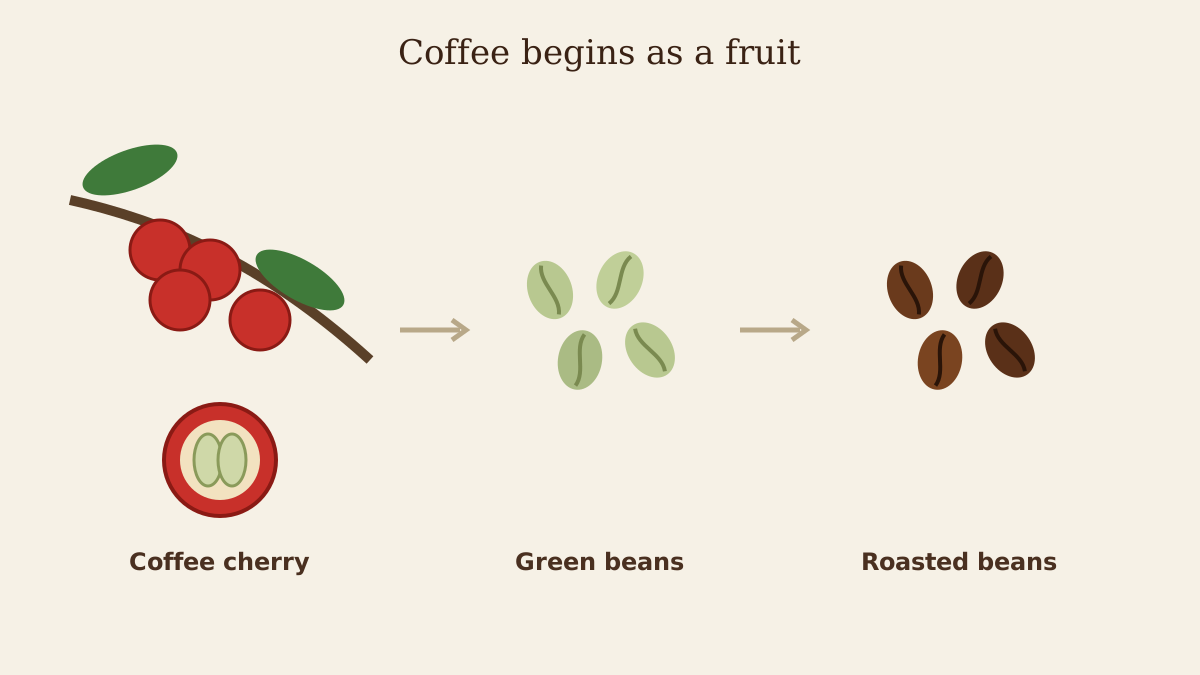
Coffee begins as a fruit.
The coffee plant produces cherries, which contain seeds commonly called coffee beans.
Two major commercial coffee species are:
- Coffea arabica
- Coffea canephora, commonly known as robusta
Before roasting, the seeds are processed to remove the fruit layers and dried.
The resulting green coffee beans have a very different aroma from roasted coffee.
They contain chemical precursors that will participate in reactions during roasting.
Their flavour potential is influenced by:
- Variety
- Growing conditions
- Soil and climate
- Harvest maturity
- Processing method
- Storage
Coffee flavour begins long before the beans enter a roaster.
02The magic of roasting
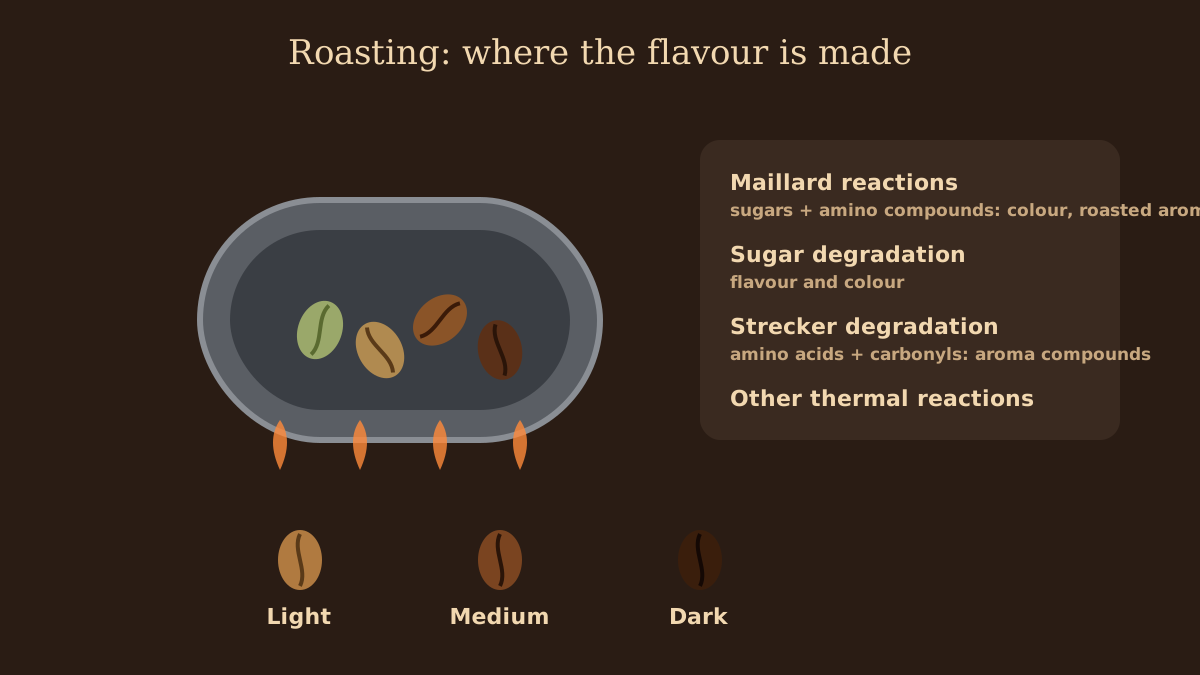
Roasting is where coffee undergoes some of its most important chemical transformations.
Green coffee beans are exposed to controlled heat.
As temperature rises, moisture escapes and numerous reactions begin.
These include:
Maillard reactions: Reducing sugars react with amino compounds, contributing to brown colour and complex roasted aromas.
Sugar degradation: Sugars break down and contribute to the development of flavour and colour.
Strecker degradation: Certain amino acids react with carbonyl compounds, generating aroma-active compounds.
Other thermal reactions: These produce a complex mixture of volatile and non-volatile substances.
Together, these reactions create the characteristic aroma of roasted coffee.
The roast profile has a major influence on the final flavour.
03Why does coffee smell so incredible?
Coffee aroma is extraordinarily complex.
Scientists have identified hundreds of volatile compounds in coffee, although only a subset contribute strongly to its characteristic aroma.
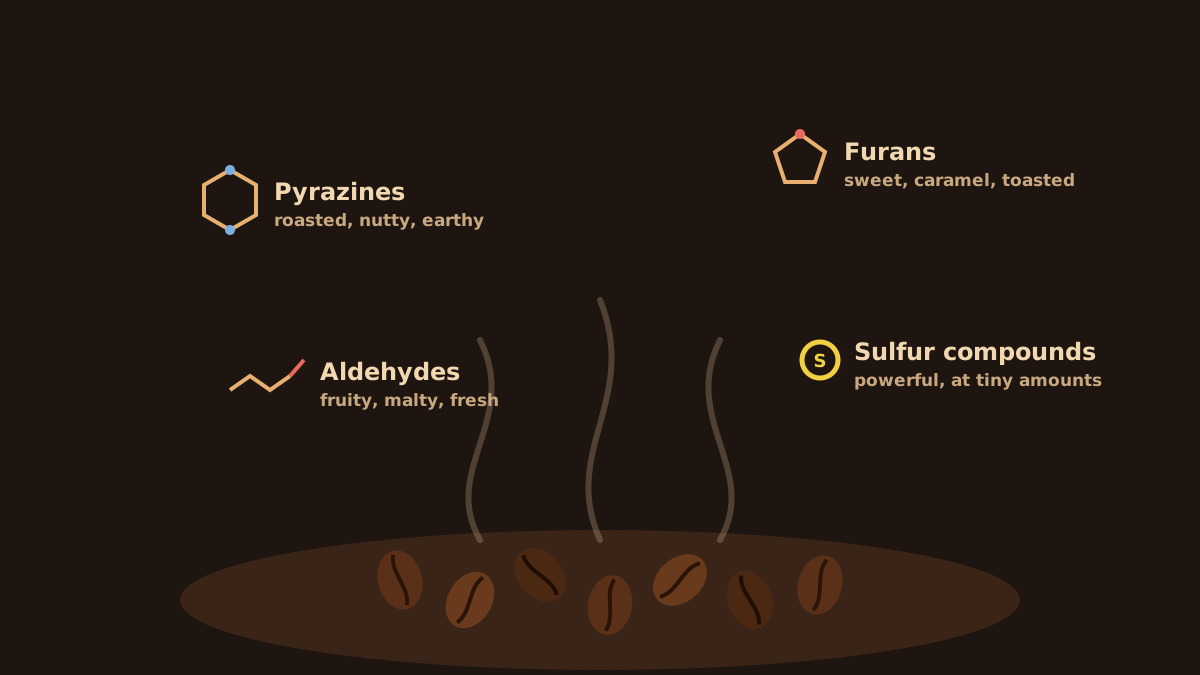
Different chemical families contribute different sensory notes.
Pyrazines: Often associated with roasted, nutty and earthy aromas.
Furans: Can contribute sweet, caramel-like and toasted notes.
Aldehydes: Some contribute fruity, malty or fresh aromas.
Sulfur-containing compounds: Certain compounds contribute powerful roasted and coffee-like notes, even at very low concentrations.
The exact aroma profile depends on the coffee variety, processing, roasting and brewing conditions.
This explains why one coffee can smell like dark chocolate while another has floral or fruity notes.
The aroma is not added artificially by the brewing process.
It emerges from the chemistry of the coffee itself.
04Why does grind size matter?
Imagine using the same coffee beans but grinding them differently.
Would the resulting drink taste the same?
Not necessarily.
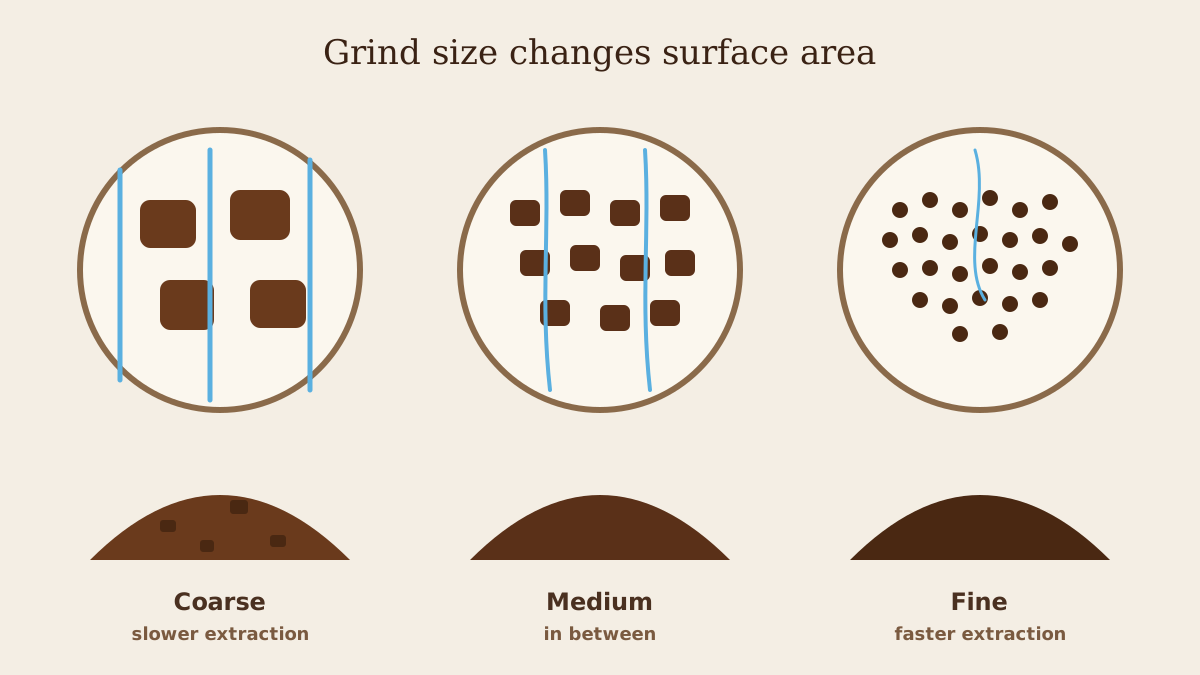
Grind size changes the surface area available for extraction.
Fine grind: Smaller particles provide more surface area and generally allow faster extraction.
Coarse grind: Larger particles have less surface area per unit mass and generally extract more slowly.
The grind size also influences how water moves through the coffee bed.
This matters particularly in espresso brewing, where water is forced through a compact bed of fine coffee.
If the grind is too fine or the coffee bed is too resistant, water flow may become restricted.
If it is too coarse, water may pass through too quickly for the desired extraction.
The ideal grind depends on the brewing method.
05What is coffee extraction?
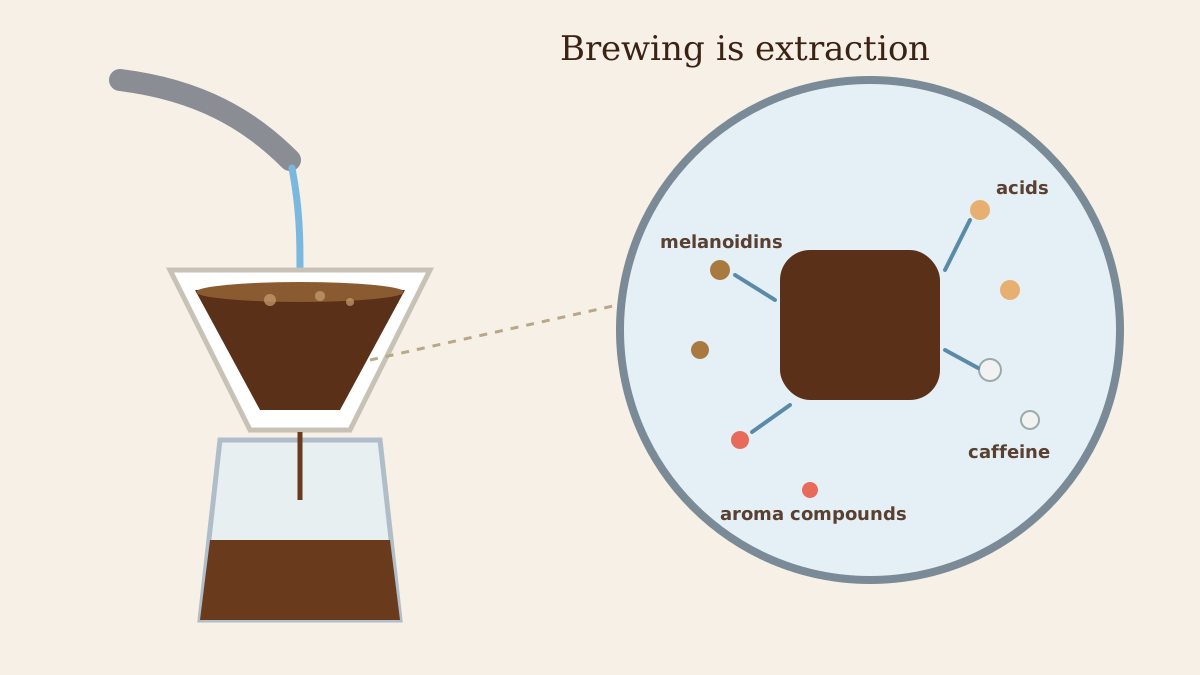
Coffee brewing is essentially an extraction process.
Hot water dissolves and carries away soluble compounds from the ground coffee.
These include:
- Caffeine
- Organic acids
- Sugars and sugar-derived compounds
- Minerals
- Melanoidins
- Various aroma and flavour compounds
Not all compounds dissolve at the same rate.
This is why brewing conditions matter.
Factors influencing extraction include:
- Water temperature
- Grind size
- Contact time
- Water composition
- Coffee-to-water ratio
- Brewing method
If extraction is too low, coffee can taste weak or sour.
If extraction is excessive or uneven, it may taste harsh, bitter or drying.
However, sourness and bitterness are not determined by extraction alone. Bean characteristics and roasting also matter.
Good brewing is about finding a balance.
06Why does espresso have a golden crema?
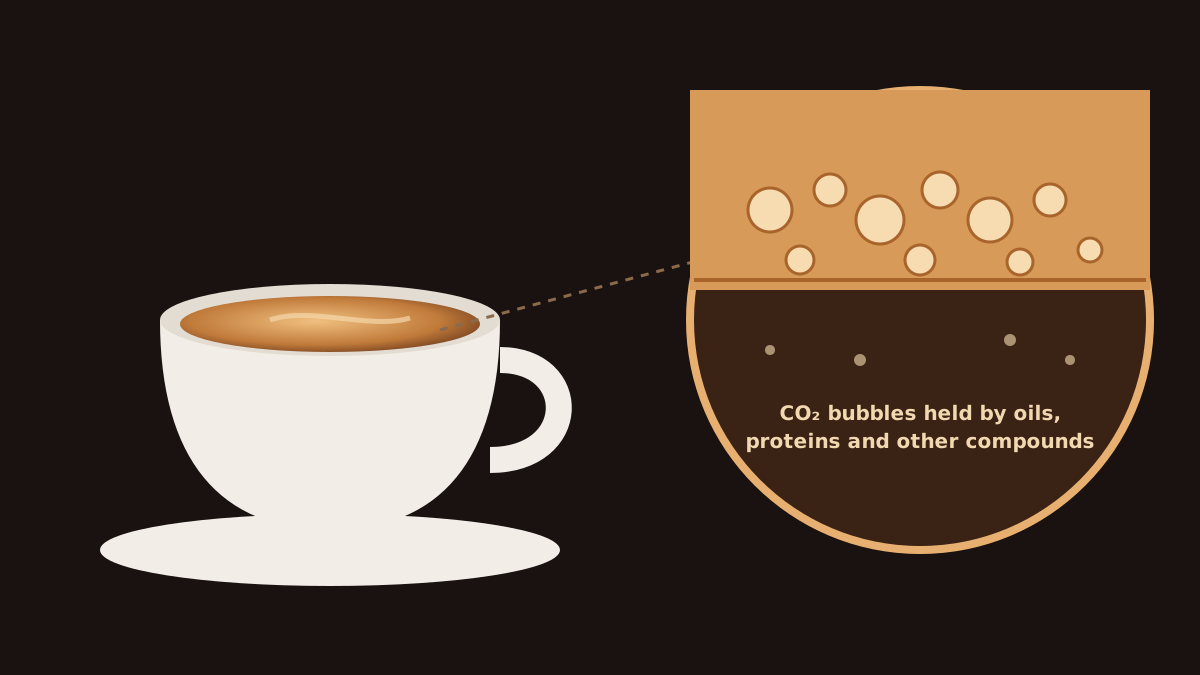
That beautiful golden layer on espresso is called crema.
It forms during espresso extraction.
Roasted coffee retains some carbon dioxide produced during roasting.
During espresso brewing, pressurised water extracts coffee compounds and releases dissolved gases.
As the liquid exits the machine and pressure drops, carbon dioxide forms bubbles.
Coffee oils, proteins and other surface-active compounds help influence the behaviour and stability of these bubbles.
The result is a foam-like layer of tiny bubbles at the surface.
Crema is visually distinctive, but it isn't a perfect measure of coffee quality.
Its appearance depends on bean freshness, roast, coffee species and extraction conditions.
07Why does coffee taste bitter or sour?
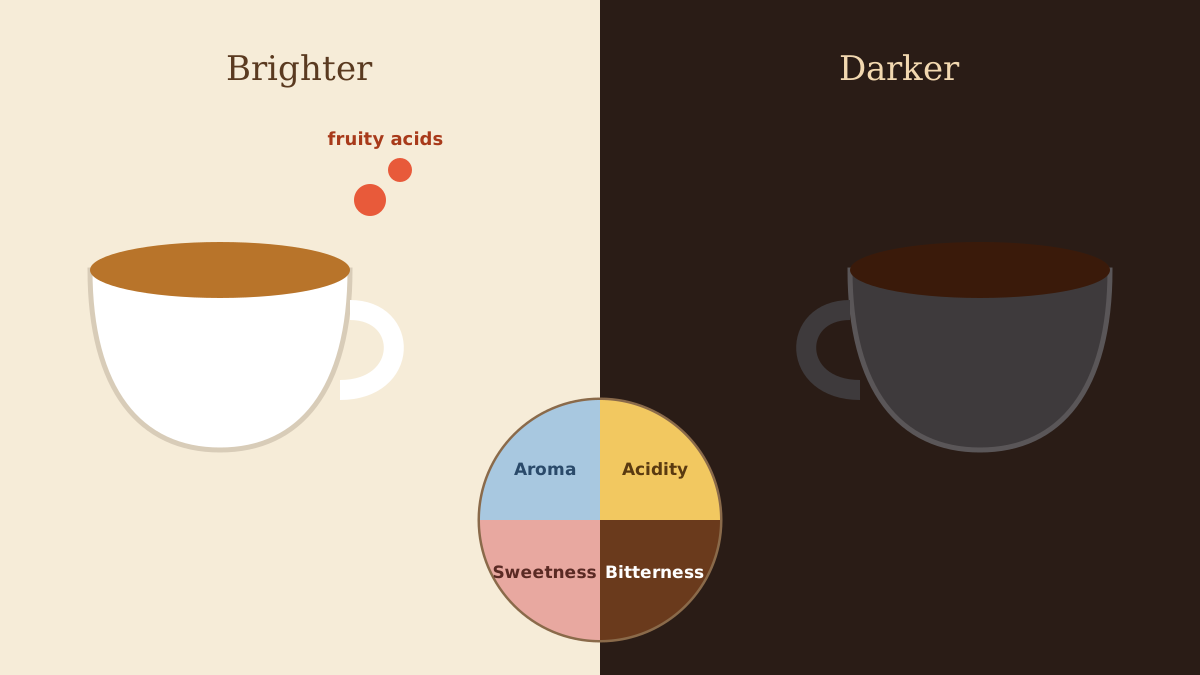
Coffee flavour is a combination of taste, aroma and mouthfeel.
Two sensations often stand out: acidity and bitterness.
Acidity
Coffee contains organic acids such as citric, malic and acetic acids.
These can contribute bright, fruity or sharp sensory impressions.
The perception depends on the coffee's composition and the brewing process.
Bitterness
Bitterness can be influenced by several compounds, including caffeine and roasting-related products.
The roasting profile and extraction conditions influence how bitter the final drink tastes.
Aroma
Much of what people describe as coffee flavour comes from smell.
When you drink coffee, volatile compounds reach the olfactory system through the nose and from the back of the mouth.
This is why coffee can taste less complex when you have a blocked nose.
Coffee is a multisensory experience.
08Does dark roast have more caffeine?
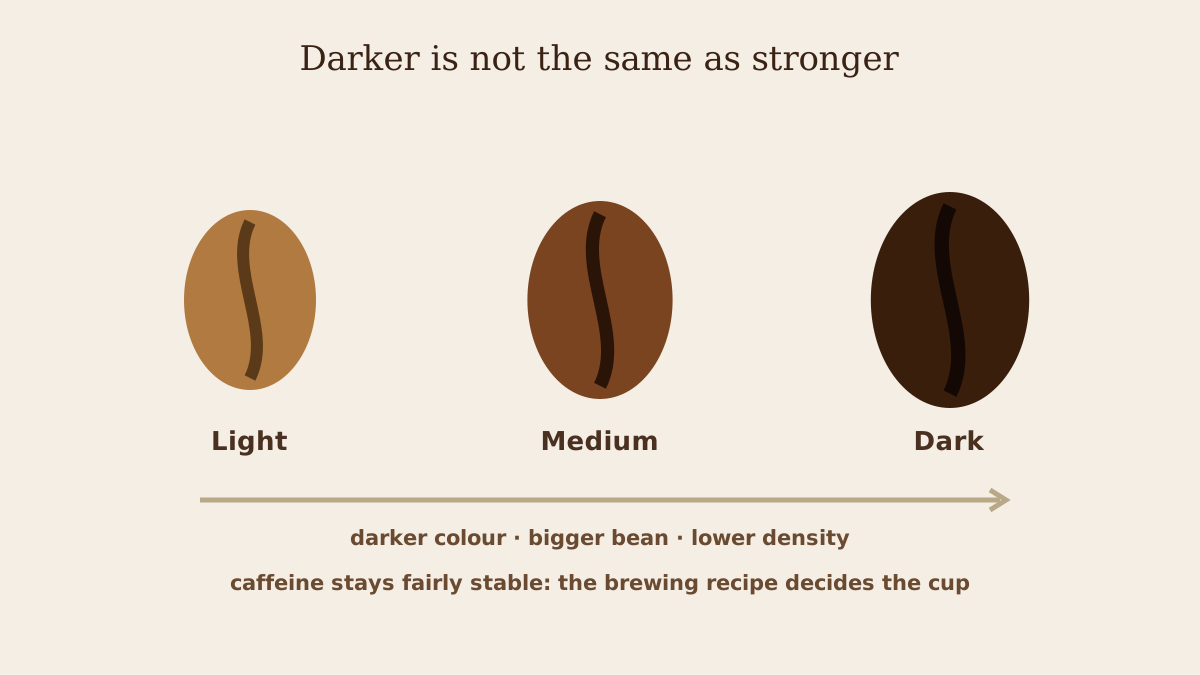
Many people assume dark roast coffee always contains more caffeine.
But this is not necessarily true.
Caffeine is relatively stable under ordinary coffee-roasting conditions compared with many other bean components.
The caffeine content of a brewed cup depends on several factors:
- Coffee species
- Bean quantity
- Brewing method
- Grind size
- Water-to-coffee ratio
- Extraction conditions
- Serving size
Robusta coffee generally contains more caffeine than arabica, although there is natural variation.
The way coffee is measured also matters.
A scoop of dark roasted beans may contain a different mass from a scoop of lighter roasted beans because roasting changes bean density and volume.
So the answer isn't simply light roast versus dark roast.
The full brewing recipe matters.
09Coffee in the food industry
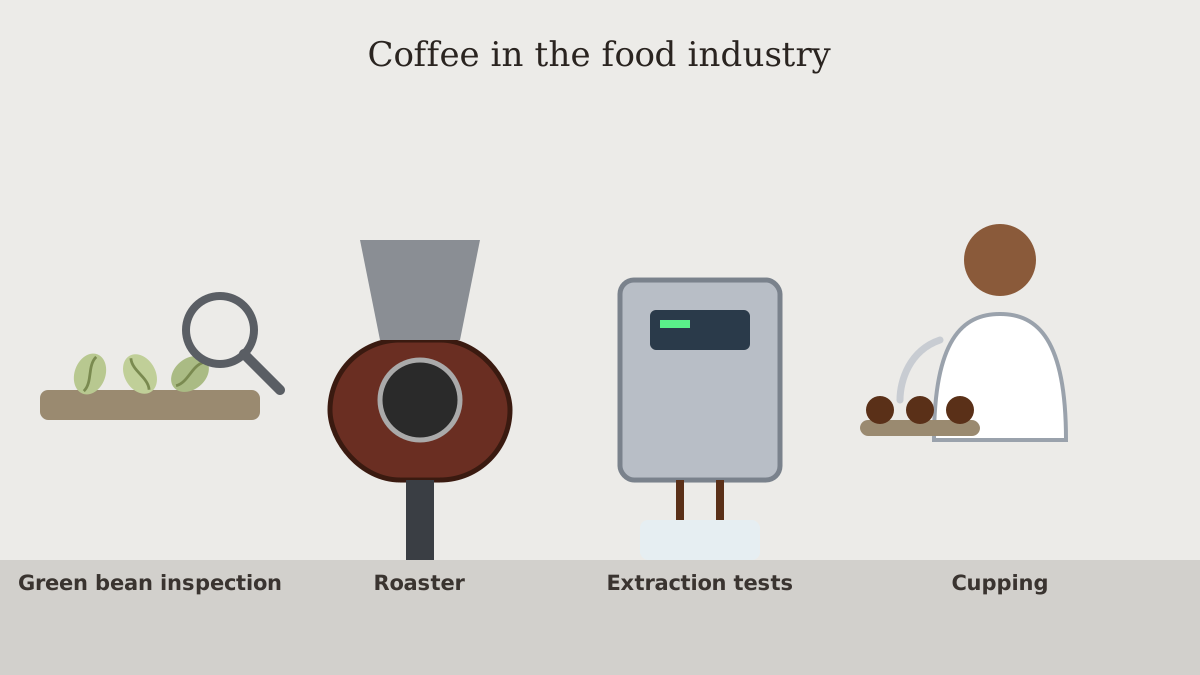
Coffee production is a highly controlled process.
Manufacturers monitor:
- Green bean quality
- Moisture content
- Roast temperature
- Roast time
- Colour development
- Grind size
- Extraction performance
- Packaging and oxygen exposure
Coffee is also used in many food applications.
Examples include:
- Chocolate and confectionery
- Ice cream
- Bakery fillings
- Ready-to-drink beverages
- Flavoured dairy and plant-based drinks
- Coffee extracts and concentrates
For manufacturers, consistency is essential.
Small changes in roasting and extraction can alter flavour, aroma, colour and product performance.
10Try this: the coffee extraction experiment
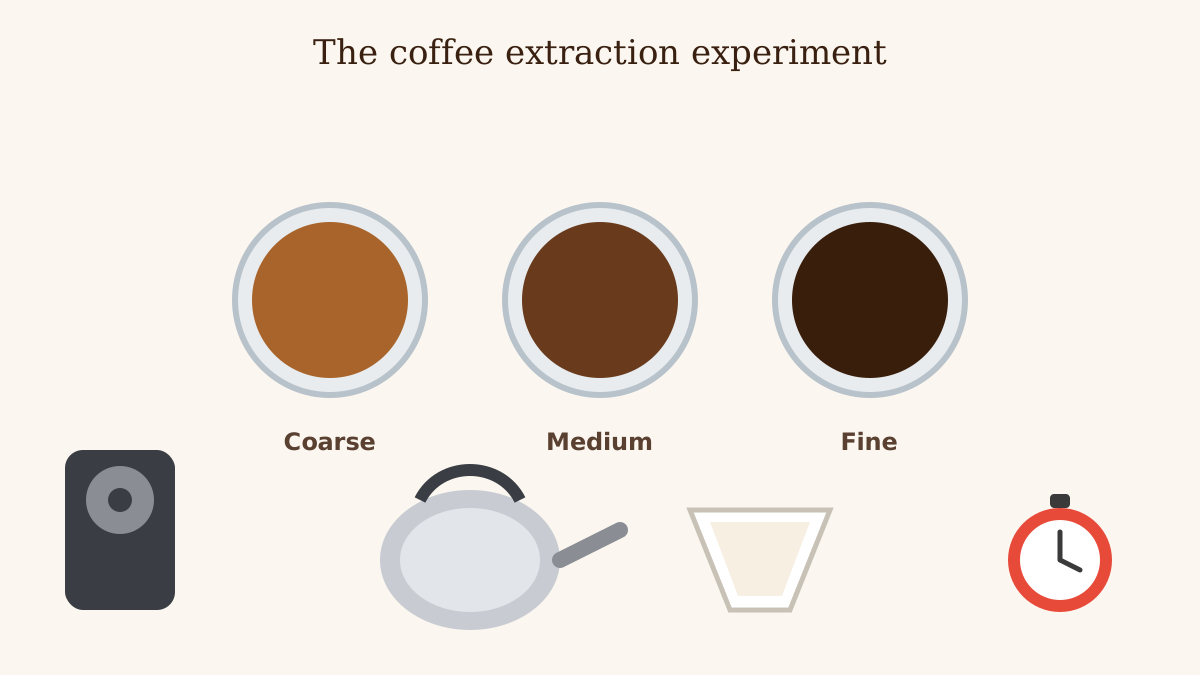
You can explore the influence of grind size at home.
What you are learning: Particle size changes the surface area and influences how quickly soluble compounds are extracted.
11The big takeaway
Coffee is not just a drink.
It is the result of agriculture, processing, roasting chemistry and extraction science.
Hundreds of chemical compounds contribute to its aroma and flavour.
And every step — from the coffee cherry to the final cup — changes the experience.
The next time you take a sip, remember that you're tasting an extraordinary chemical transformation.