
The secret to making food last.
Imagine opening a jar of pickles that was prepared months ago.
Or finding dried fruit that has remained usable for weeks.
Fresh food doesn't always stay fresh for long. Fruits soften, vegetables spoil, milk turns sour and bread develops mould.
Yet humans have developed ways to make food last much longer.
We use salt, sugar, heat, cold, acidity and even the removal of water.
But why do these methods work?
The answer is that food preservation is largely about controlling the conditions microorganisms need to grow and the chemical reactions that gradually reduce food quality.
Let's explore the science that keeps food from spoiling.
01Why does food spoil?
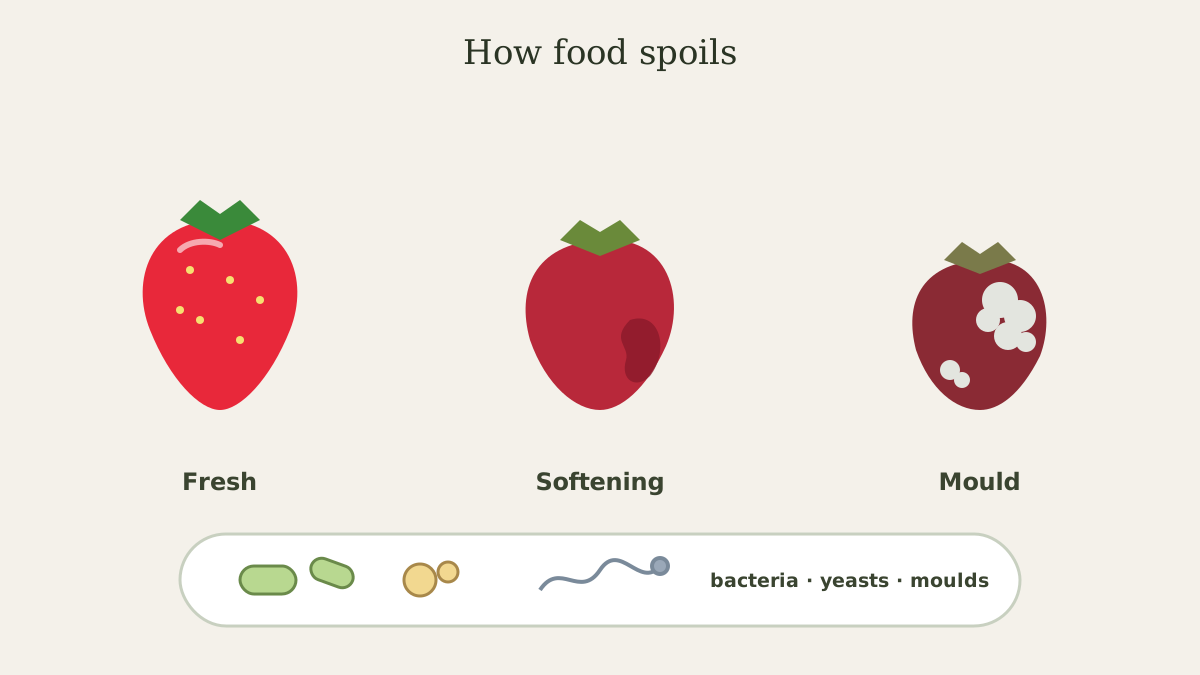
Food spoilage can happen for several reasons.
One major cause is microbial activity.
Bacteria, yeasts and moulds can grow in food when conditions are suitable.
They use nutrients and produce metabolic by-products that can change:
- Smell
- Taste
- Texture
- Colour
- Appearance
But microorganisms are not the only reason food deteriorates.
Enzymes naturally present in food can continue to cause changes after harvesting.
Oxygen can promote oxidation, including rancidity in fats.
Moisture loss can cause foods to dry out, while unwanted moisture can encourage deterioration.
Preservation techniques are designed to slow or prevent these changes.
The objective is not always to make food last forever.
It is to extend shelf life while maintaining acceptable quality and safety.
02The invisible factor: water activity
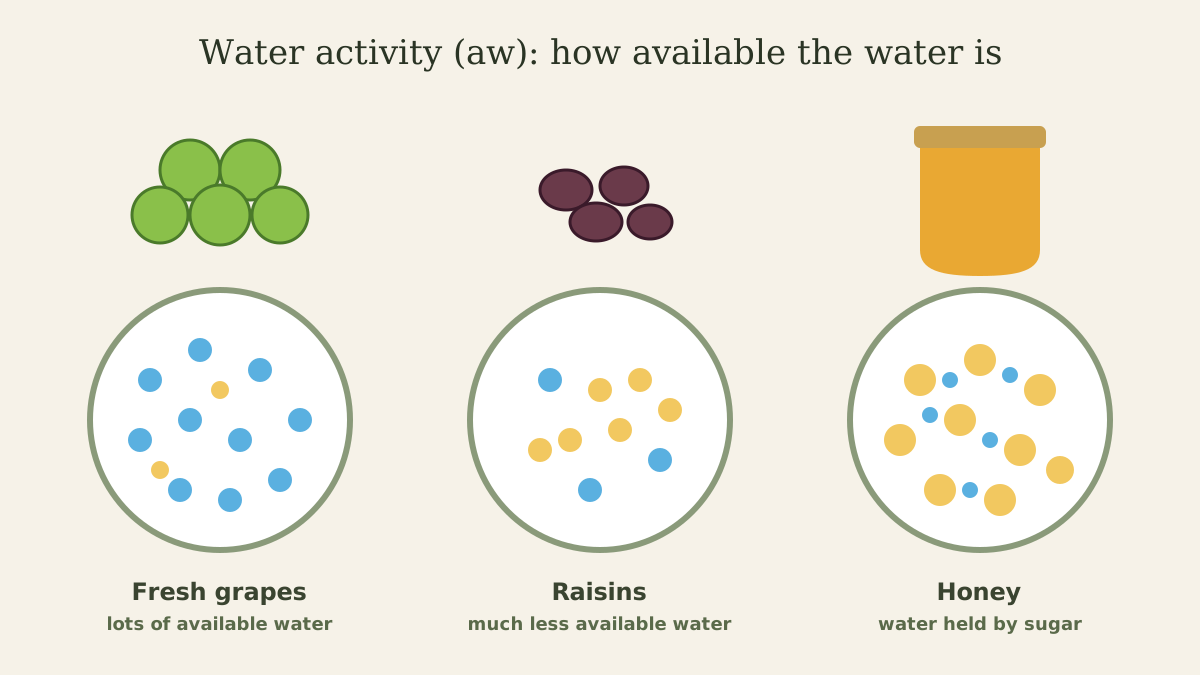
One of the most important concepts in food preservation is water activity, represented by aw.
It is not the same as moisture content.
Moisture content tells us how much water is present.
Water activity tells us how available that water is for microbial growth and chemical reactions.
Think about raisins and fresh grapes.
Both contain water and sugars, but raisins have much less available water.
As water activity decreases, the growth of many microorganisms becomes more difficult.
This is why drying is such an effective preservation method.
Honey also has low water activity because of its high sugar concentration.
However, low water activity does not mean that a food is automatically sterile.
Some microorganisms, particularly certain yeasts and moulds, can tolerate relatively low water activity.
03How does salt preserve food?
Salt has been used for food preservation for centuries.
But how does it work?
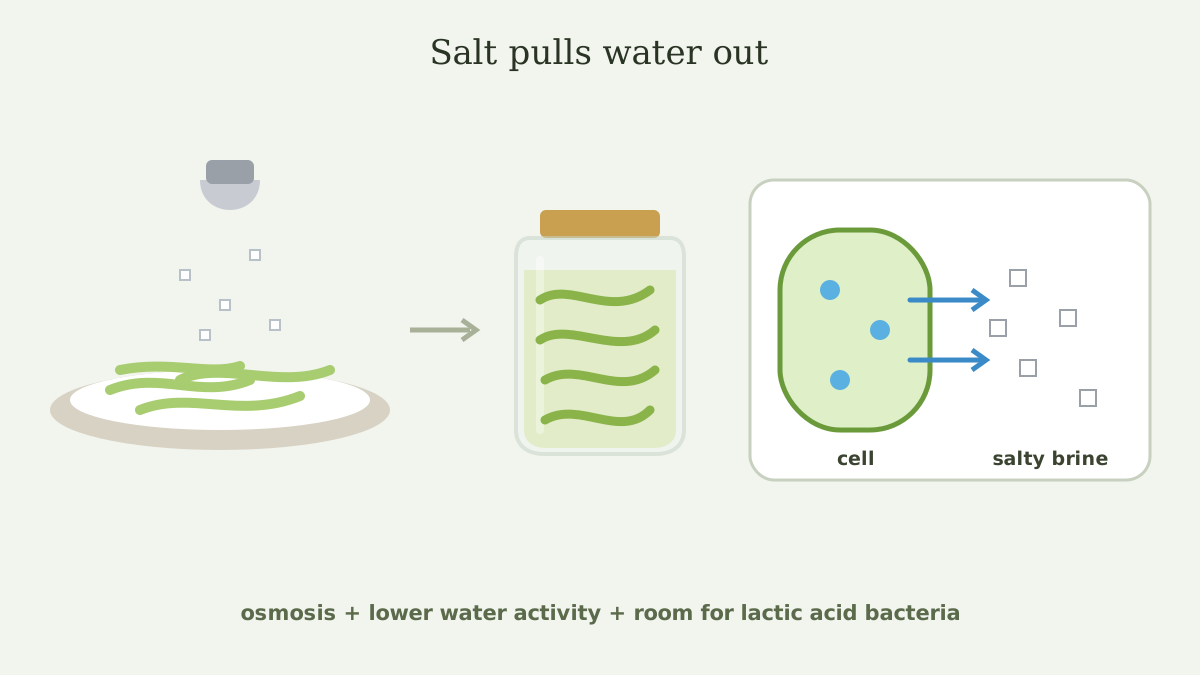
When salt dissolves, it creates a concentrated environment that changes the movement of water.
Through osmotic effects, salt can draw water out of food tissues.
It also reduces water activity in the surrounding environment.
These conditions can inhibit the growth of many unwanted microorganisms.
Salt is particularly important in traditional cured foods and fermented vegetables.
However, the effect depends on salt concentration, food composition and processing conditions.
In fermented cabbage, for example, salt also helps select for desirable lactic acid bacteria.
Salt is not simply a flavouring ingredient.
It can be a powerful tool in food preservation and microbial control.
04Why does sugar help preserve food?
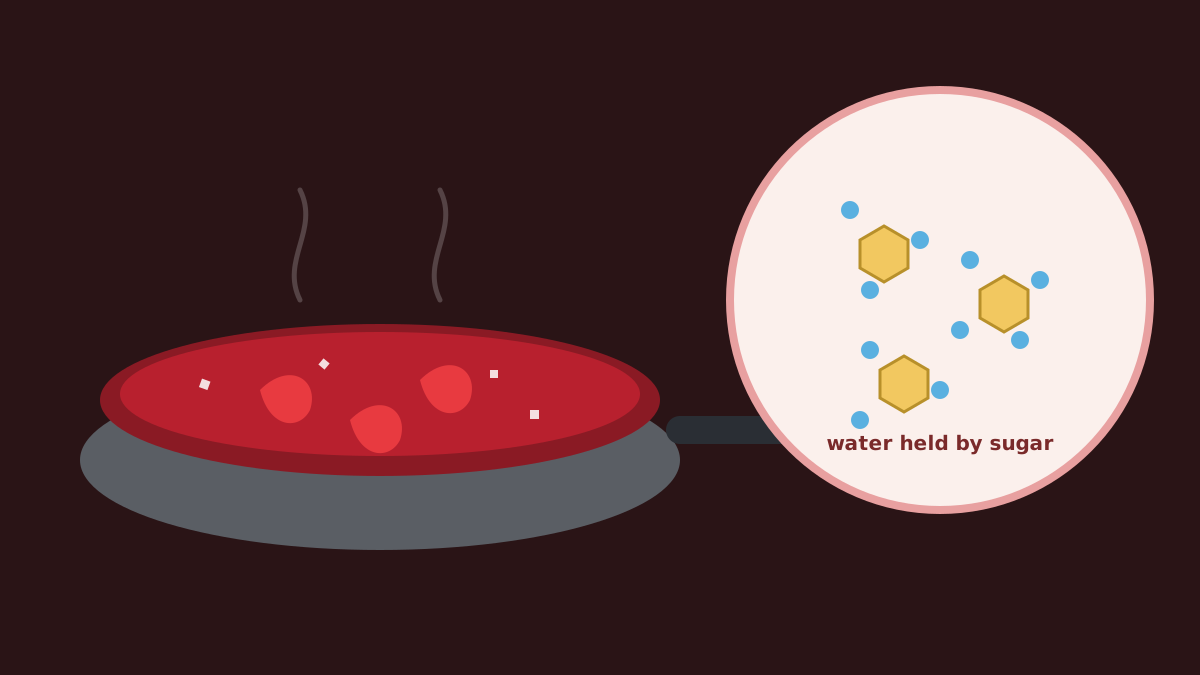
Think about jam.
It can remain usable much longer than fresh strawberries when properly prepared and stored.
One reason is sugar concentration.
Large amounts of dissolved sugar reduce water activity.
This makes it harder for many microorganisms to grow.
Sugar also contributes to the texture of jam by influencing viscosity and the structure formed by pectin.
But sugar alone does not guarantee safety.
Proper preparation, acidity, processing and storage conditions still matter.
This is why tested jam recipes specify ingredient ratios and processing instructions.
A jar of homemade jam should never be assumed shelf-stable simply because it contains sugar.
05Why does acidity matter?
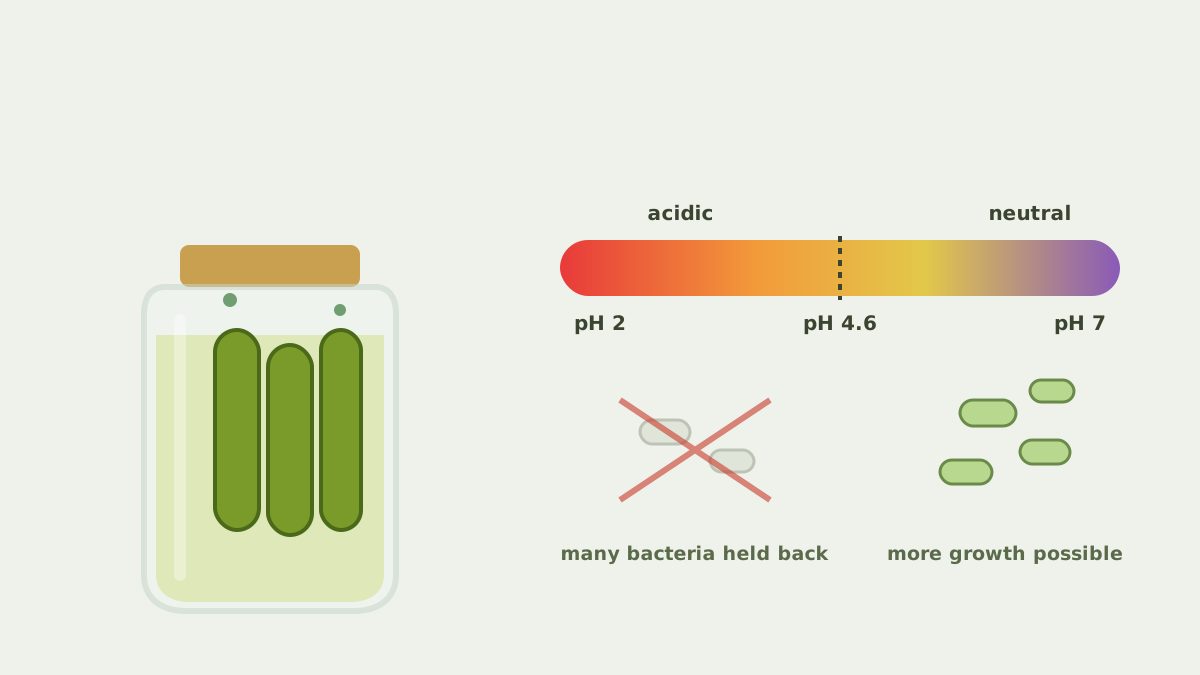
Microorganisms do not all grow under the same conditions.
The pH of a food can strongly influence microbial growth.
Acidic environments inhibit many bacteria.
This is one reason vinegar is used in pickling.
The acid lowers the pH and creates conditions that are unfavourable for many harmful microorganisms.
However, acidification must be properly controlled.
For example, low-acid vegetables cannot simply be stored in a cupboard after adding a little vinegar.
Safe preservation depends on validated formulations, appropriate acidity and the correct processing method.
This is especially important for home canning.
06How does heat preserve food?
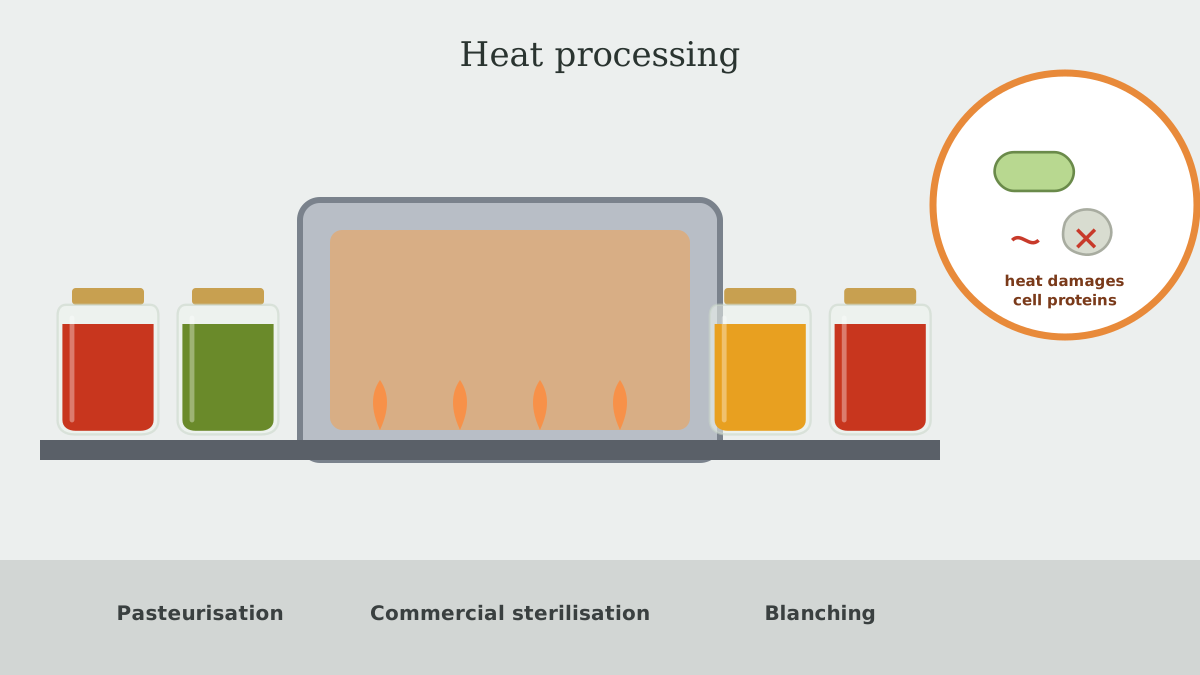
Heat is one of the most widely used preservation technologies.
It works by damaging important cellular structures and proteins in microorganisms.
Different heat treatments achieve different outcomes.
Pasteurisation
Pasteurisation uses a controlled combination of time and temperature to reduce targeted microorganisms and improve food safety.
It is widely used in milk and other beverages.
Commercial sterilisation
Commercially sterile shelf-stable foods are processed to control microorganisms capable of growing under normal storage conditions.
This is commonly used for many canned foods.
Blanching
Blanching briefly heats vegetables, often before freezing.
One important purpose is to inactivate enzymes that could otherwise affect colour, flavour and texture during storage.
Heat treatment must be matched to the food, its acidity, packaging and intended storage conditions.
07Why does freezing slow spoilage?
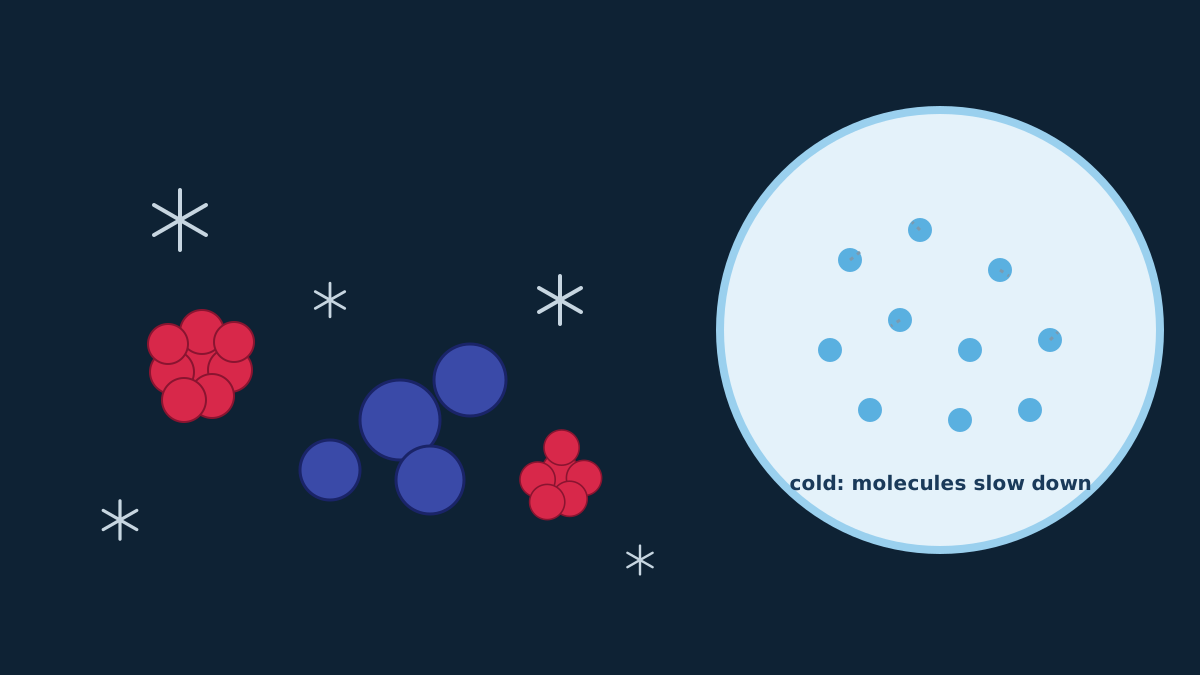
Freezing is another powerful preservation method.
At low temperatures, chemical reactions slow down and microbial growth is greatly restricted.
Water also forms ice crystals.
This reduces the amount of liquid water available for many reactions and microorganisms.
However, freezing does not reliably kill all microorganisms.
Many can survive frozen storage and become active again after thawing.
Freezing also affects food structure.
Large ice crystals can damage plant cells, which is why frozen strawberries often become softer after thawing.
For better quality, foods should be packaged properly and frozen quickly where practical.
Maintaining a stable freezer temperature also helps reduce quality deterioration.
08Modern food preservation technology
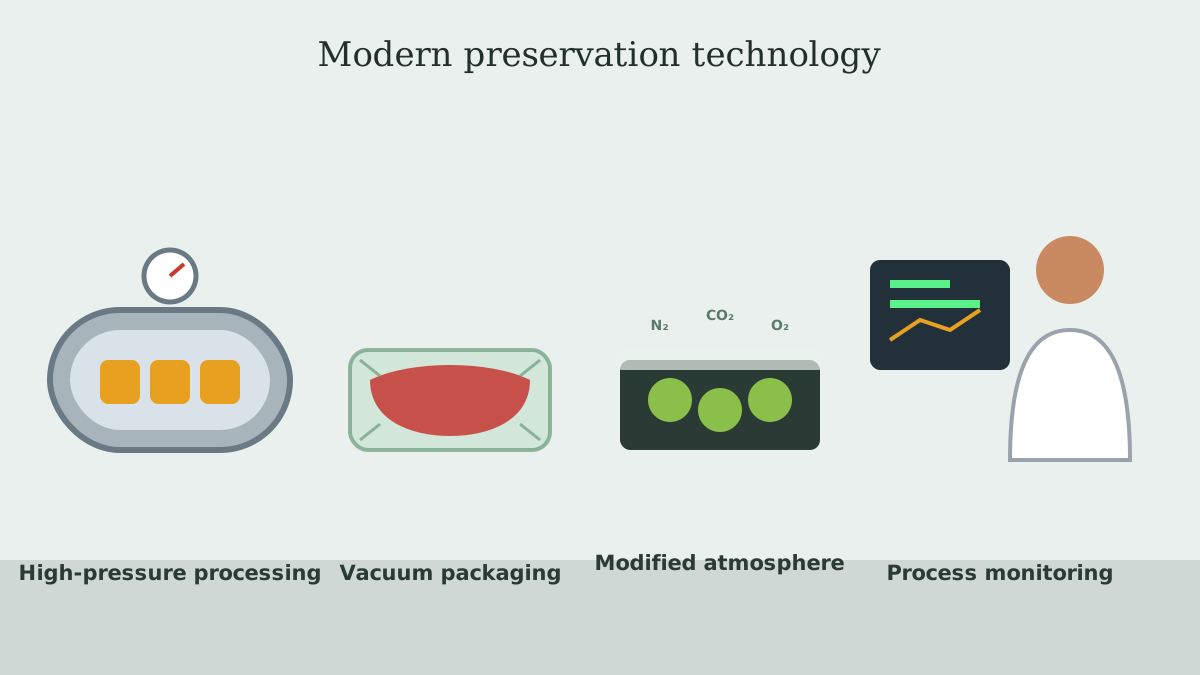
Food preservation continues to evolve.
Modern manufacturers use technologies designed to improve shelf life while maintaining food quality.
Examples include:
Vacuum packaging: Removes much of the air surrounding food, helping reduce oxidation and limiting the growth of some spoilage organisms.
Modified-atmosphere packaging: Changes the gas composition inside a package to help control deterioration.
High-pressure processing: Uses very high pressure to inactivate many microorganisms without relying entirely on traditional heat treatment.
Dehydration: Removes moisture to reduce water activity.
Each method has advantages and limitations.
For example, vacuum packaging does not eliminate all food-safety risks. Some dangerous microorganisms can grow in low-oxygen environments if other controls are inadequate.
Preservation requires a complete understanding of the food and the process.
09Try this: the apple preservation experiment
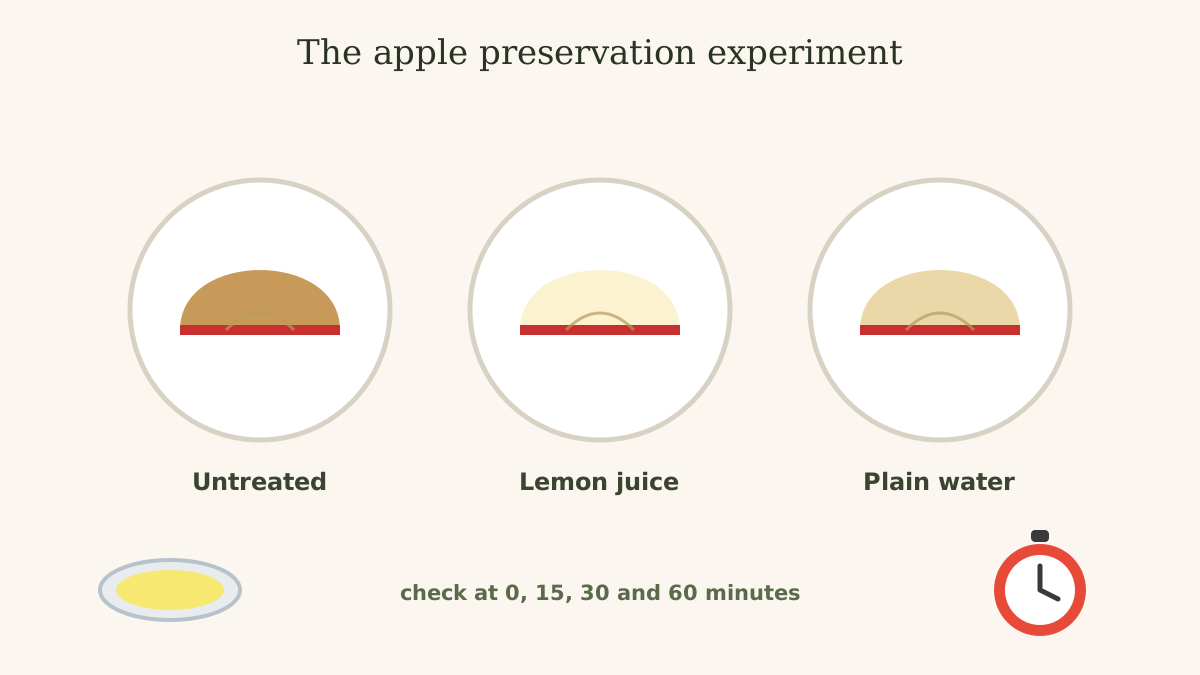
Let's investigate how different conditions affect browning.
Lemon juice contains acids and ascorbic acid, which can help slow enzymatic browning.
This is an example of controlling a chemical reaction to preserve food appearance.
10The big takeaway
Food preservation is not one single technique.
It is a combination of science, chemistry, microbiology and process control.
Salt, sugar, heat, acidity, refrigeration and modern packaging all work by changing the conditions that allow food to deteriorate.
The next time you open a jar of preserved food, remember how much science went into making it last.