Everyone says thirty percent. It is right about half the time.
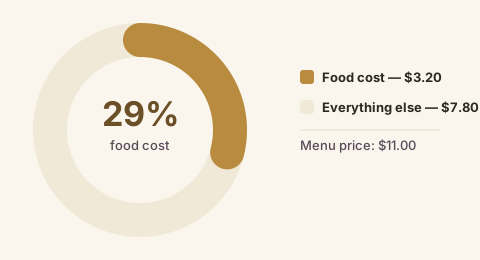
Food cost percentage is the ingredient cost of a dish divided by its menu price. A sandwich costing $3.20 and selling at $11 has a 29% food cost.
- Rough starting points, not rules. Cafés often run lower — mid-twenties to low thirties — because coffee has an extraordinary margin and subsidises the food. Full-service restaurants commonly target 28–35%. Food trucks often run higher on food but far lower on rent.
- But the invoice price is not your cost. You buy romaine at $3.49 a head and throw away a quarter of it trimming. Your real cost per usable kilo is $4.65, not $3.49. Cost your menu on invoice prices and a "30%" food cost is really 34% — which on $400,000 of sales is $16,000 you did not know you were spending.
- And percentage alone is misleading. A 25% dish selling 30 times a week earns you $315. A 35% dish selling 45 times earns $760. The "worse" dish is twice the business. Judge dishes on margin multiplied by volume, not percentage alone.
- The number that actually decides survival is prime cost — food plus labour divided by sales. Full service commonly aims for around 60–65%. You can have a beautiful food cost and still lose money on labour.